With a full day in Saga ahead and several places difficult to reach by public transport, renting a car again was a good decision. The day before, even moving between nearby towns had involved infrequent connections or none at all. I picked up the reserved car from the rental office directly opposite Takeo-Onsen Station.

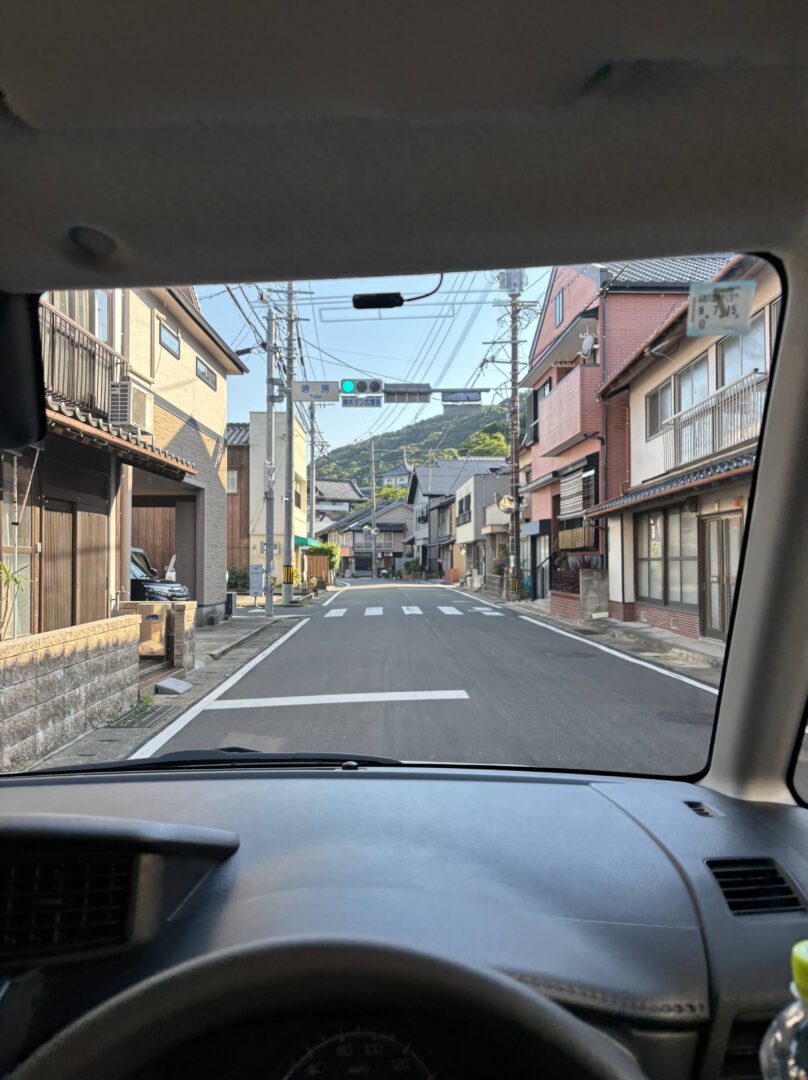
Arita’s Porcelain Streets
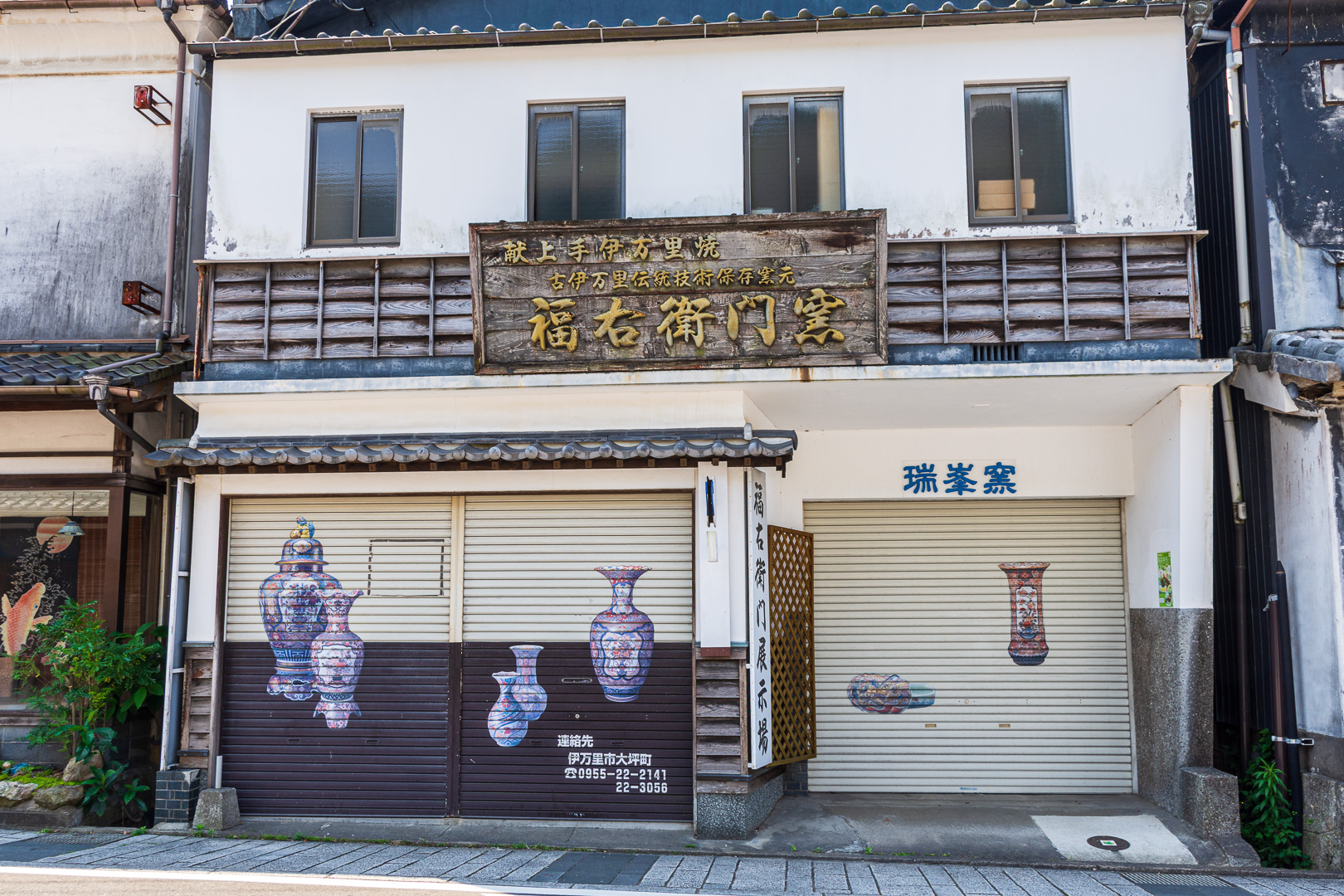
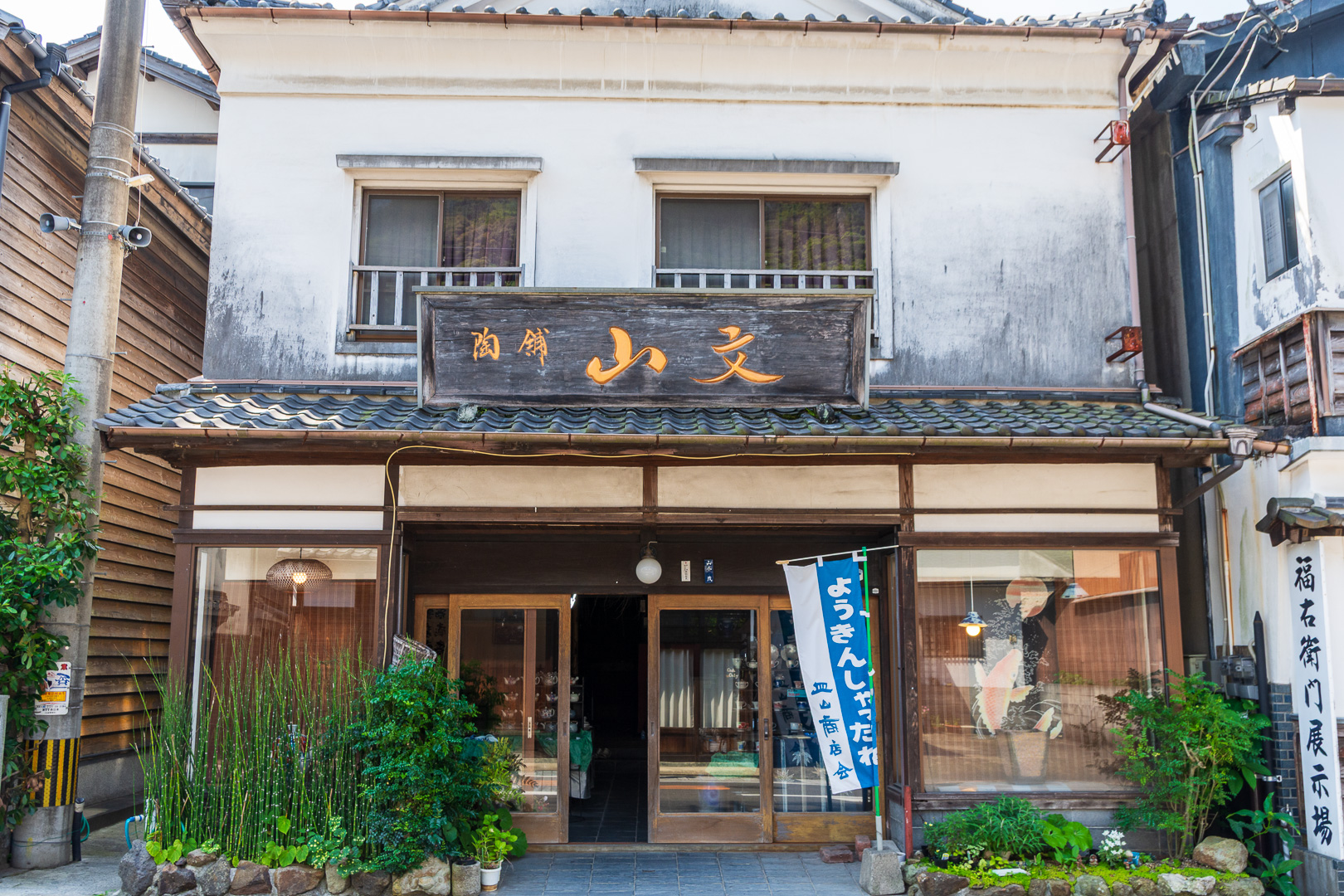
My first destination was Arita, where I explored the areas around Kami-Arita and Arita Stations. The streets around Kami-Arita were more traditional-looking, with small kiln workshops still scattered among the old buildings.
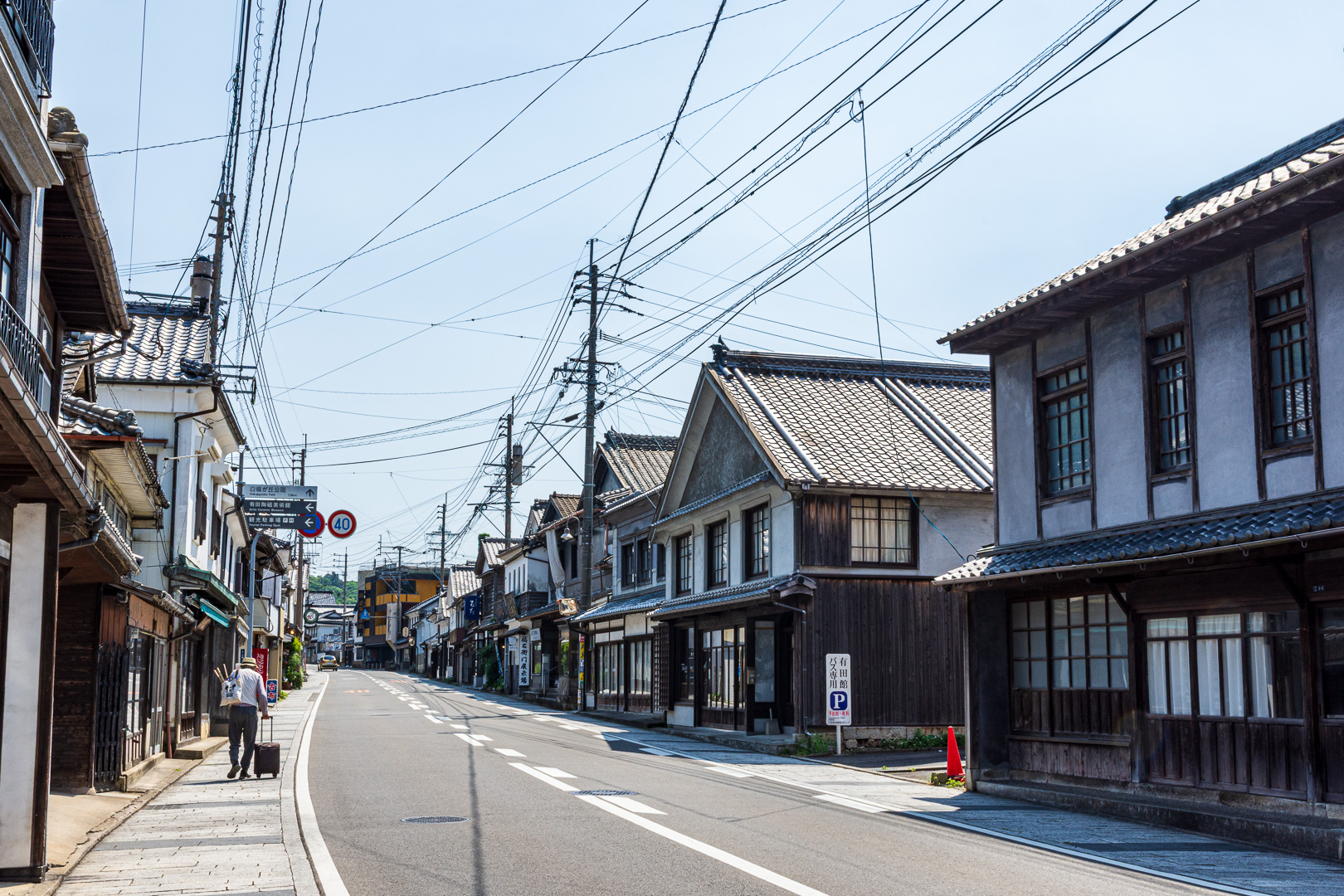
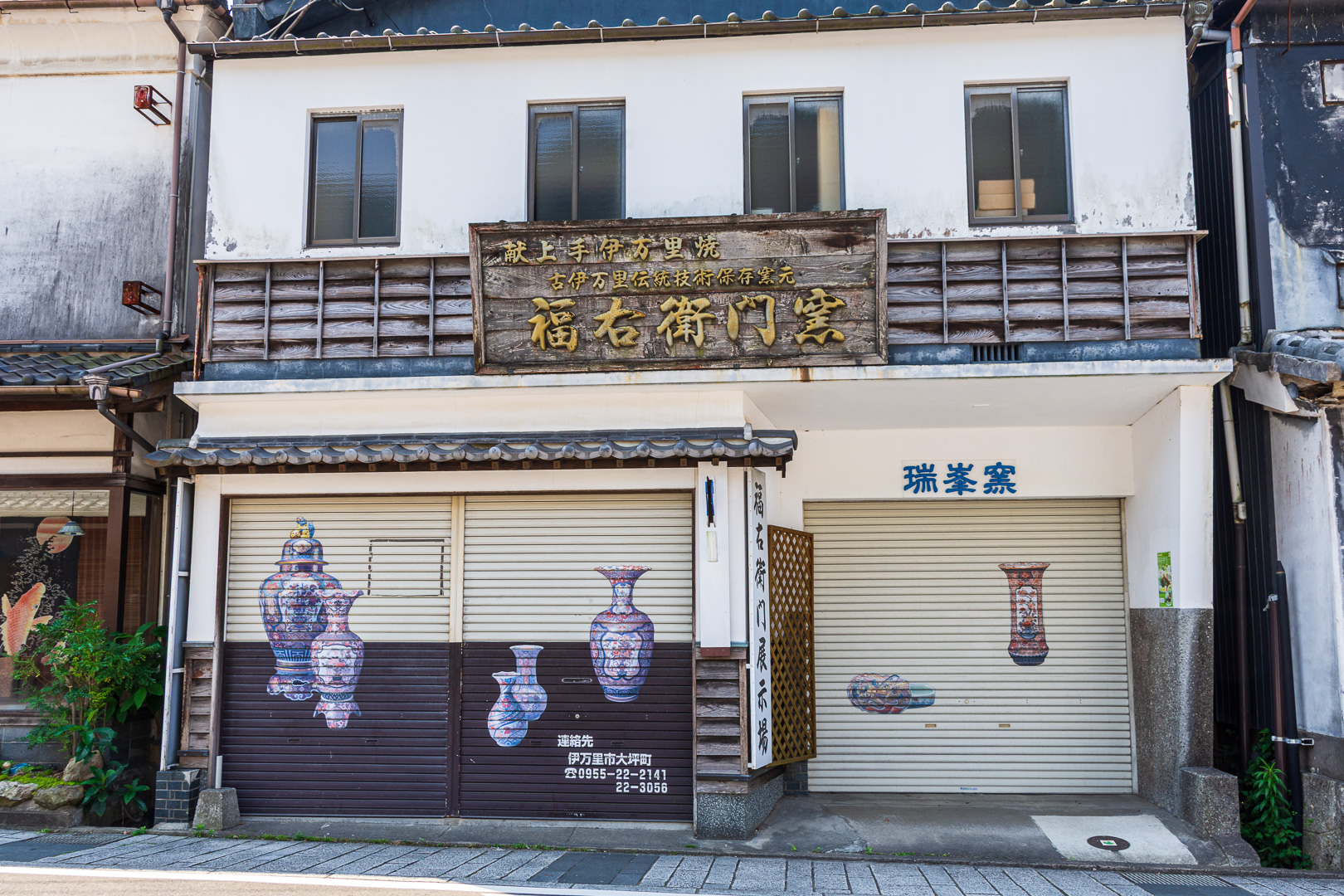
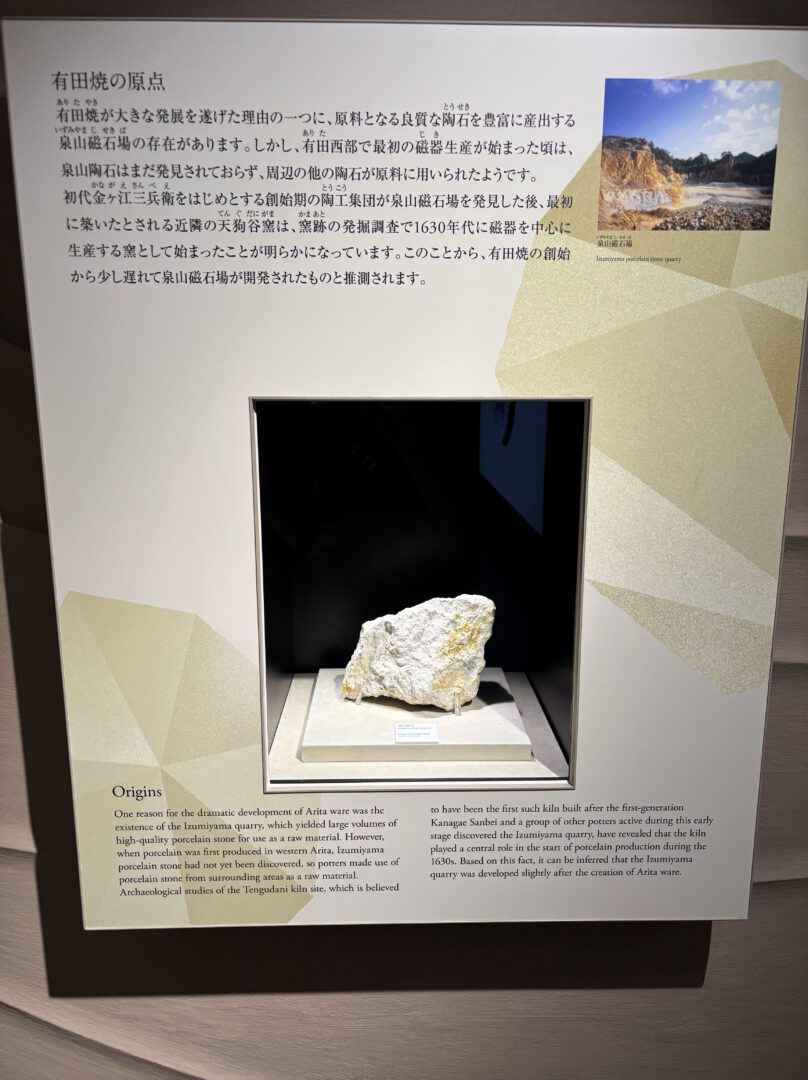
Porcelain production began here at the start of the Edo period, when porcelain stone was discovered at nearby Izumiyama in the early 17th century. That discovery made large-scale porcelain production possible in Japan for the first time. A major fire destroyed much of the town in 1828, but it was rebuilt quickly. Today, buildings from the Edo, Meiji, Taishō, and Shōwa periods remain throughout the area.
Even some of the road signs were porcelain white with cobalt-blue glaze.
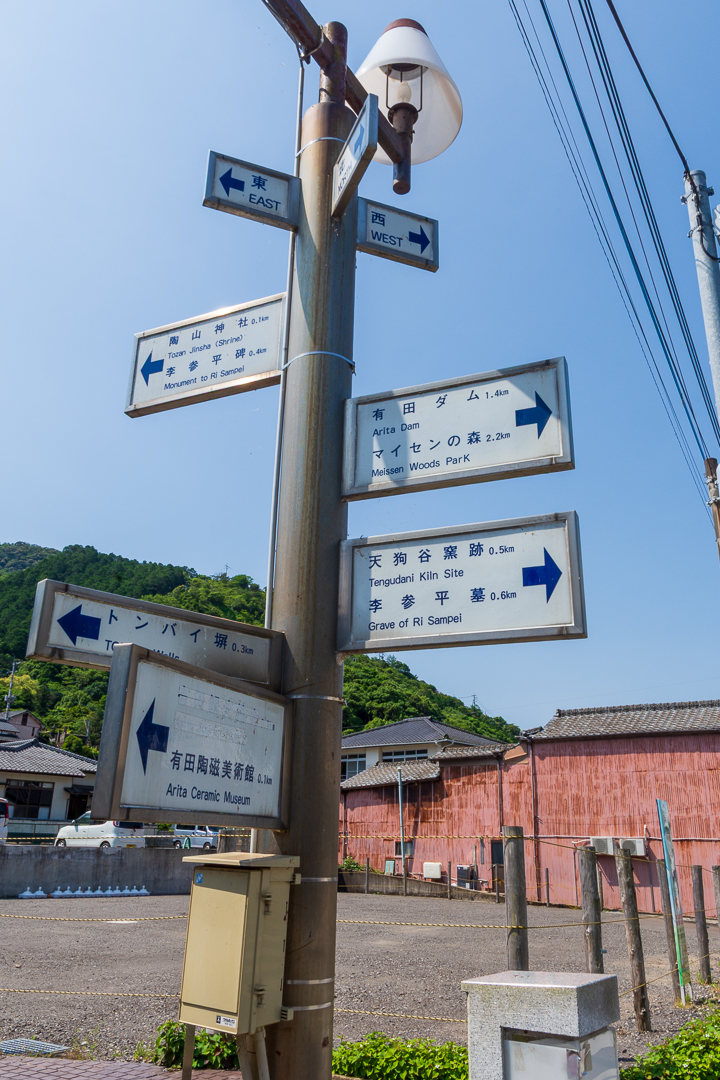
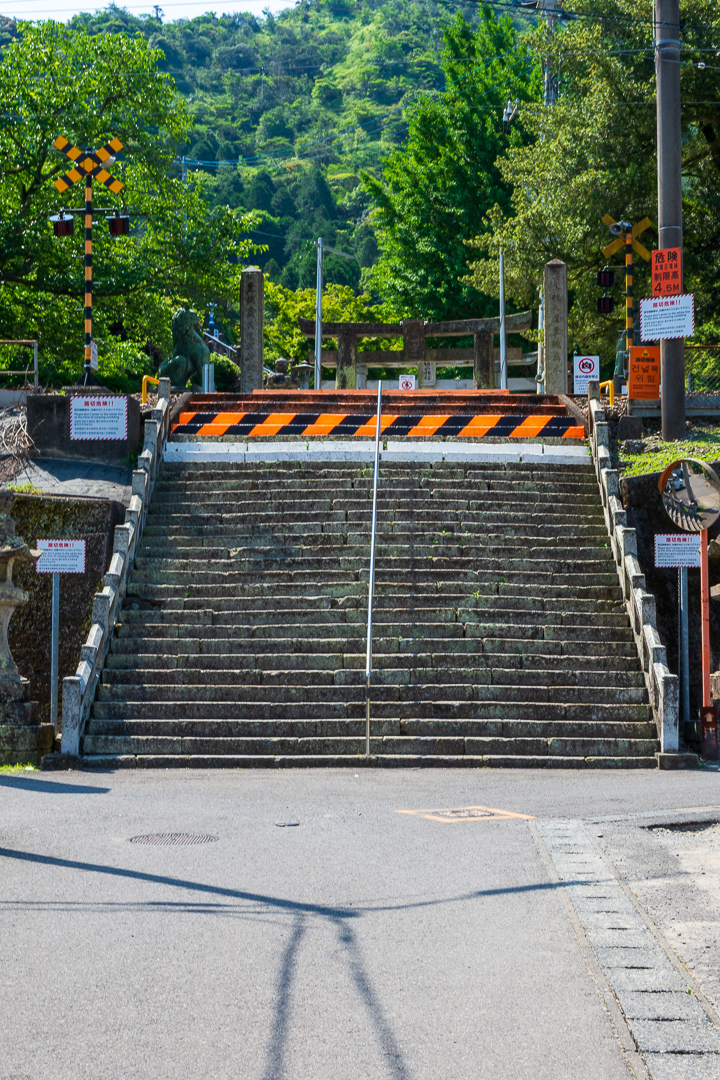
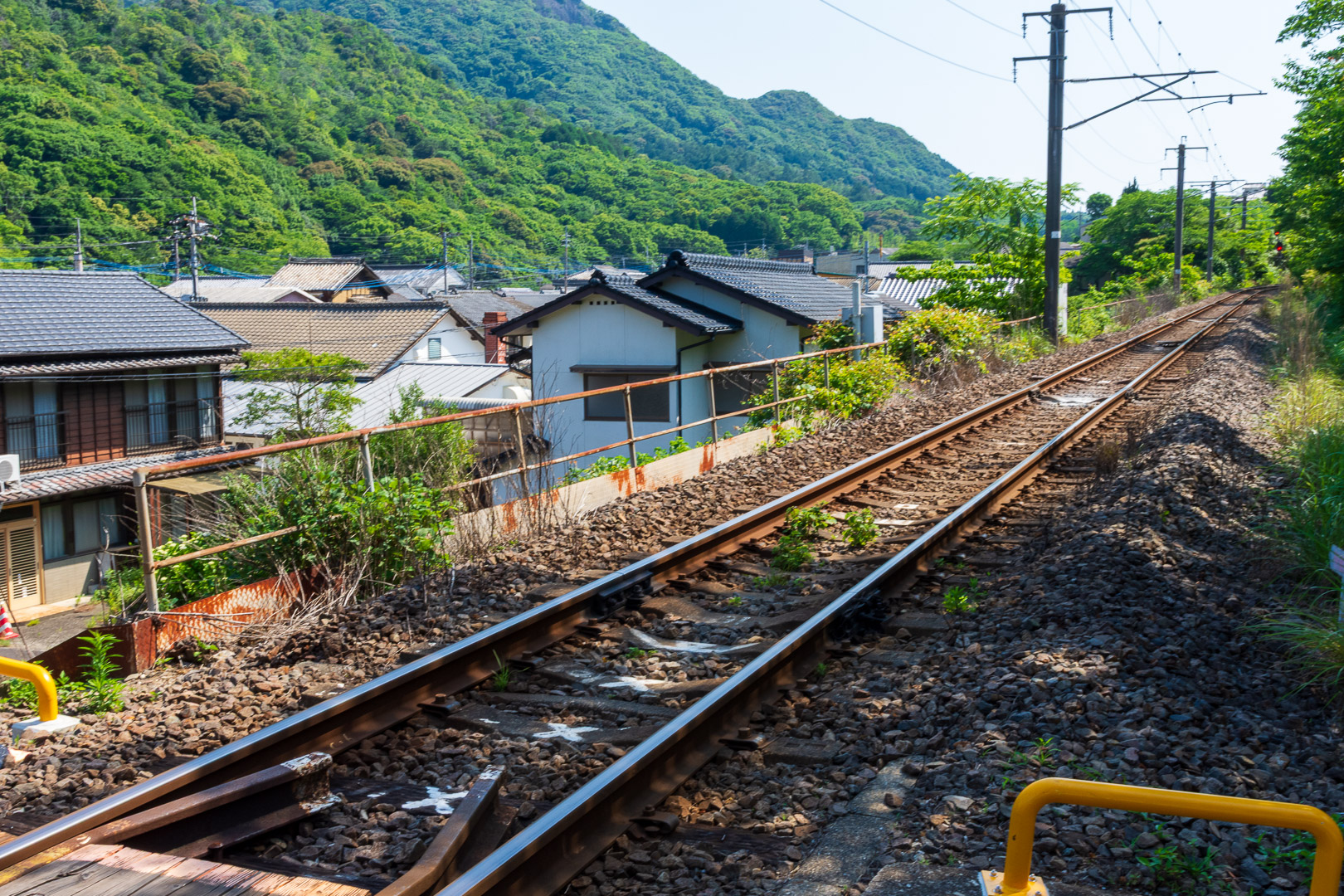
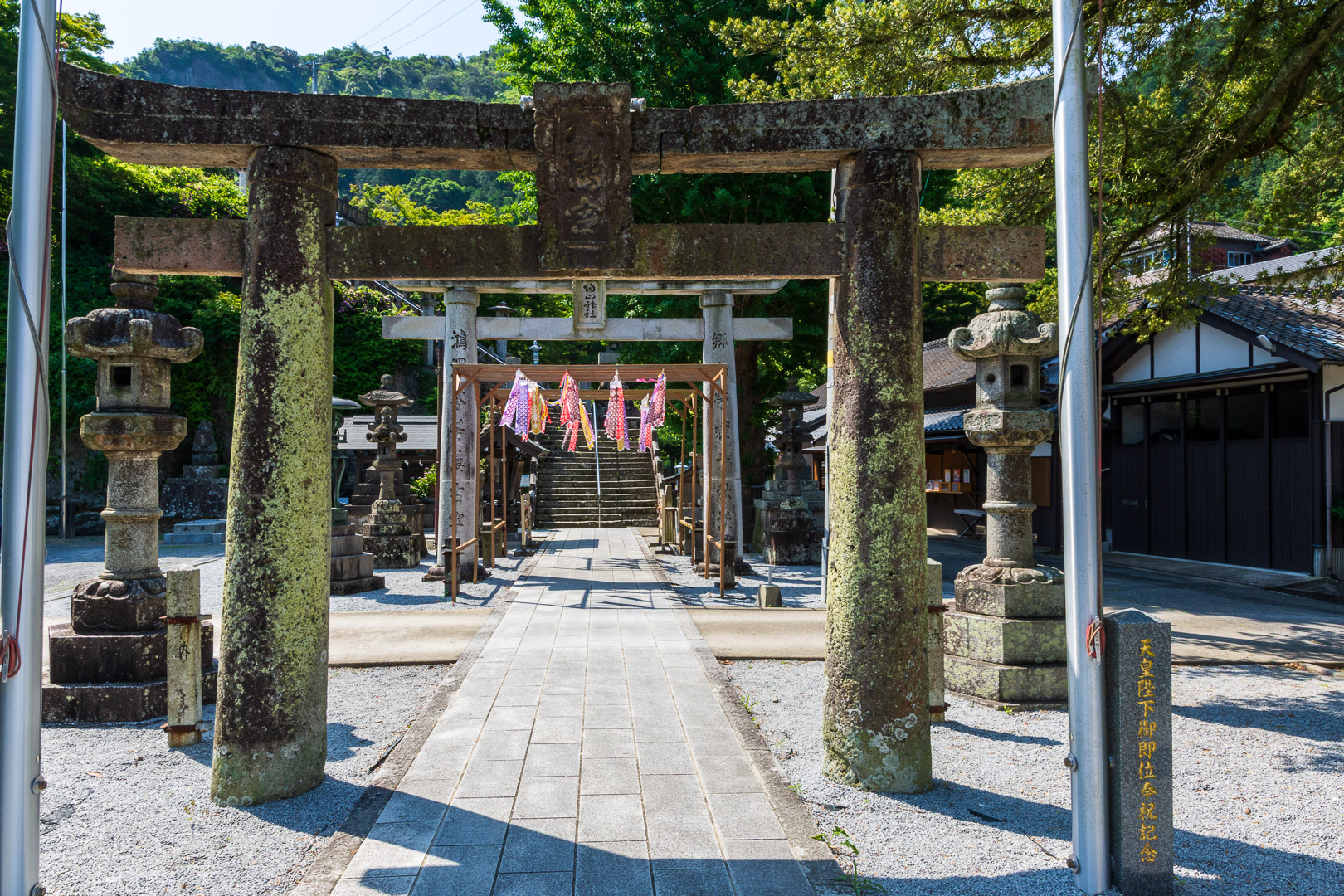
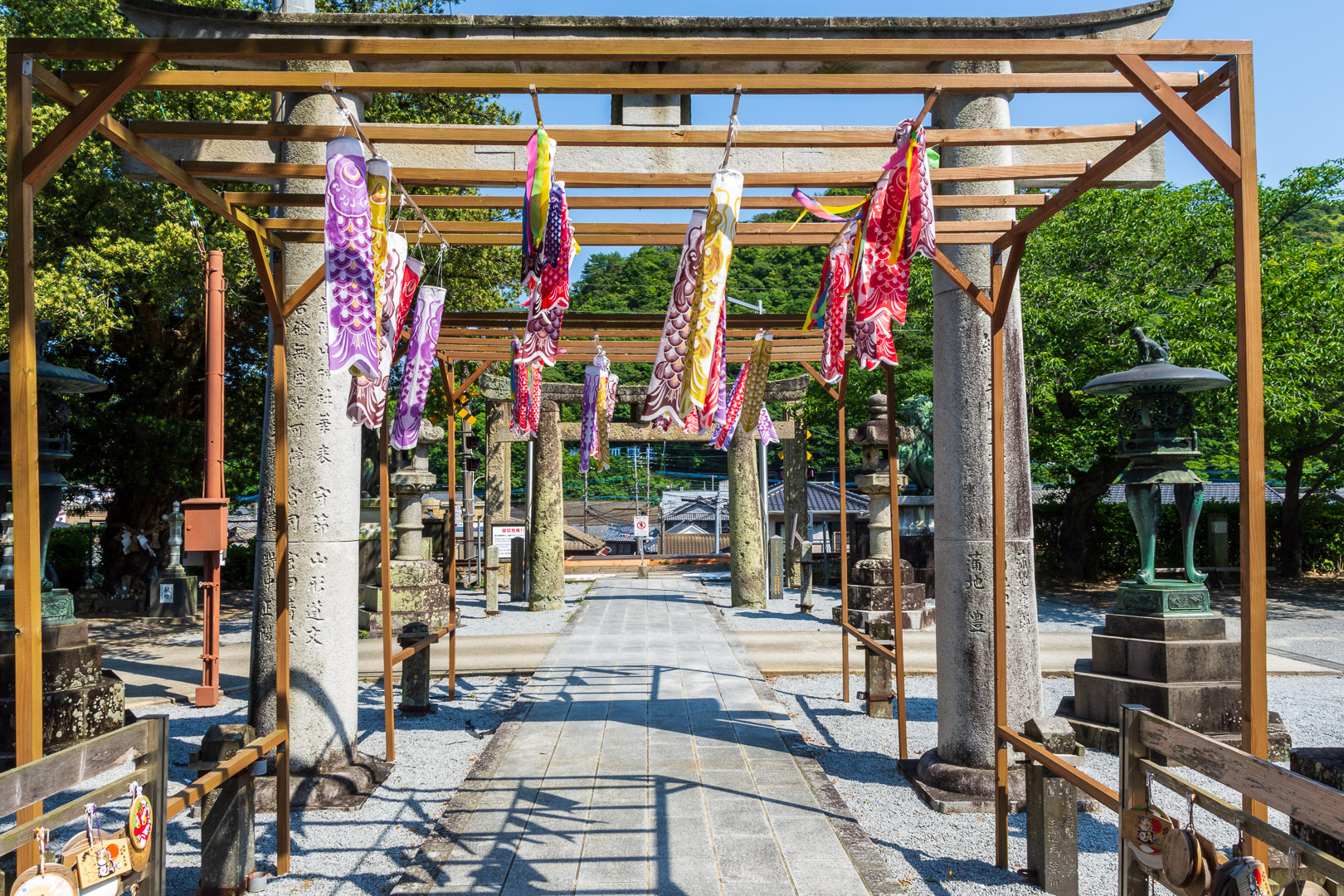
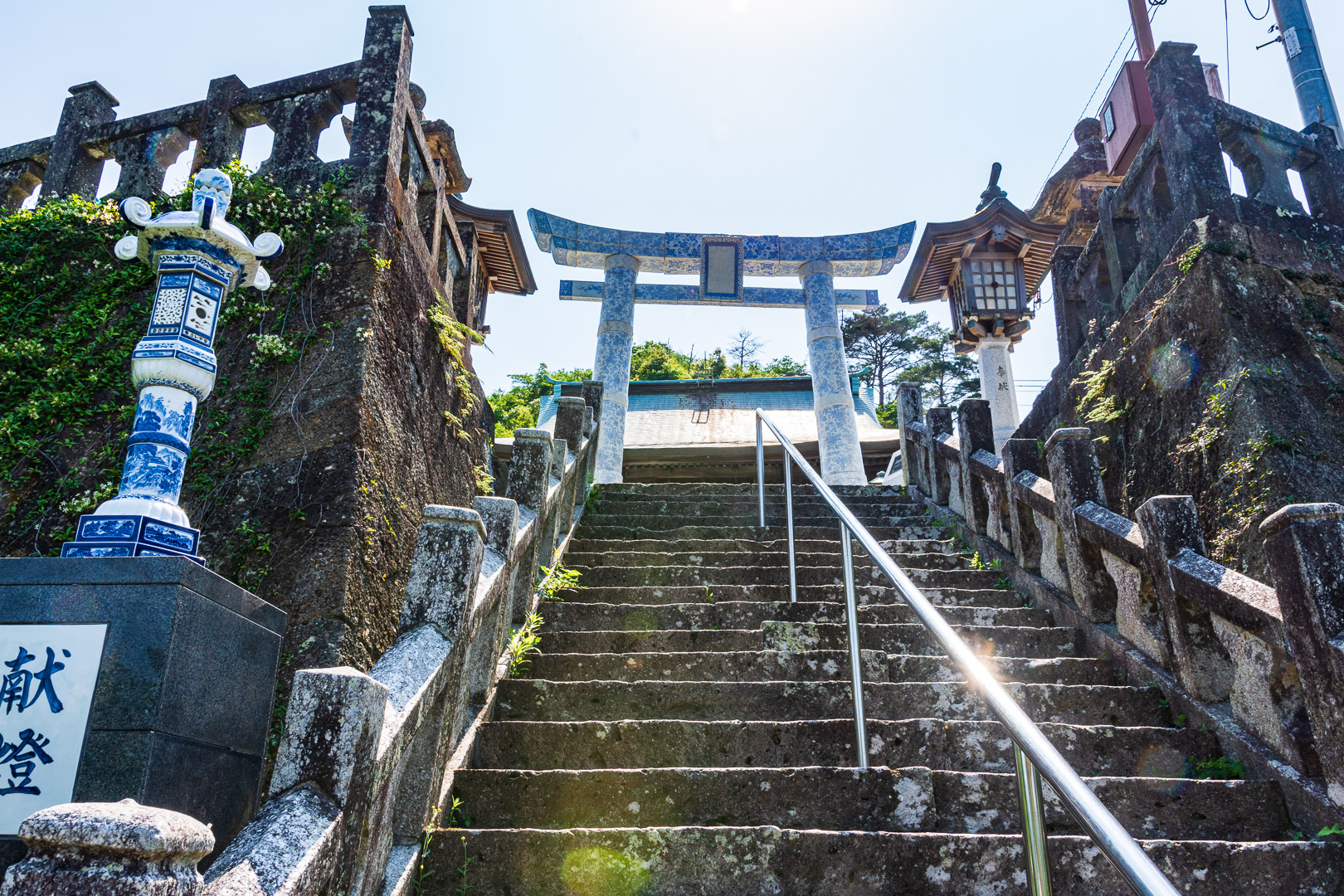
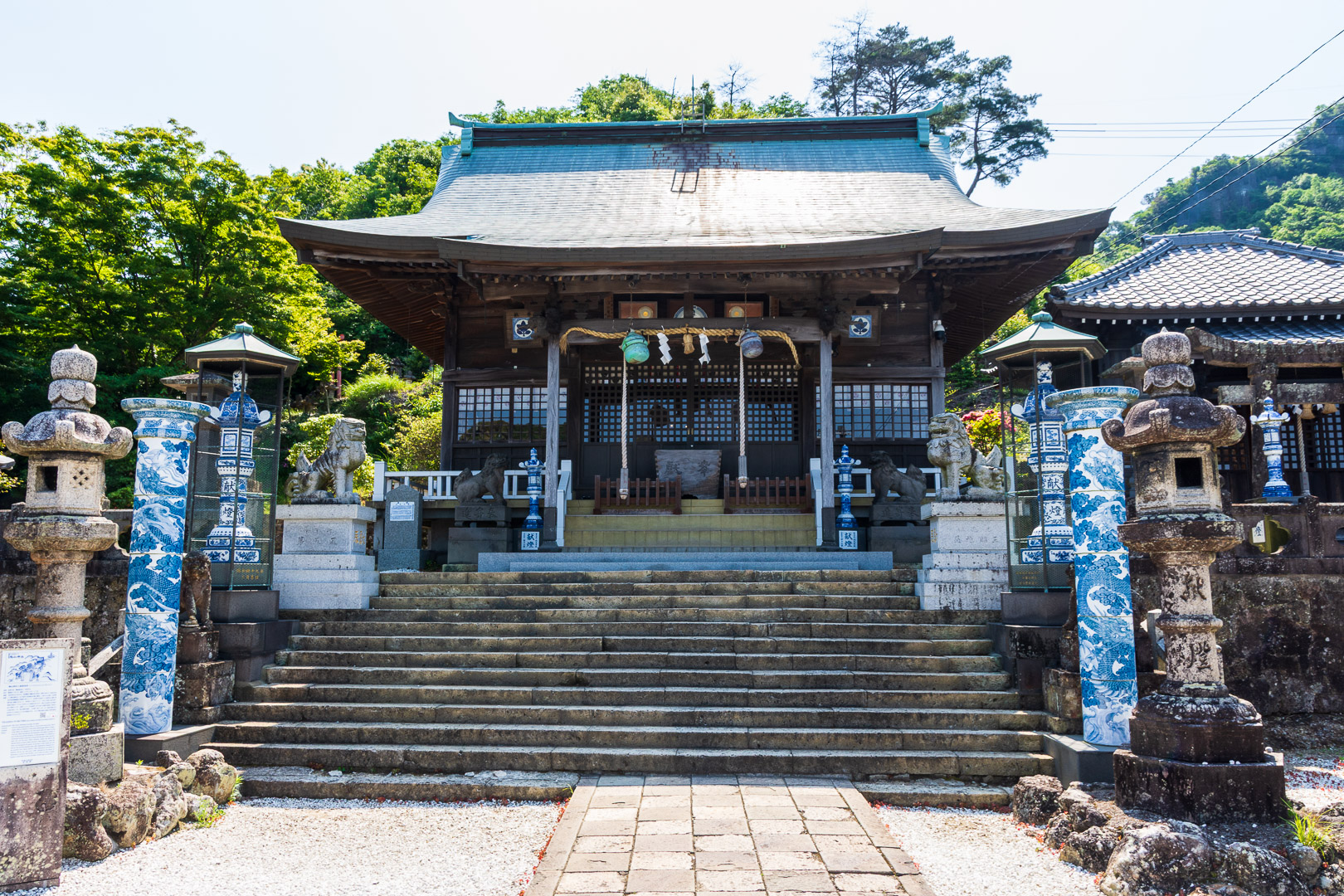
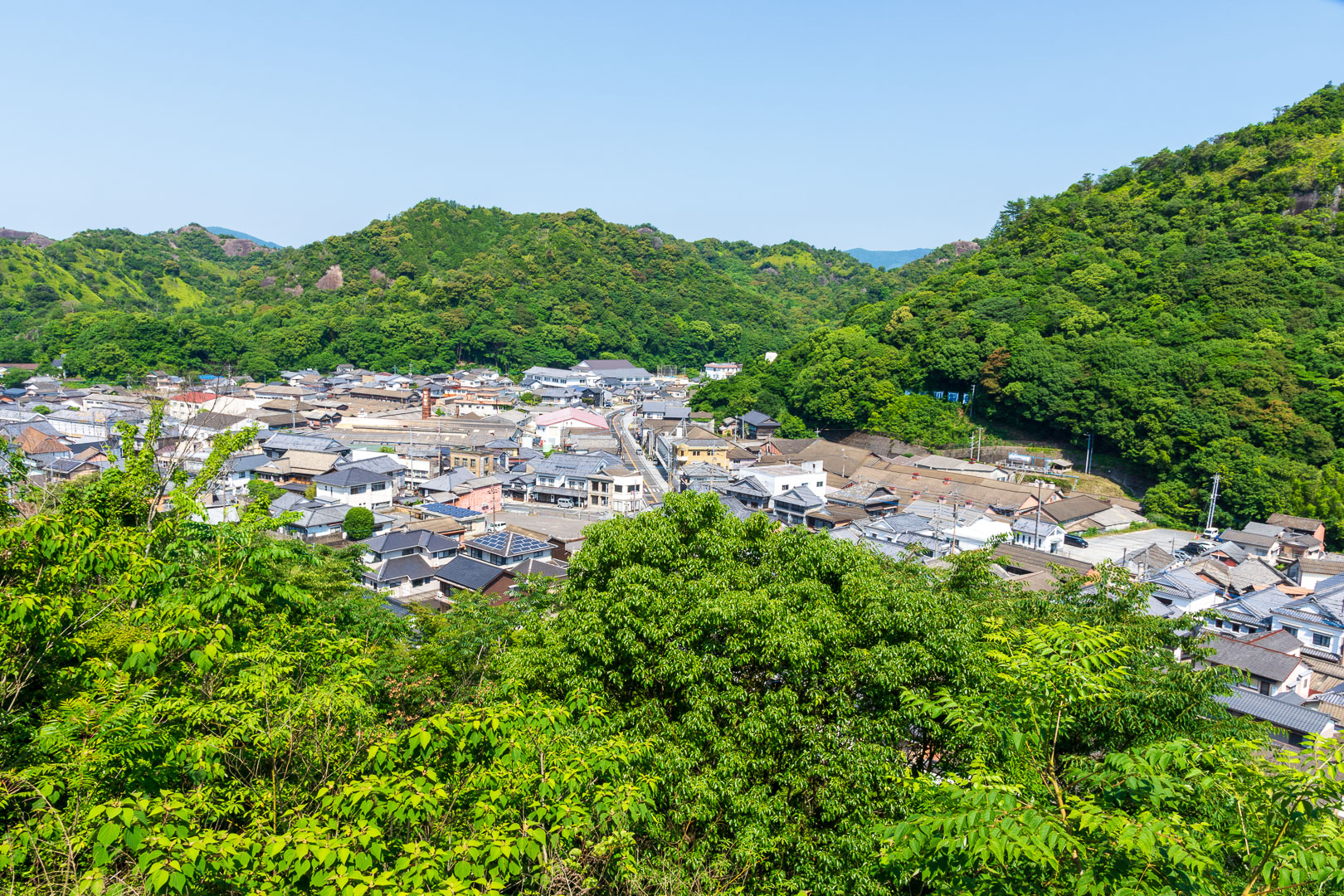
After parking close to the main road in Kami-Arita, I crossed an unprotected railroad track, where warning signs repeatedly reminded people not to stop. On the other side was Tōzan Shrine, with ceramic ornaments throughout the grounds. The honden, or main hall, was also decorated with porcelain, and a Shinto ceremony was taking place as I climbed the stairs. Beyond the shrine, I could look back over the small town.
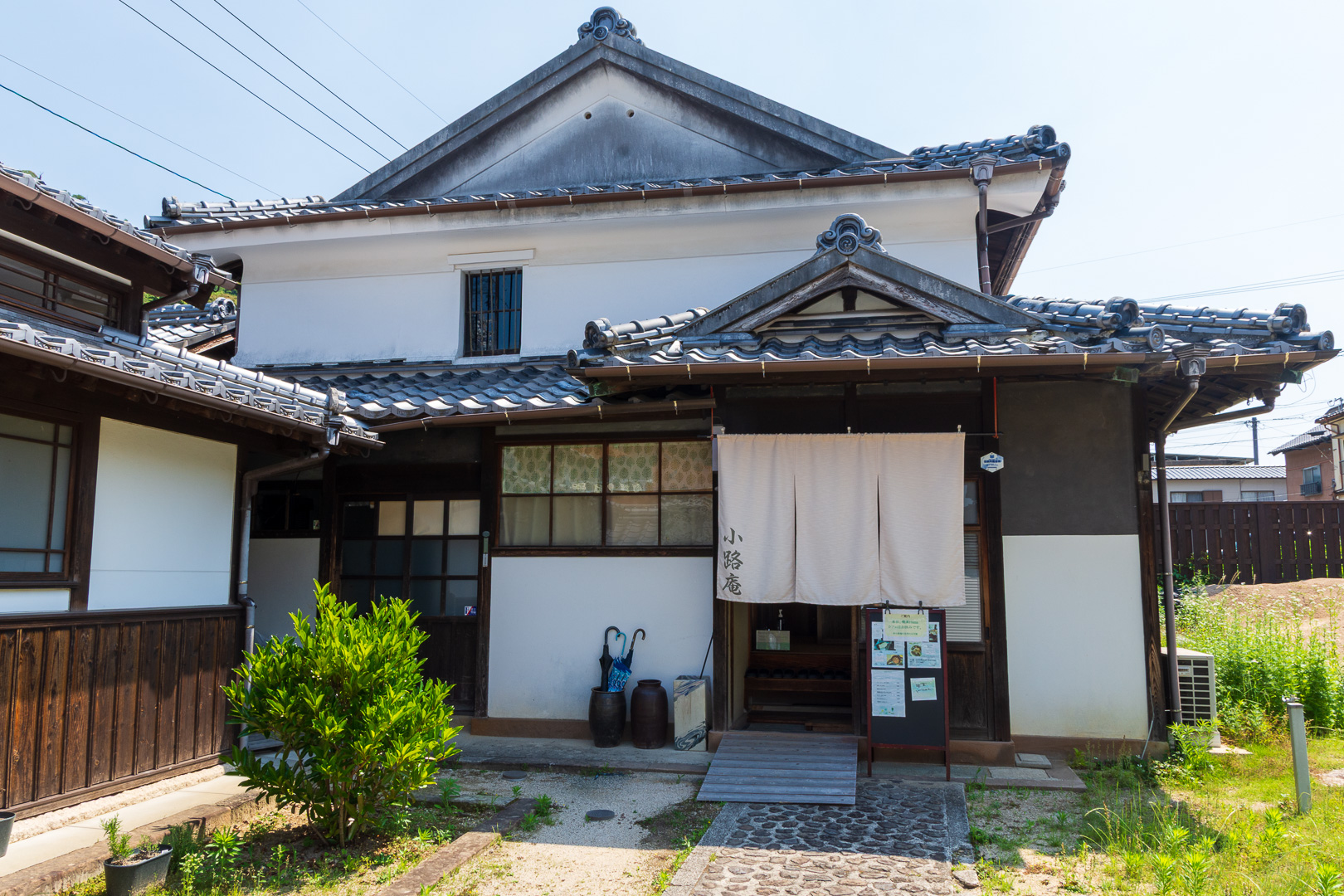
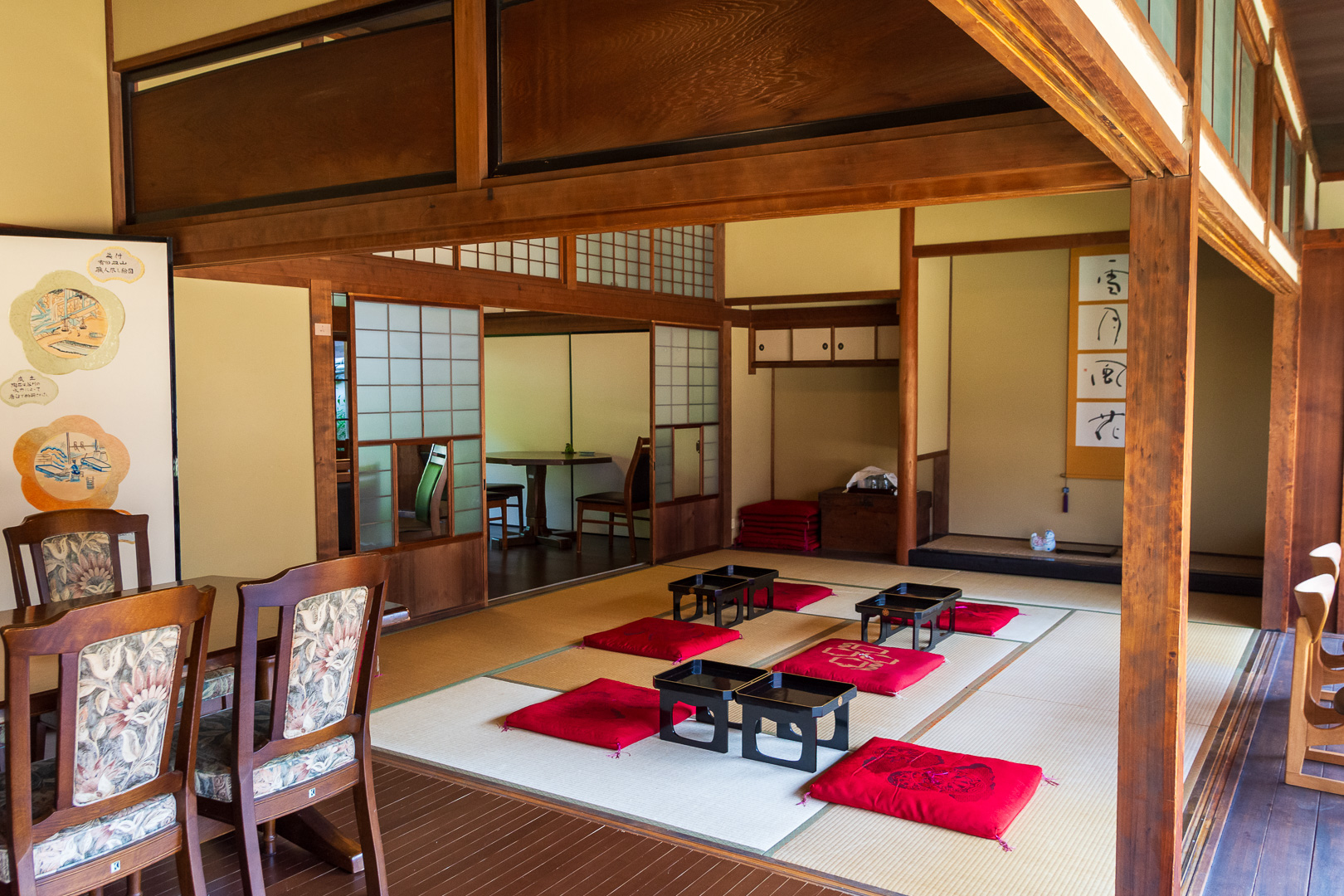
On a side street, I found Shūjian (小路庵), a historic house open to visitors, with a café inside. It was the birthplace of Magoemon Ezoe, who later served as the fifth president of TOTO and as mayor of Arita.
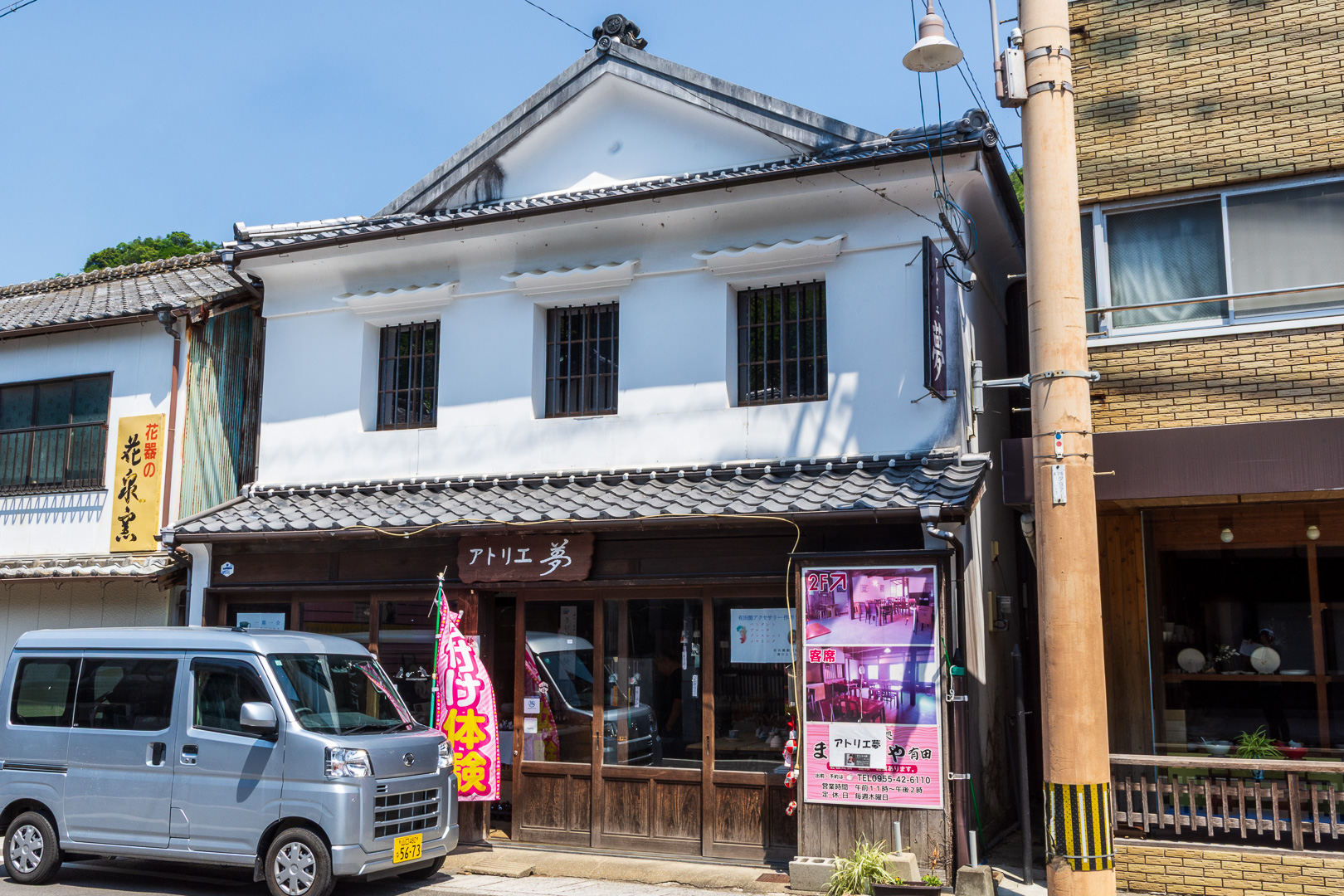
At some of the ateliers, such as Atelier Yume (アトリエ夢), I could watch the work in progress. For more than 35 years, the owner had been hand-painting and firing ceramic pieces in Arita.
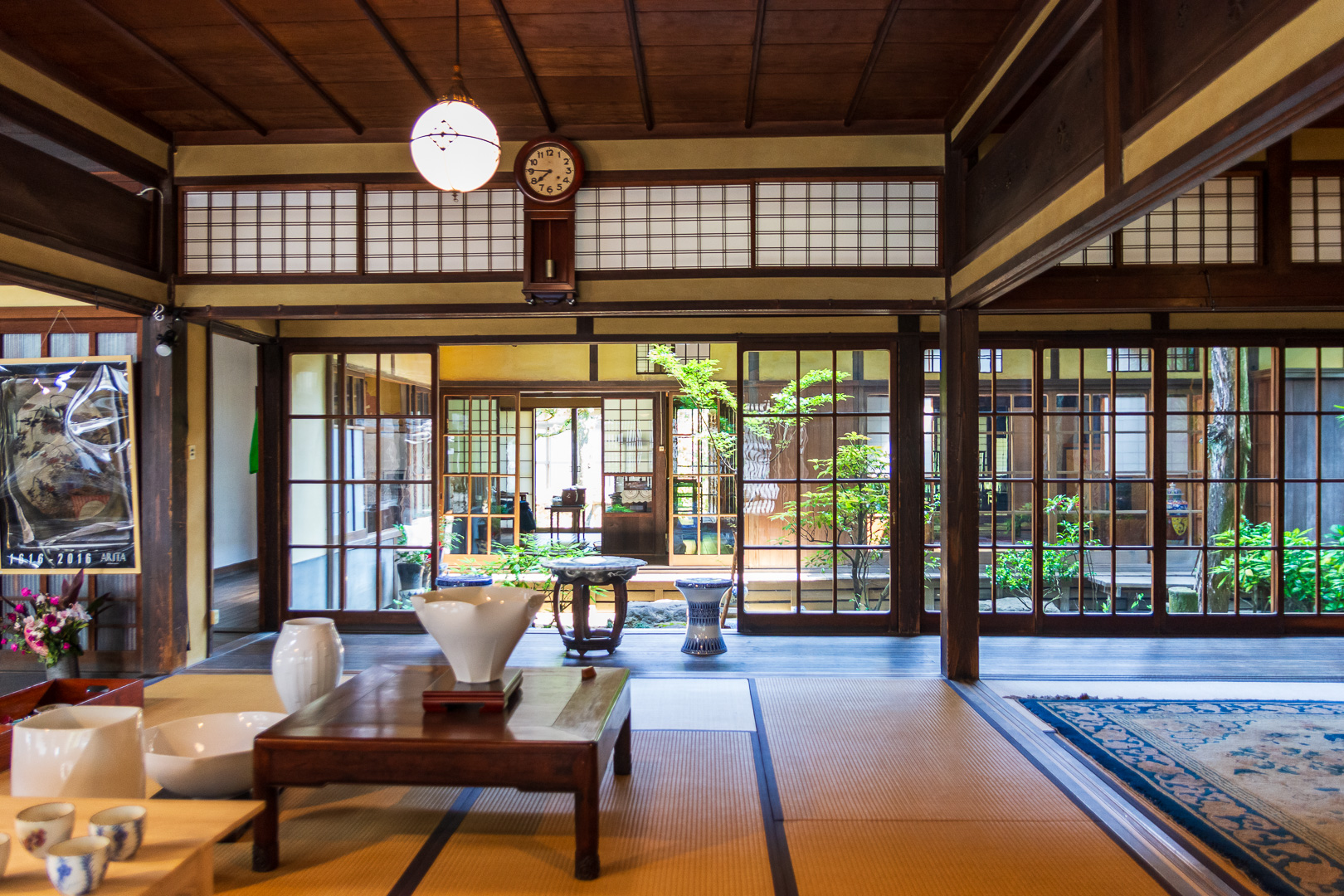
To the east of Kami-Arita was Izumiyama, the quarry where the porcelain stone for Arita ware had been extracted.
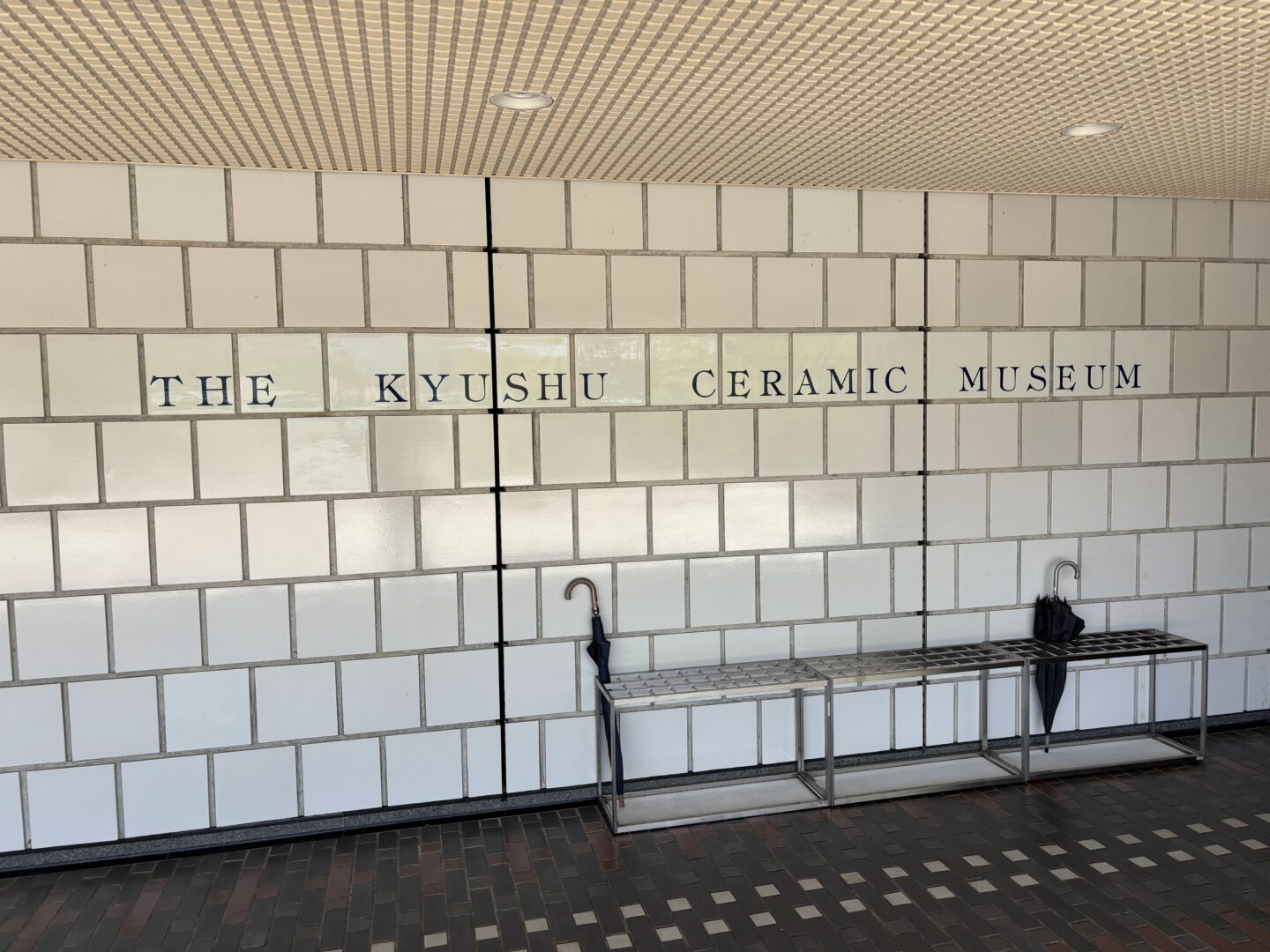
Back in the car, I continued west toward Arita Station and made a quick visit to the Kyushu Ceramic Museum. There were several museums on the map, but this seemed the most useful general introduction to the region’s different ceramic styles. Admission was free when I visited.
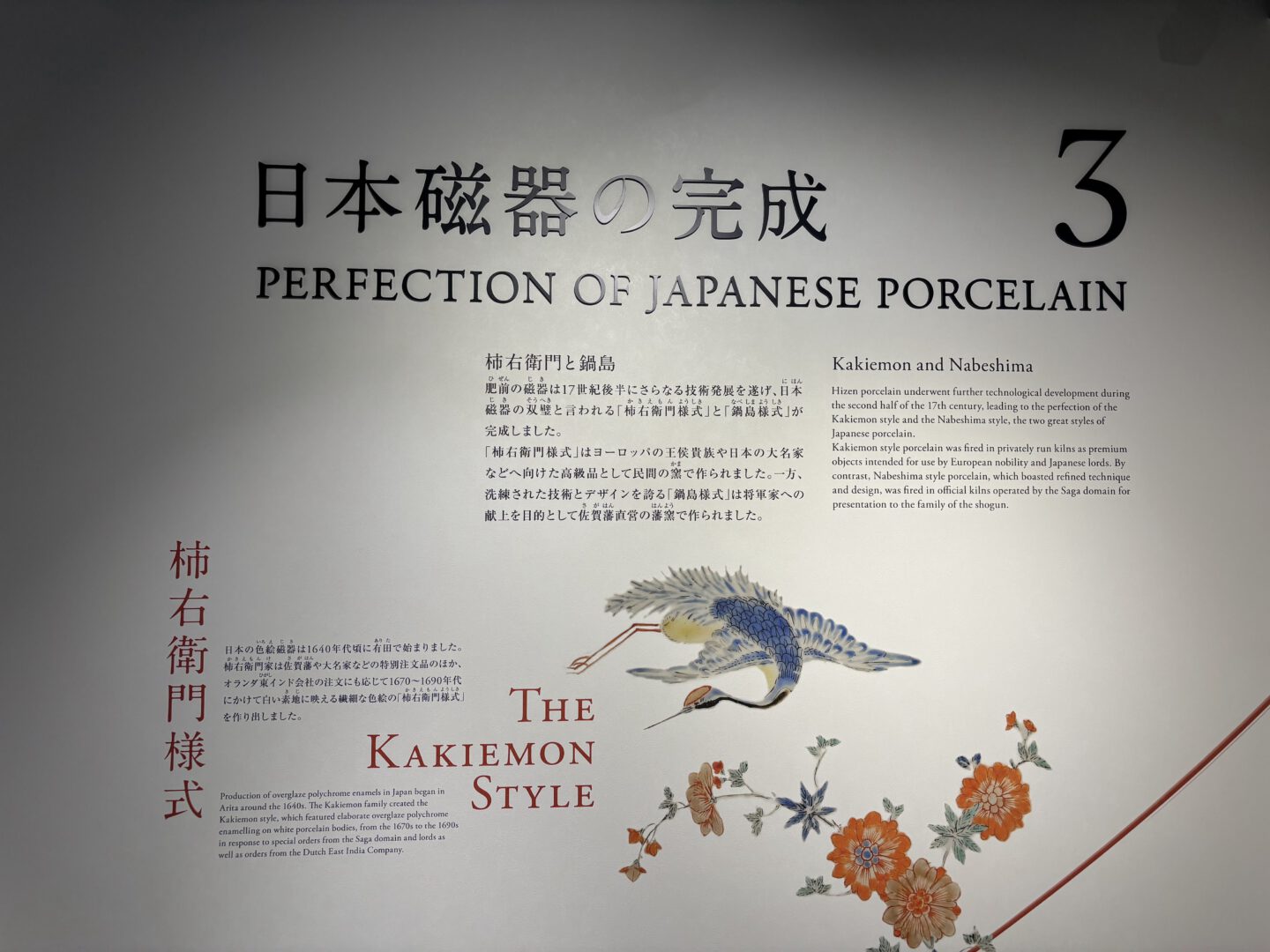
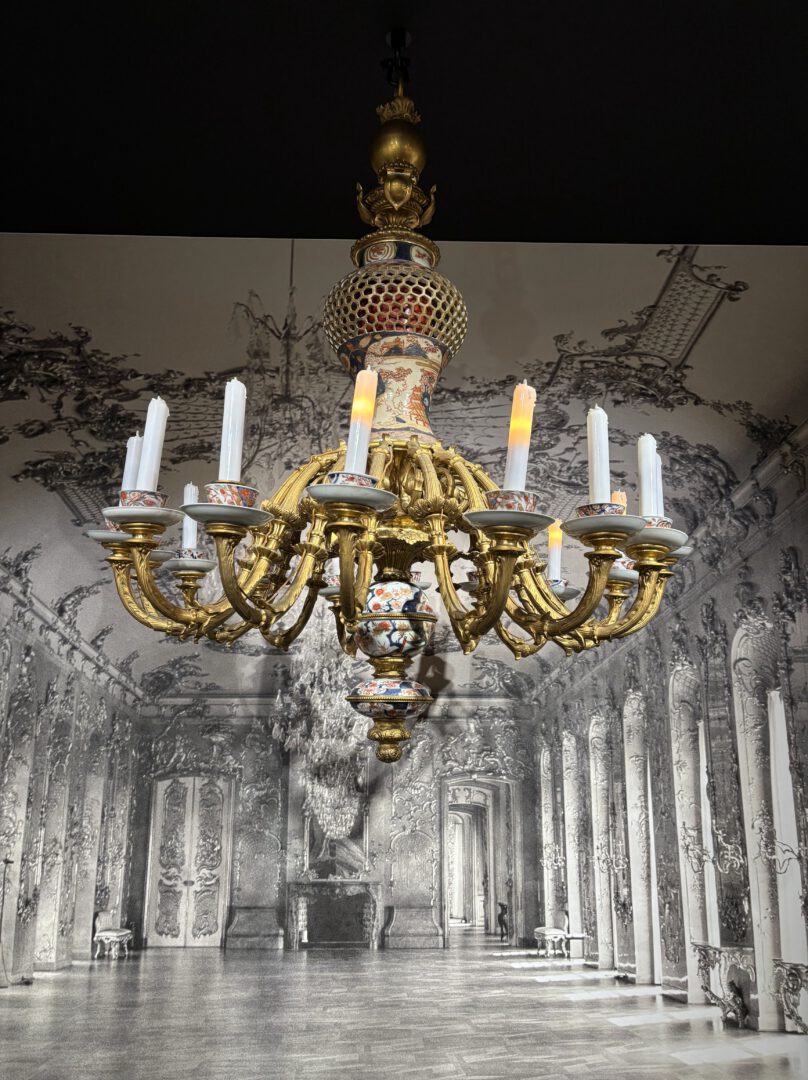
The exhibition introduced porcelain made in the former Hizen Province, now Saga and Nagasaki Prefectures, but its focus was Arita ware: the discovery of porcelain stone at Izumiyama, the growth of domestic trade, and the later export business. The museum was modern and well organized, with digital elements that helped move the story from the earliest simple wares to increasingly intricate porcelain. It also made the connection to Europe tangible: Arita porcelain became important to Dutch trade in the 17th century, and the displays repeatedly referred to Dresden and Meissen.
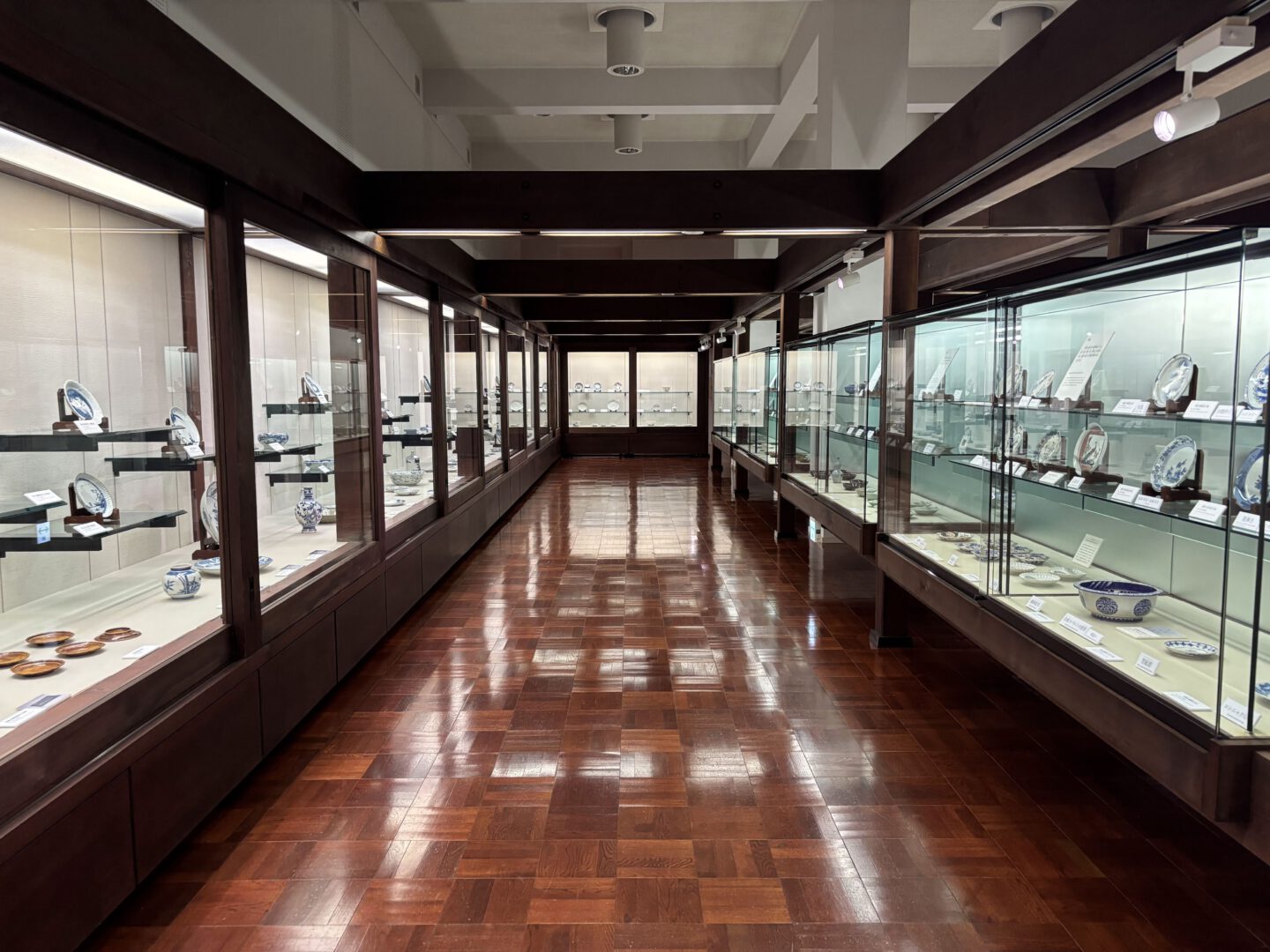
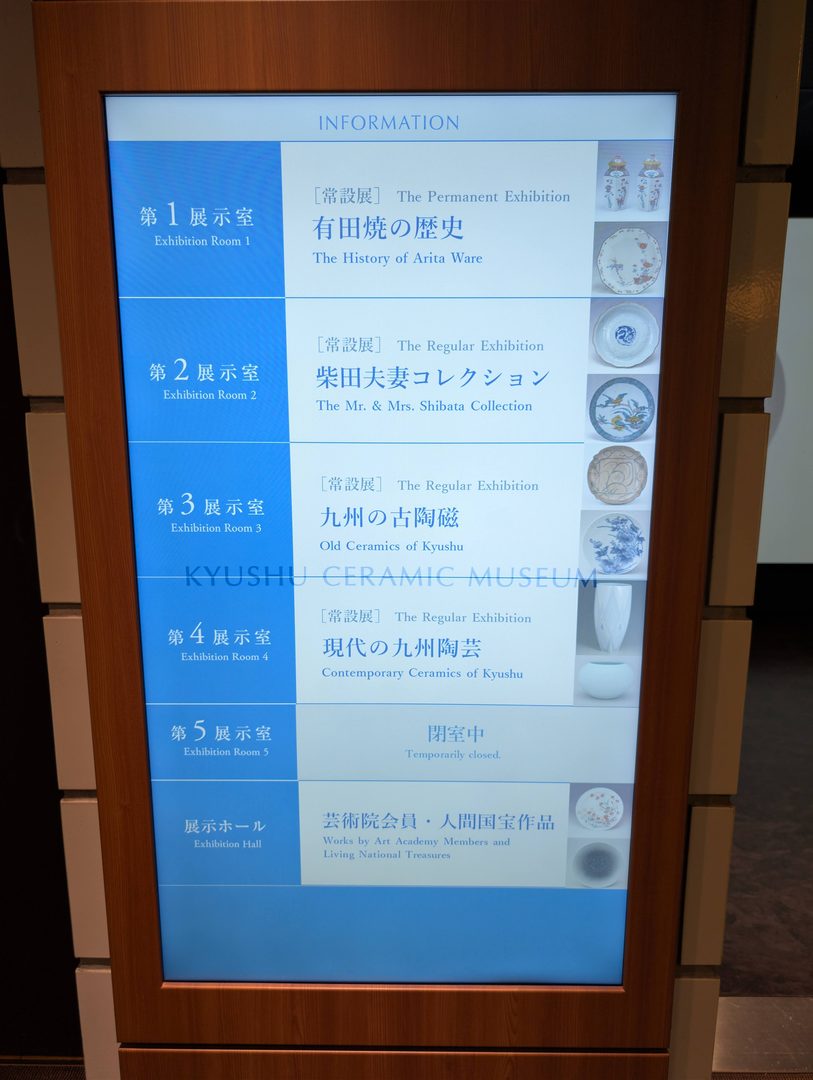
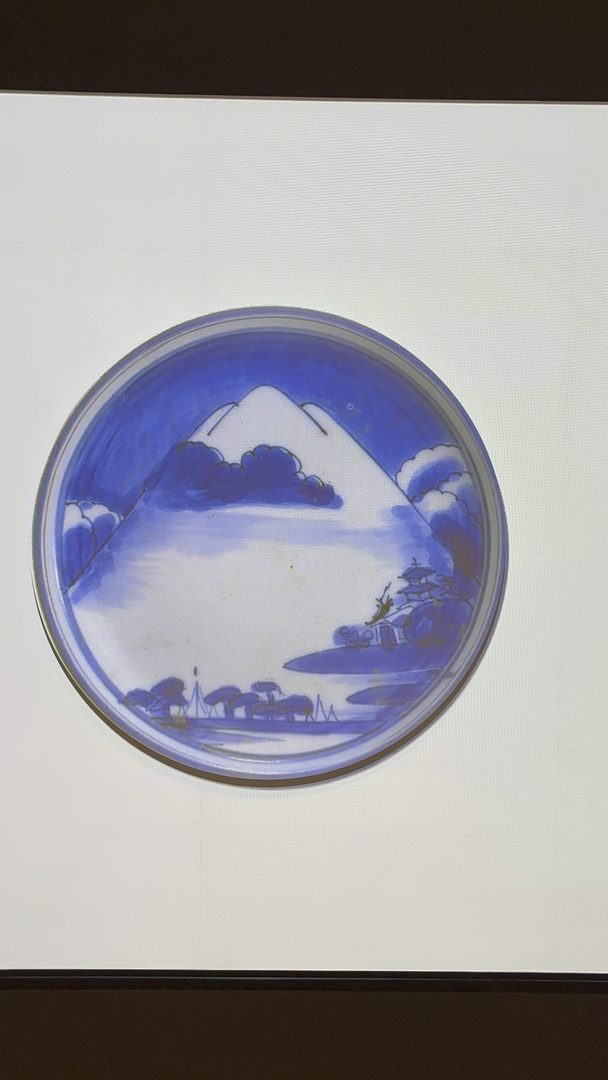
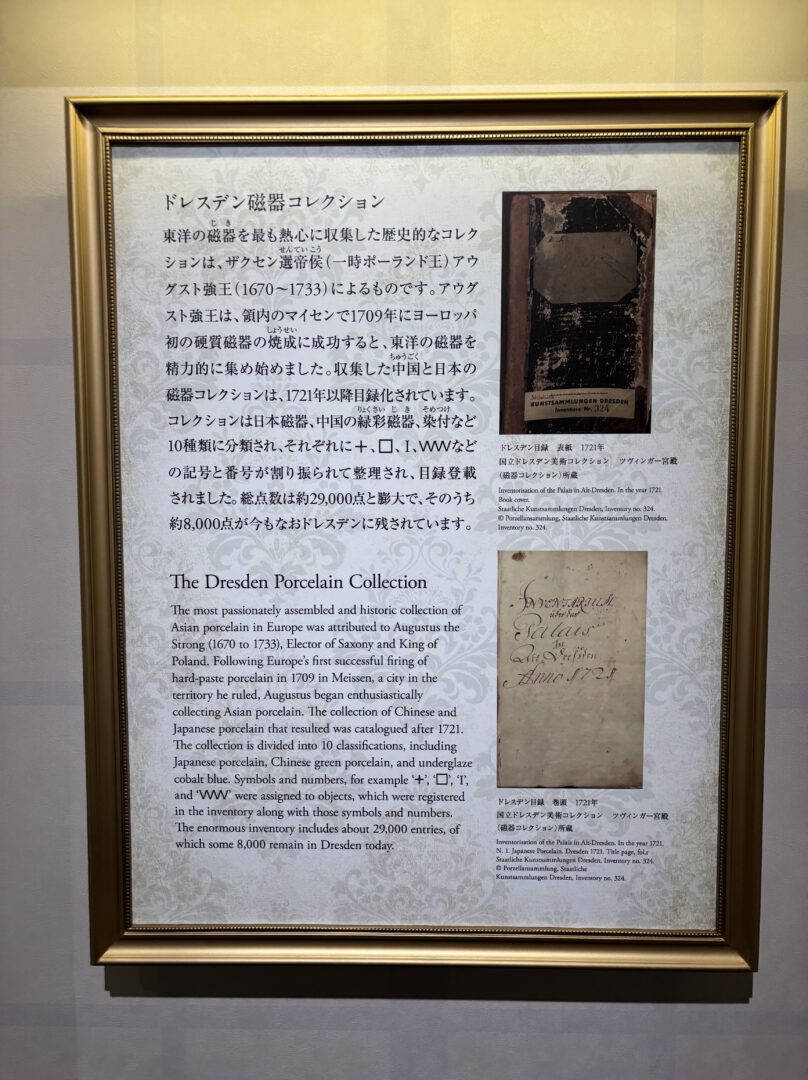
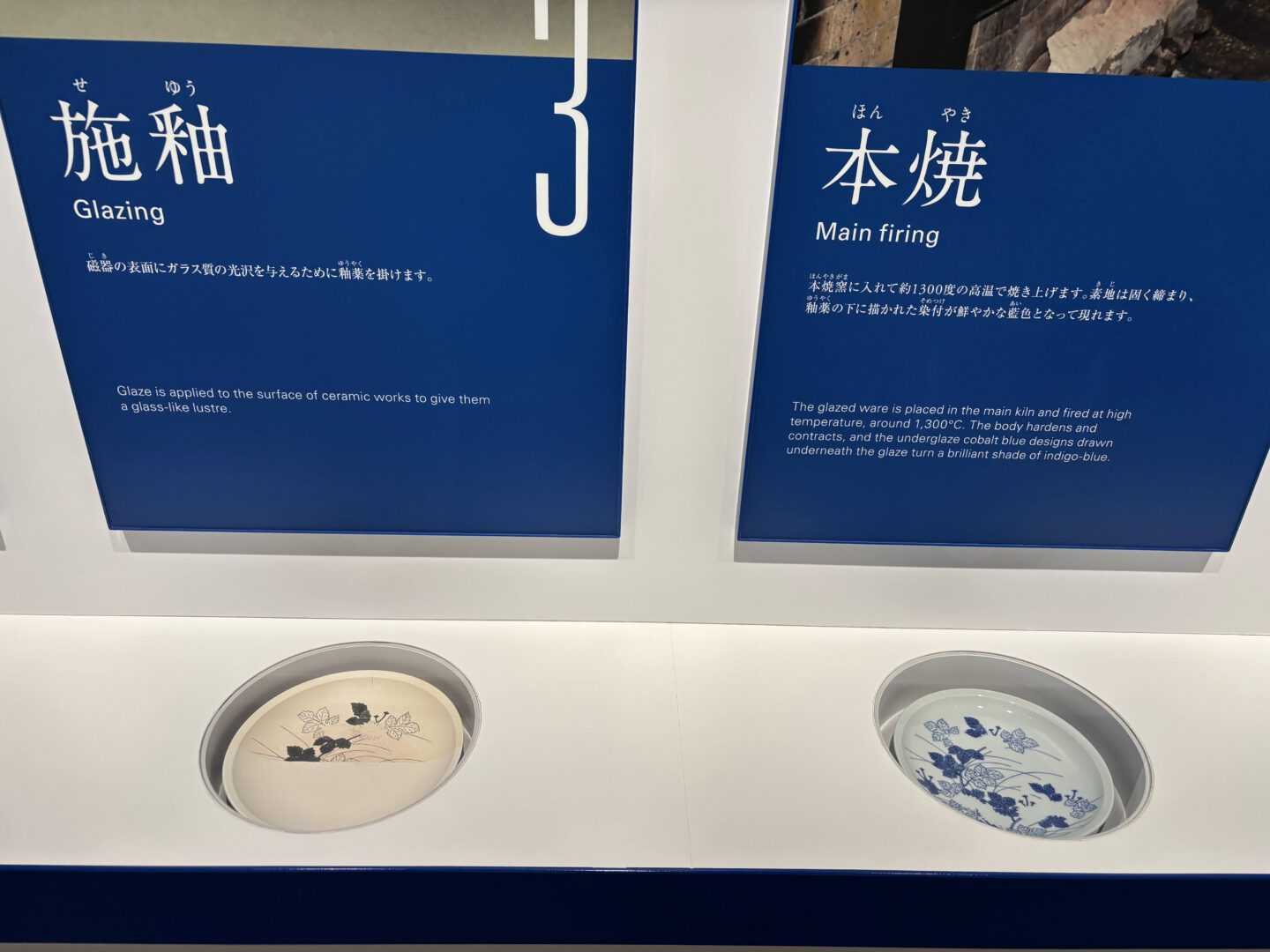
The second exhibition room centered on the Shibata Collection. I found it interesting that the couple behind it had lived in Tokyo rather than the region. Akihiko ran a food company, while Yuko ran a trading company. Both had been drawn to antiques from a young age and collected Edo-period Arita ware systematically, tracing changes in its styles and the lives of the people who used it. They wanted the collection preserved as part of Arita’s cultural heritage. Between 1990 and 2003, they donated 10,311 pieces to this museum; Akihiko also donated works to the British Museum in London.
The Kilns of Okawachiyama
From Arita, I drove about half an hour to Okawachiyama, a kiln village in Imari. I parked at the entrance to the village, beside a bridge decorated with ceramic designs. Many active kilns stood close together in the narrow valley, with workshops and shops selling their own work.
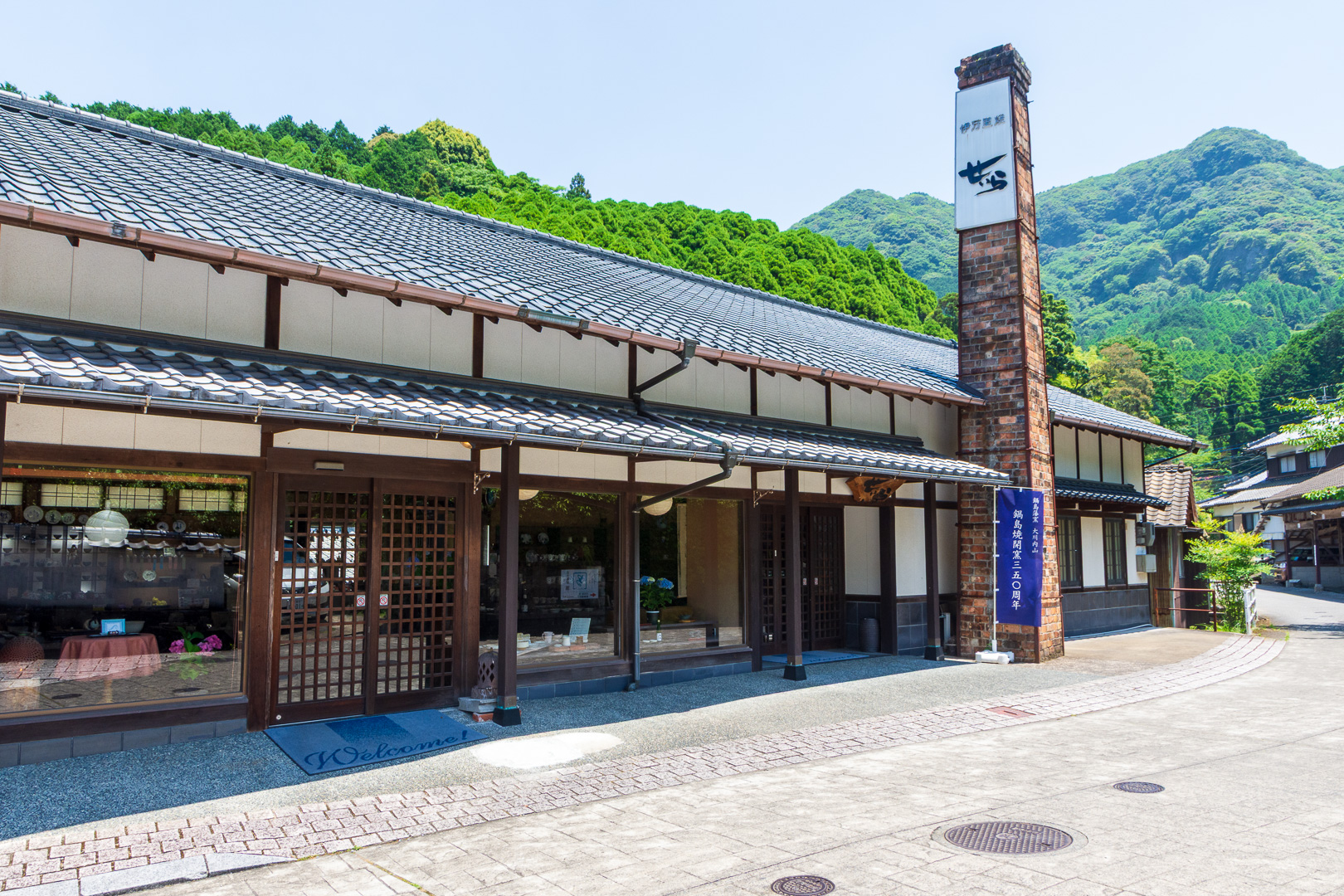
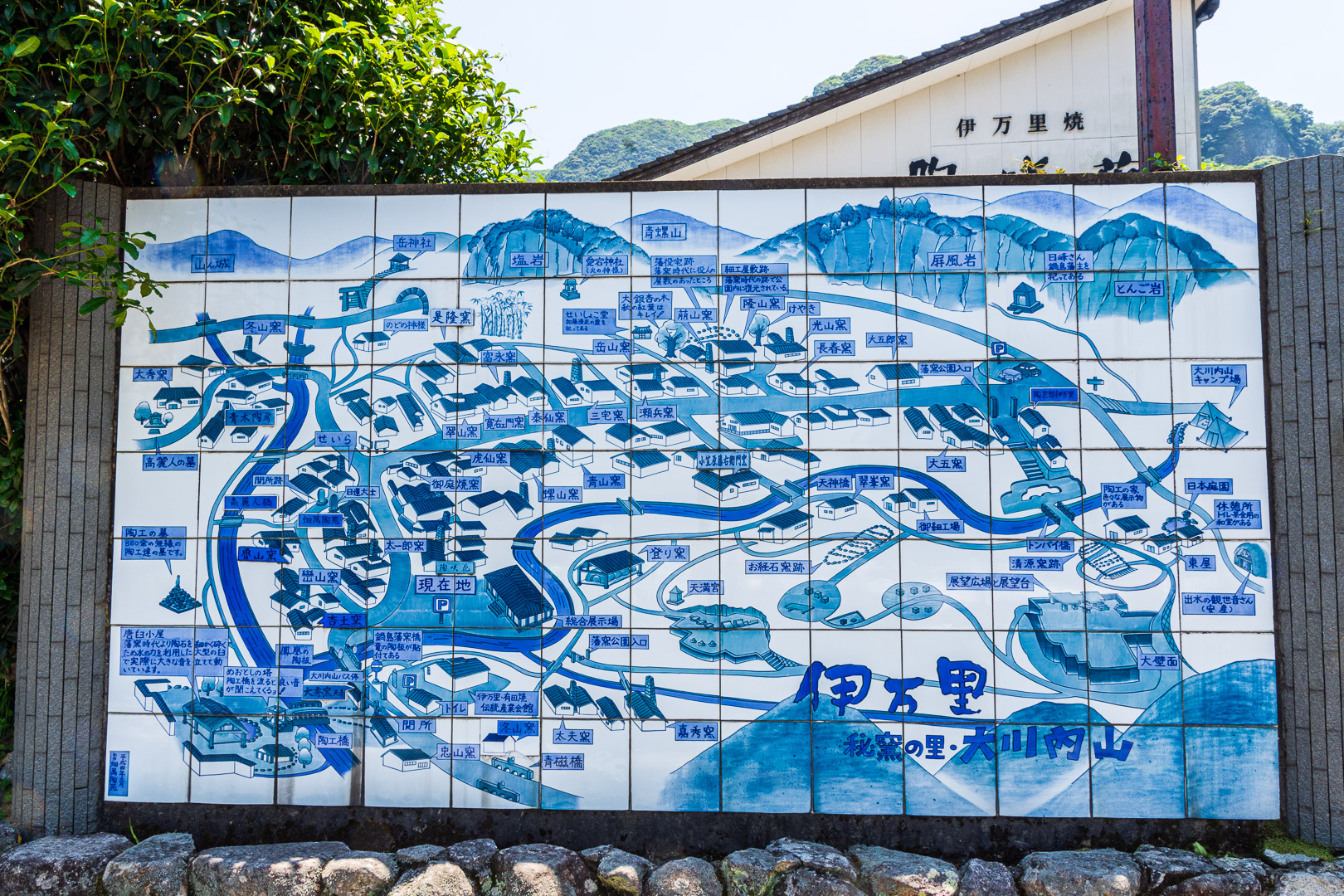
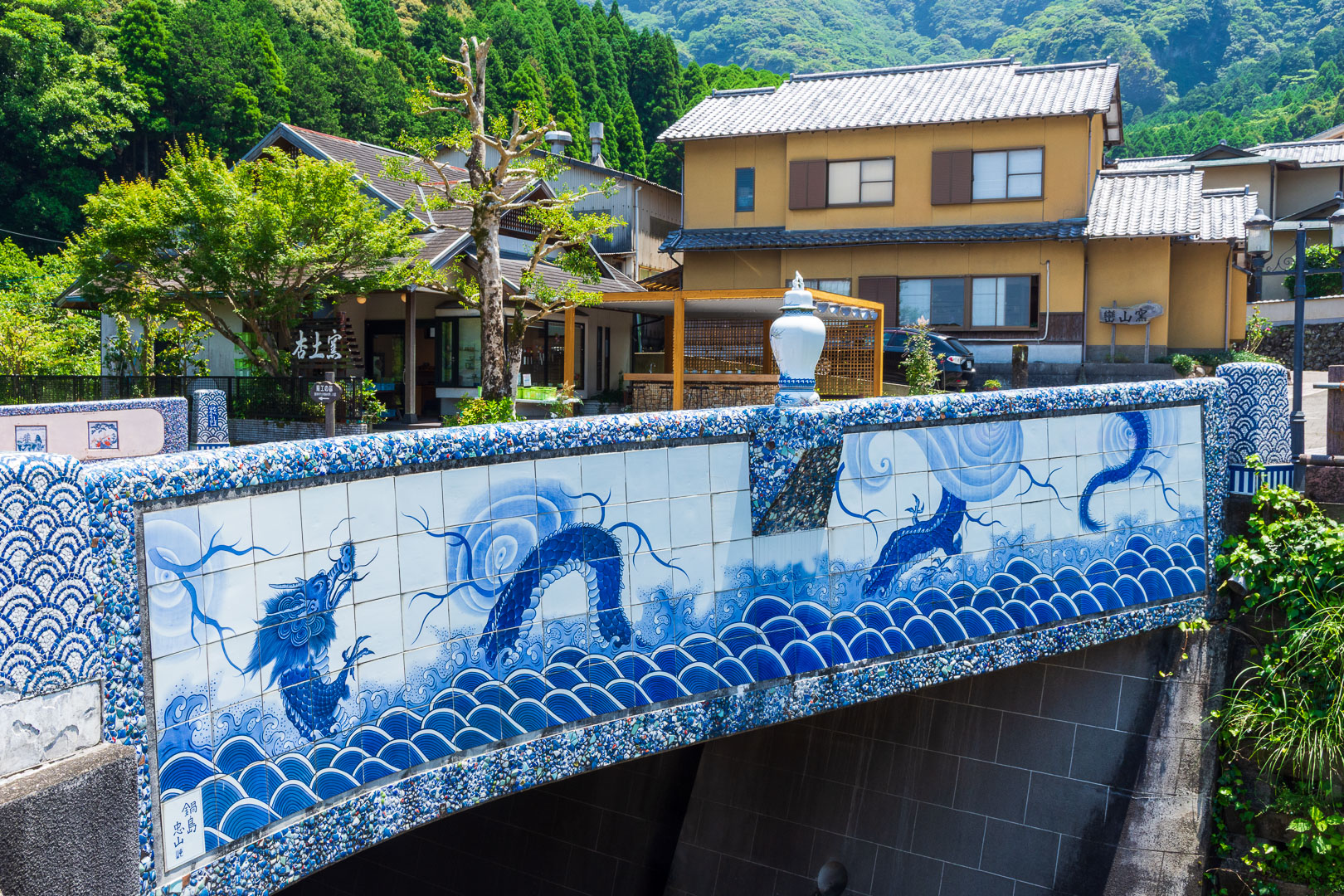
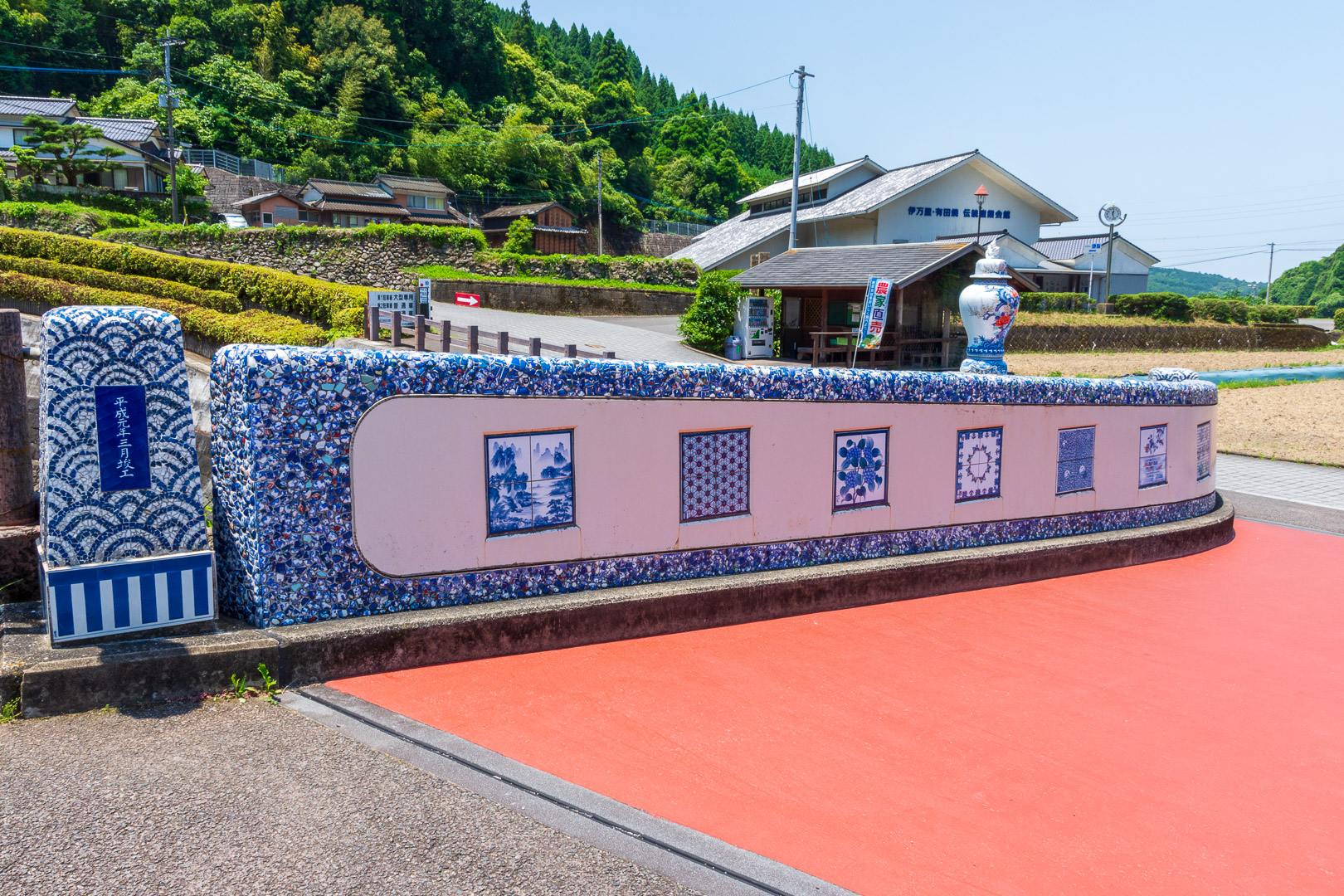
I took my time moving from one to the next because each had different pieces on display. There were many beautiful things, but I held back from buying anything. From 1675 to 1871, this was the Nabeshima domain’s protected official kiln village, where highly skilled potters made porcelain for the shogunate and other feudal lords rather than the ordinary market. The distinctive Nabeshima style was still everywhere.
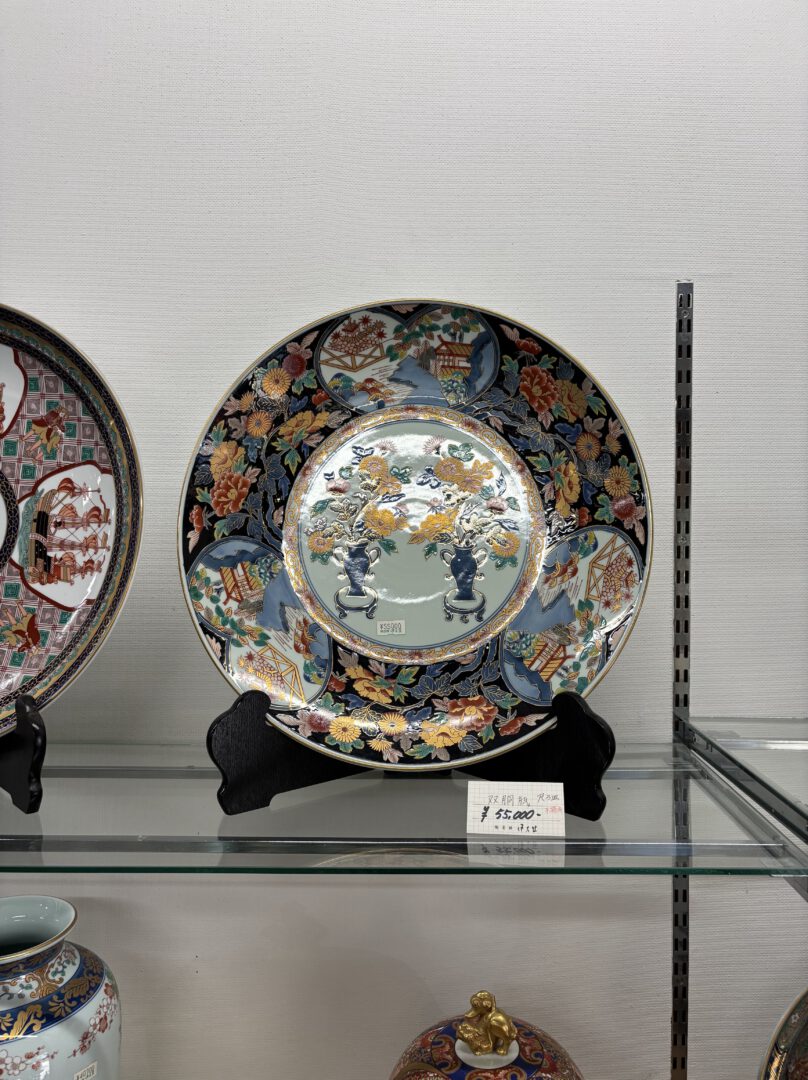
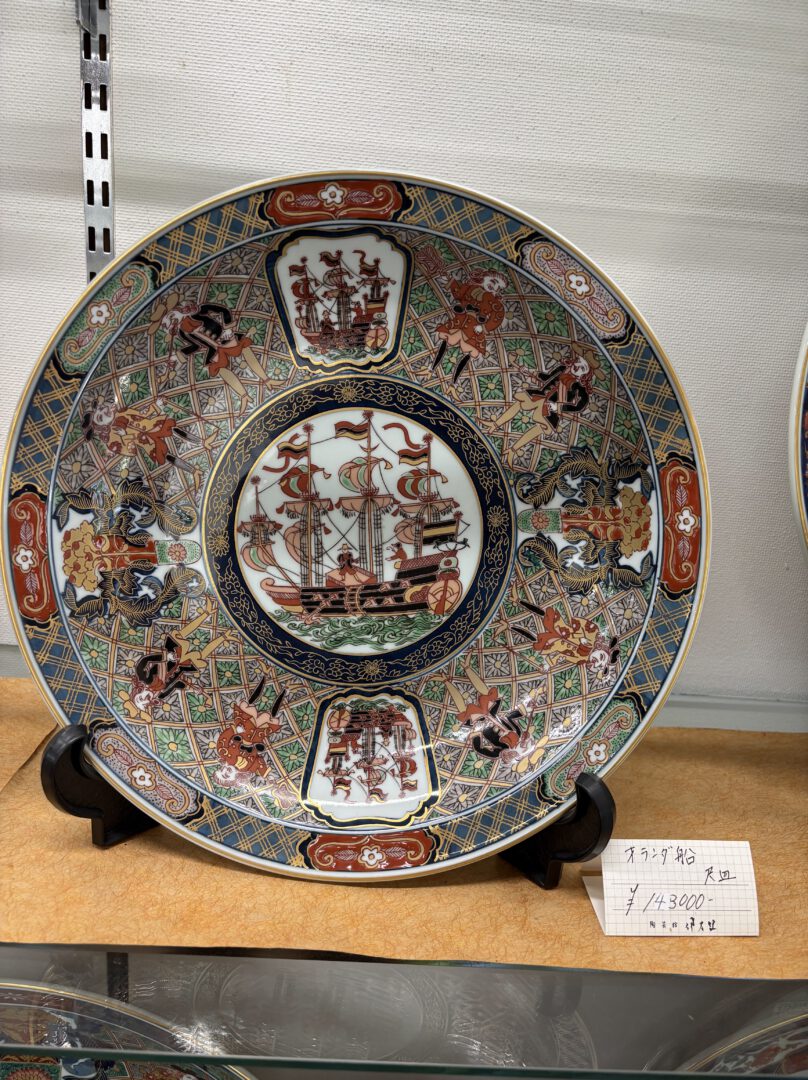
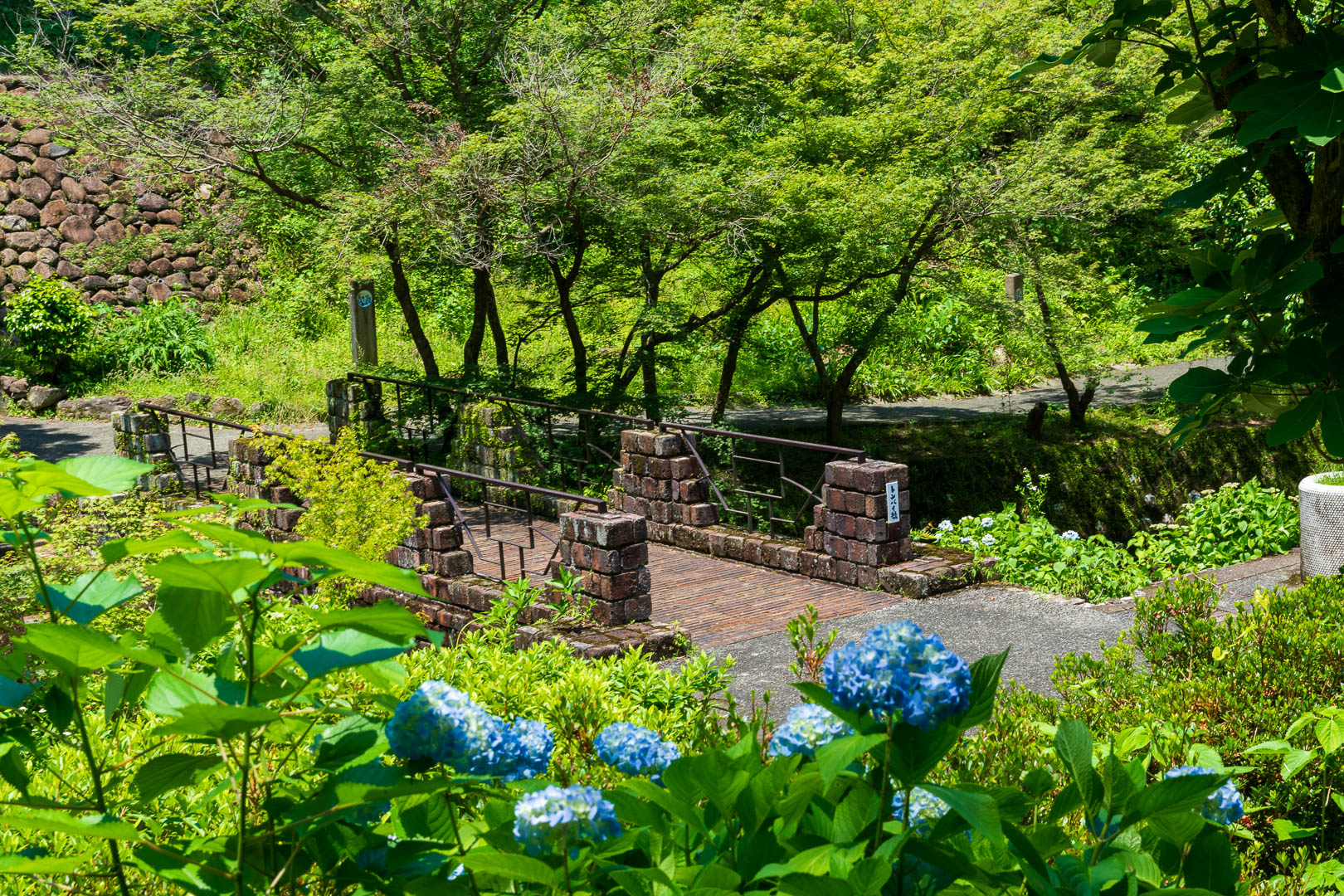
At the end of the street, Nabeshima Hanyo Park led through a small forest to a viewpoint.
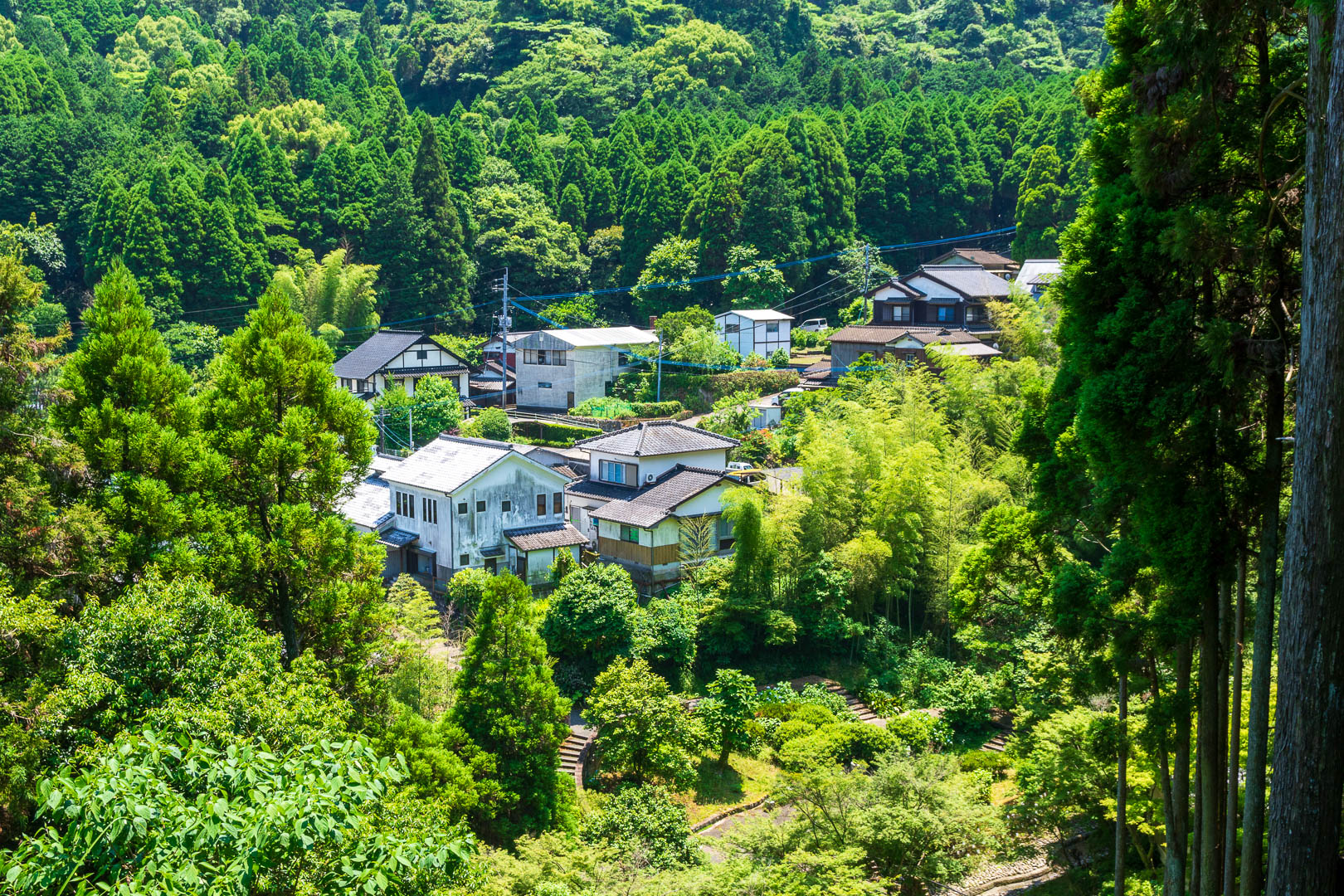
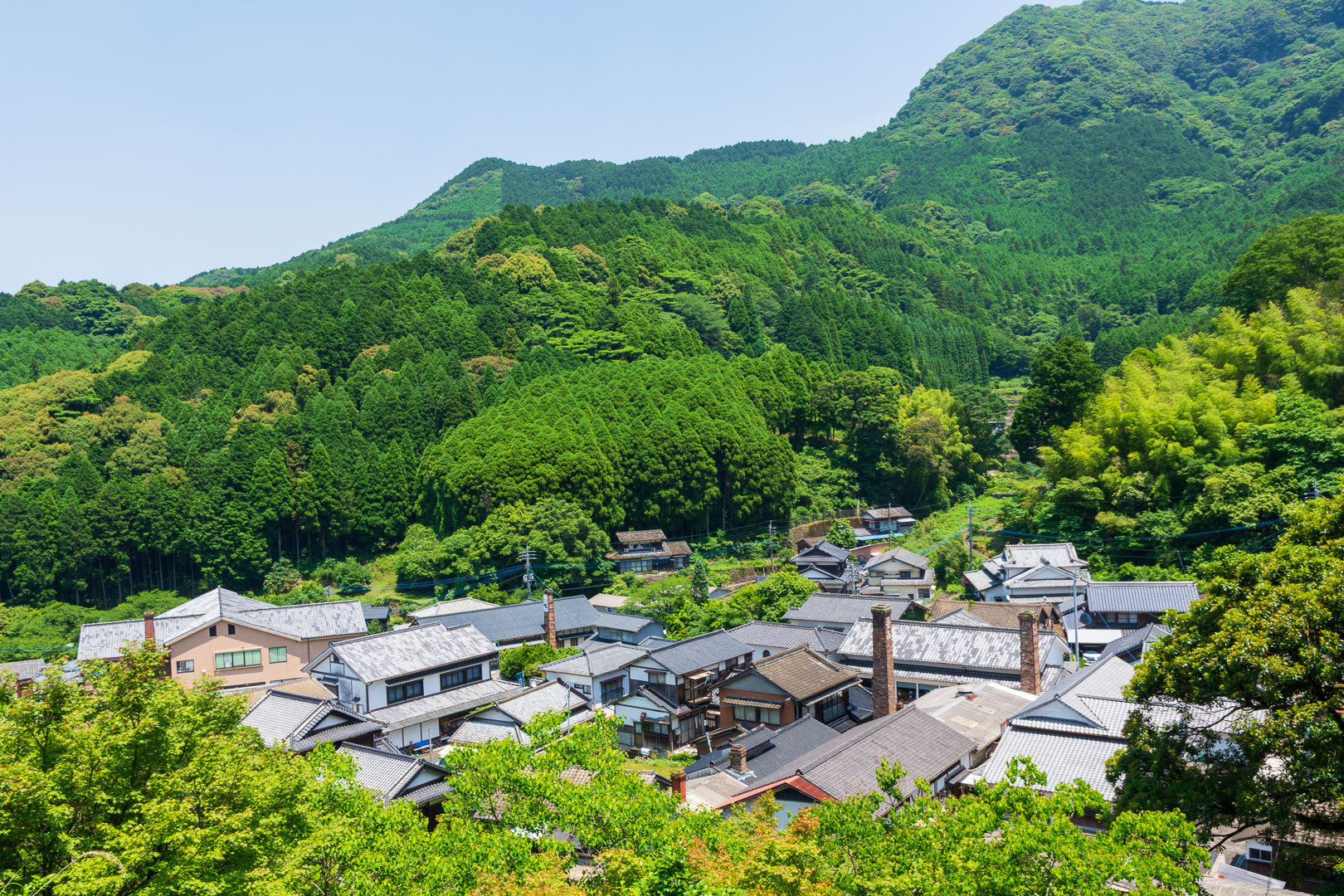
Back in the village, I watched the shop owners and wondered whether there would be people to succeed them. Still, the number of active workshops and the range of work I had seen gave me reason to hope that the tradition would continue.
Lunch at Drive-In Tori
By the time I finished Okawachiyama, it was long past noon and I was hungry. I had not found anywhere to eat in the village, and the place I had navigated to in Imari with Google Maps turned out to be closed. I drove north toward my next destination hoping to find something—anything—along the way, even if it was only a roadside convenience store. Then an oversized, anthropomorphized chicken mascot flashed past, and I knew I was saved. I had happened to stumble across the famous Drive-In Tori Imari (ドライブイン鳥 伊万里店). If you know, you know.
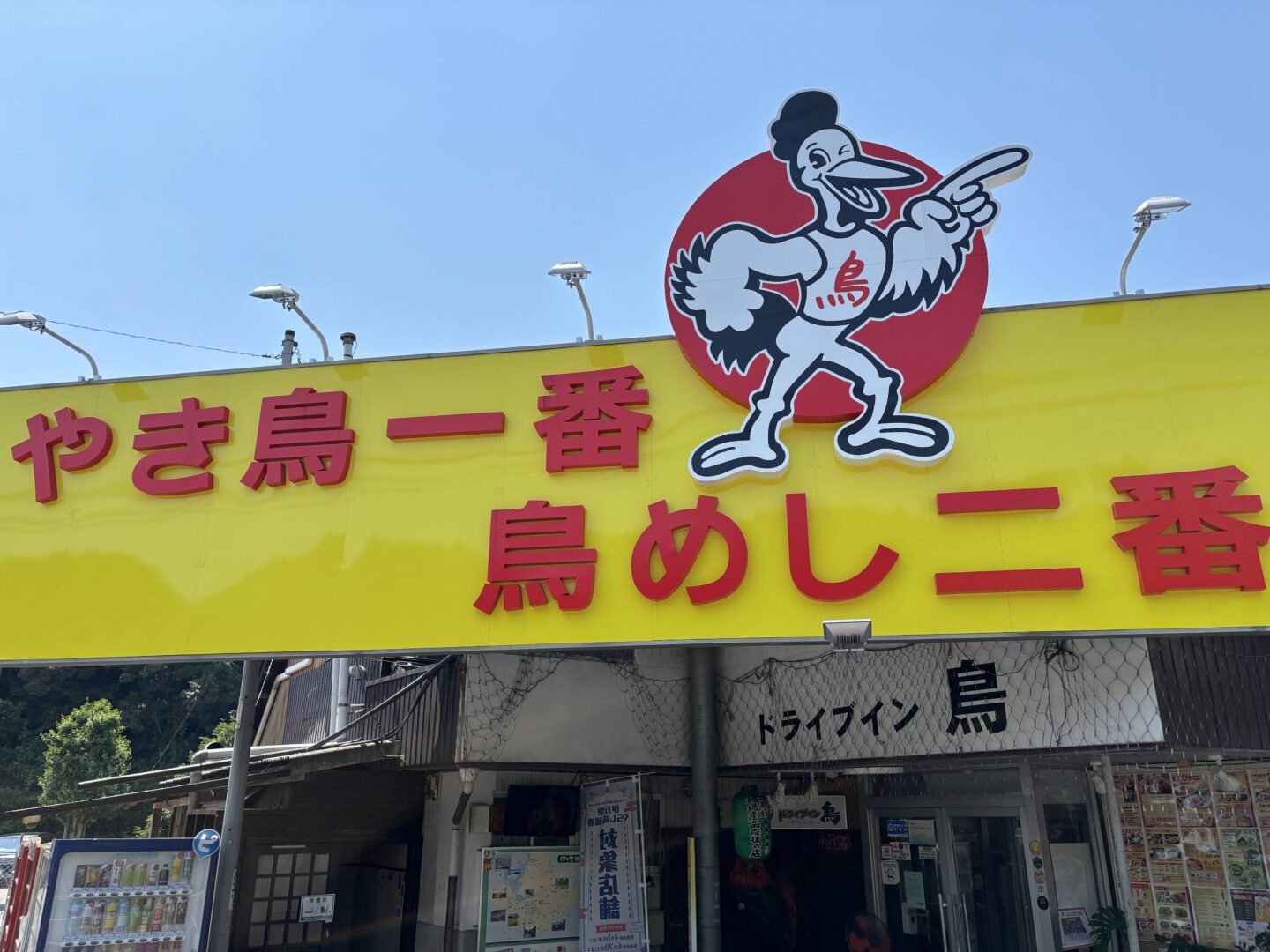
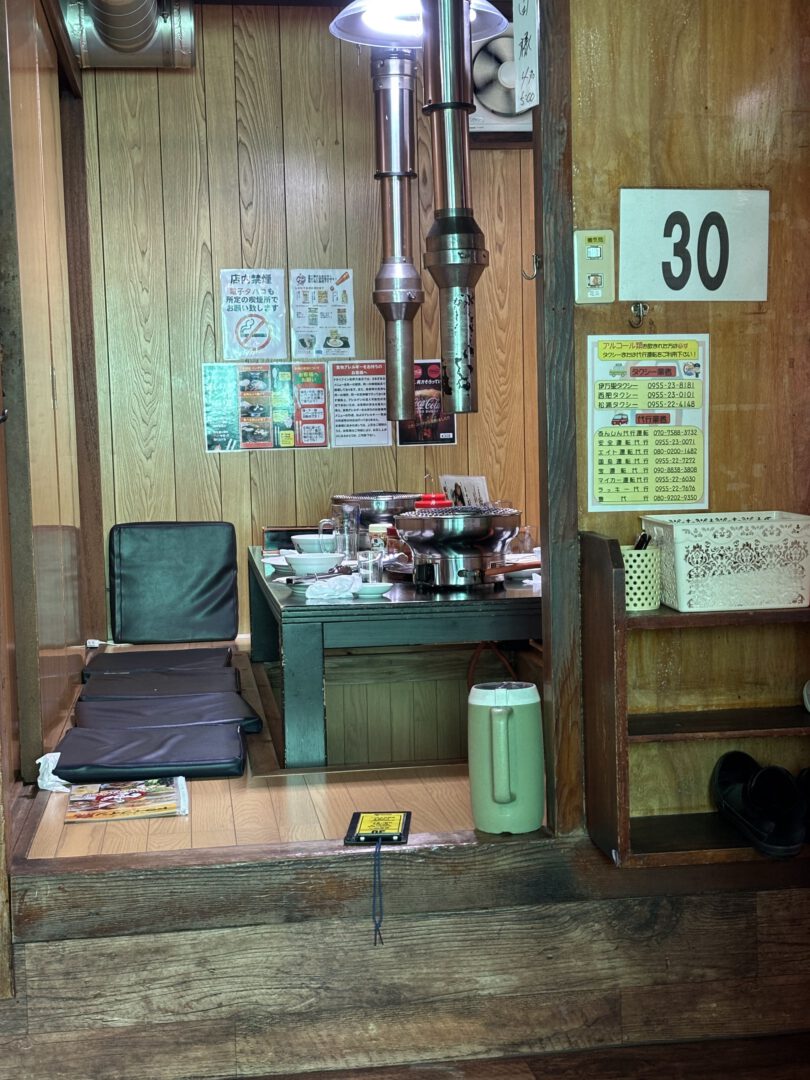
The lobby doubled as a waiting room, where I drew a ticket and waited to be called. Even at that late hour, the place was popular, and I waited around half an hour.
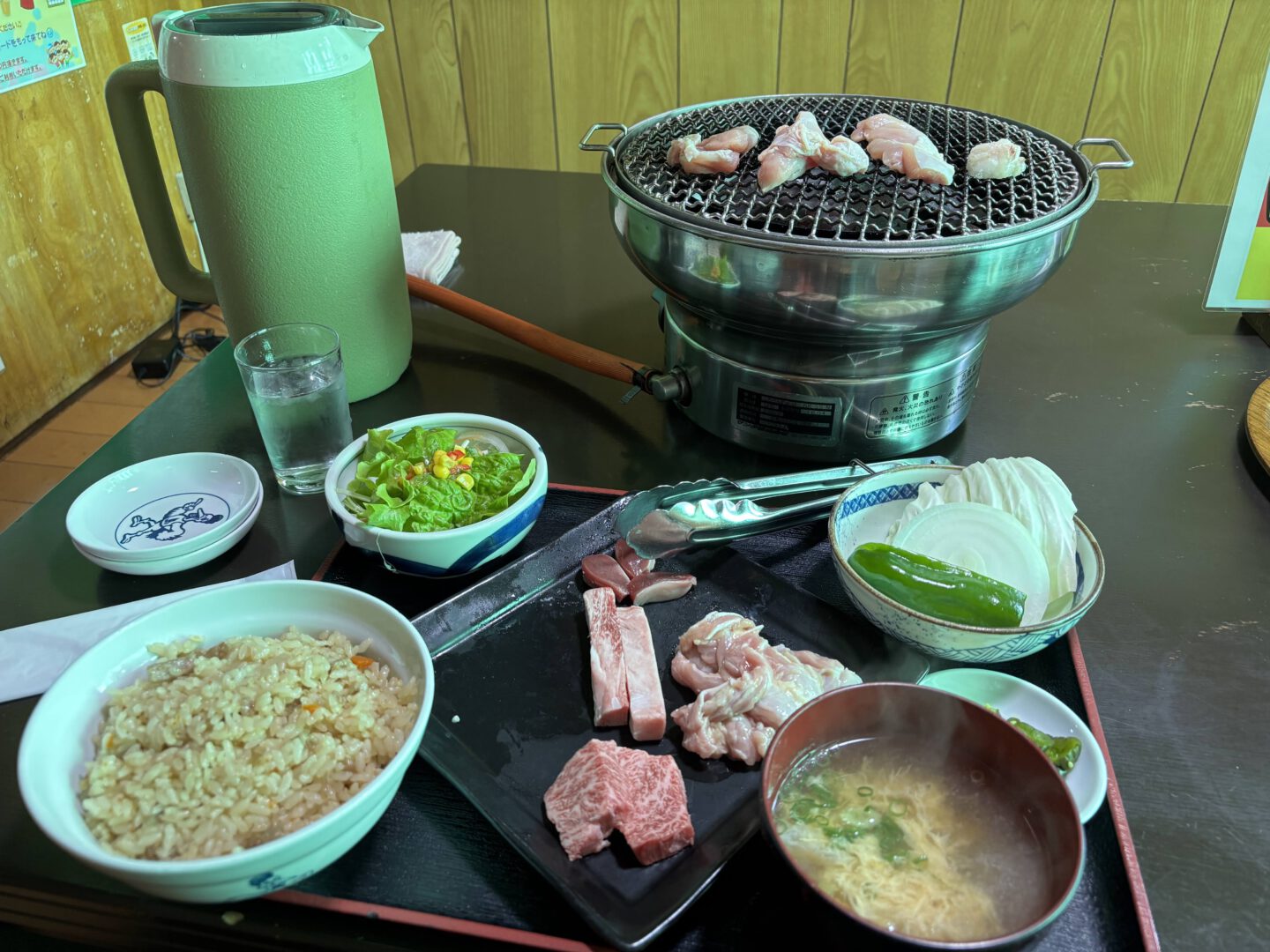
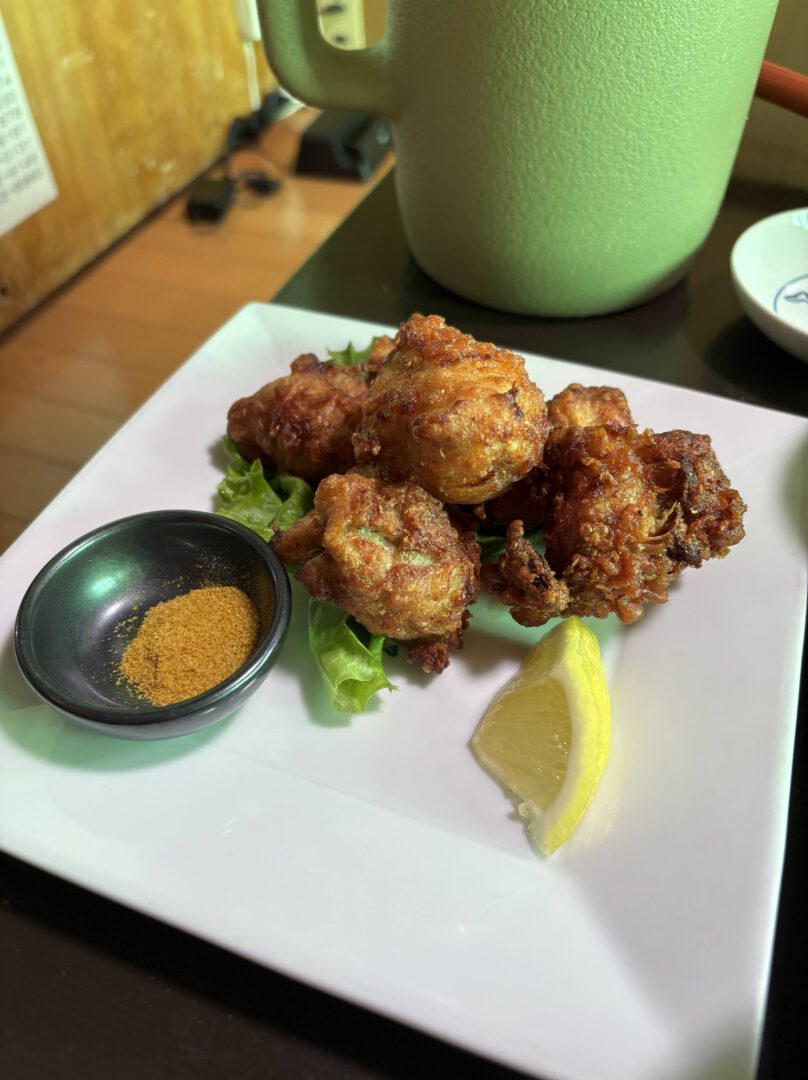
This was different from the yakitori places I knew. I could grill the meat myself over a shichirin, a small charcoal brazier, more like at a yakiniku restaurant. The lunch set included chicken neck (seseri), young chicken thigh (momo), chicken kidney (segimo), salad, soup with egg and chicken, and chicken fried rice. I also ordered karaage, which was out of this world. My eyes had been bigger than my stomach, but the energy was exactly what I needed to continue the day. I packed some chicken fried rice to eat for dinner later.
Into the Nanatsugama Sea Caves
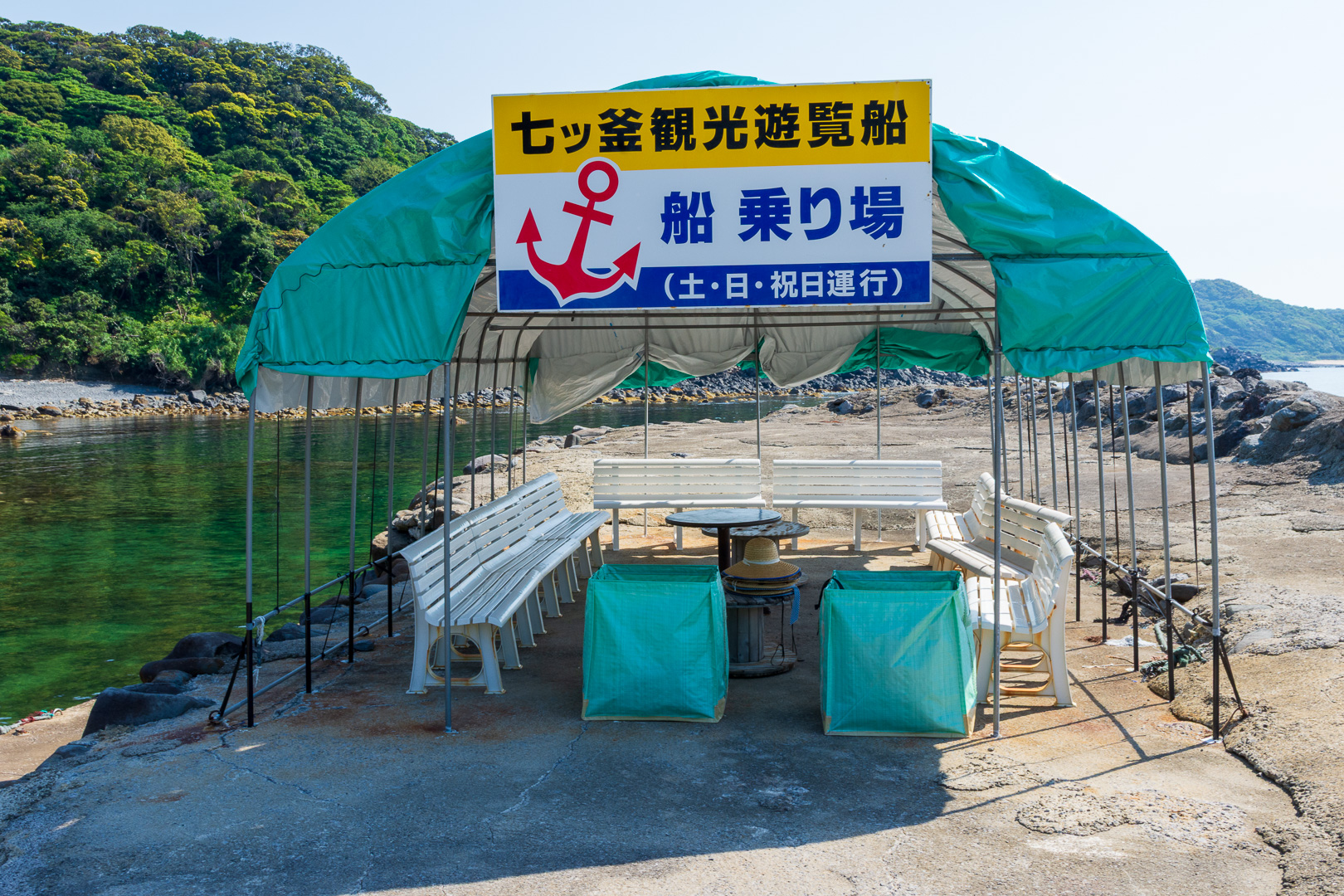
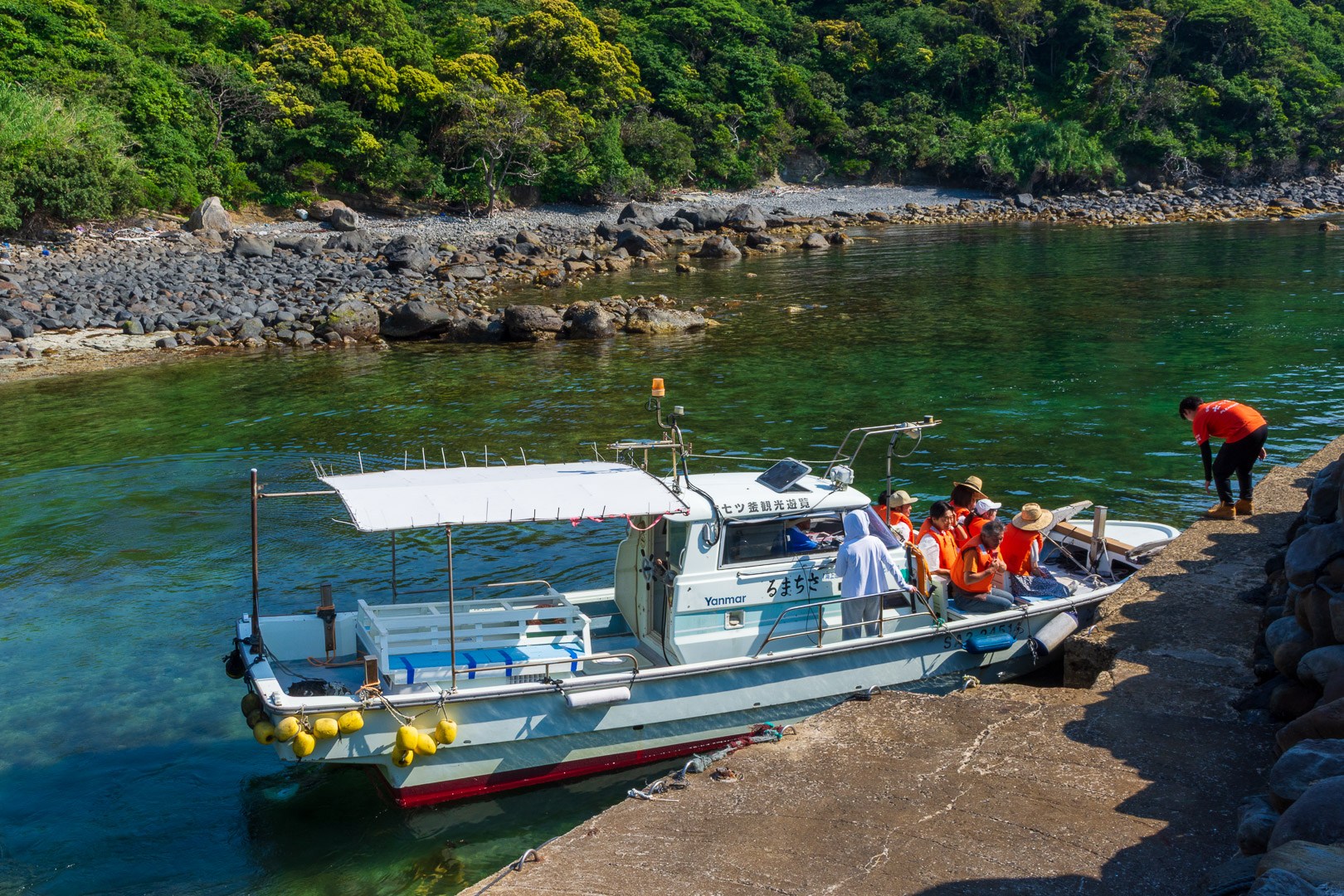
I had initially planned to continue straight to Karatsu, but while checking the route, I discovered boat trips to the Nanatsugama sea caves and decided to make a coastal detour. There was a larger, more commercial boat from Marinepal Yobuko in Yobuko and a much smaller operation departing near Nanatsugama. Its online presence seemed to be little more than a Facebook page. Of course, I wanted to try the latter. It was run by the Yakatashi Fishery Cooperative’s youth division from a pier below the Nanatsugama Park parking area, using small fishing boats rather than a conventional sightseeing vessel. It operated only on weekends and in good weather when I visited: Facebook; map.
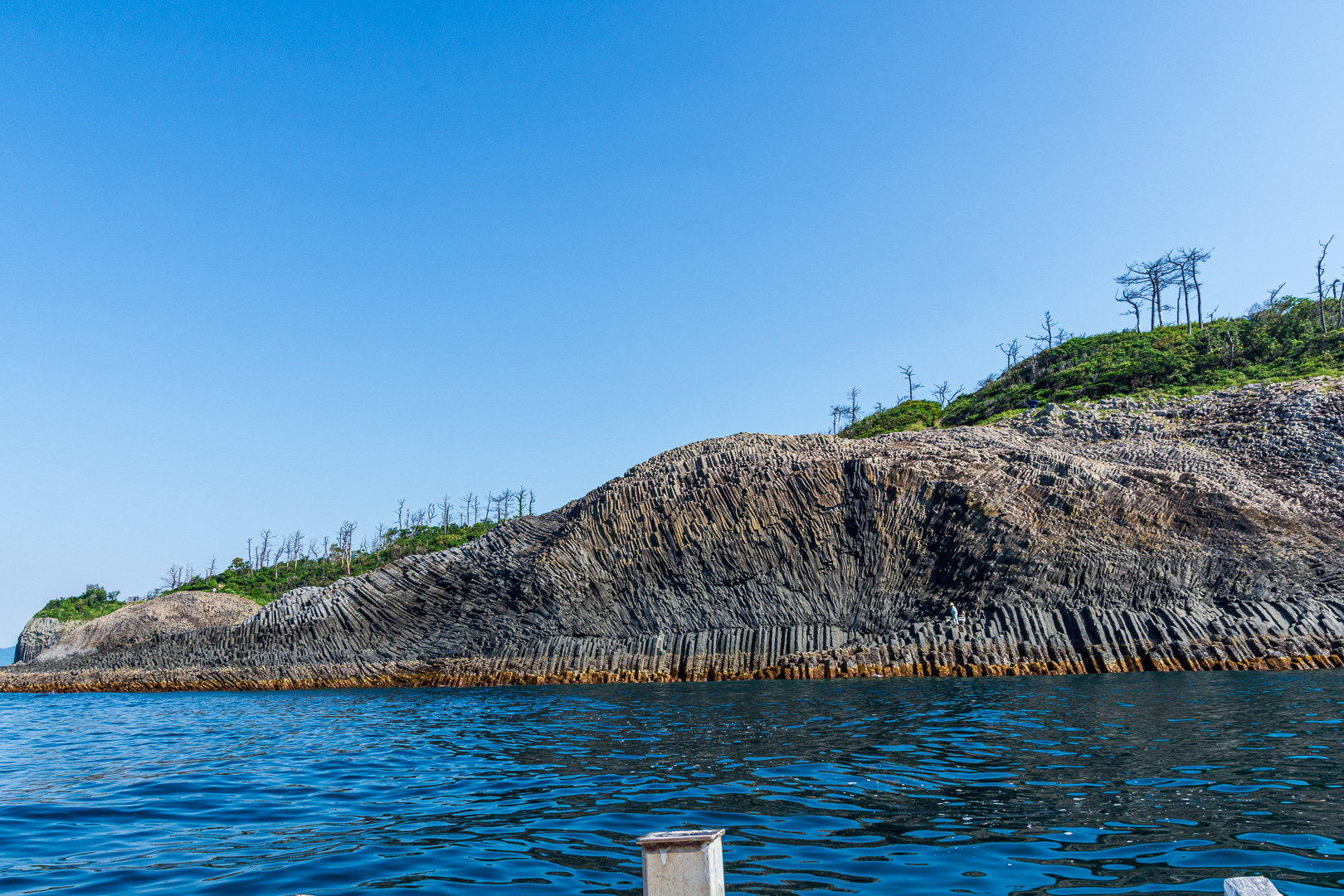
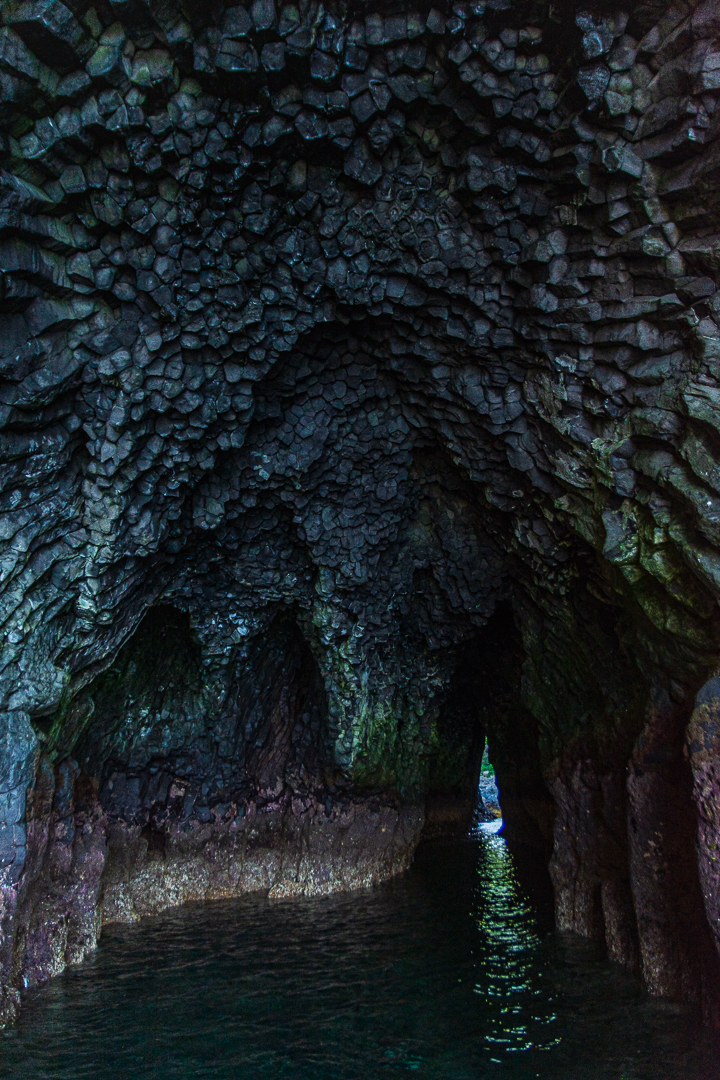
Nanatsugama is a row of seven sea caves in black basalt, cut into the coast by waves from the Genkai Sea. The regular, column-like pattern in the rock came from cooling lava. The largest cave has an entrance around three meters wide and extends about 110 meters into the cliff.
I arrived with two other people, but the operator wanted five passengers before leaving. After 15 minutes, they let us go anyway. It turned out to be the last ride of the day.
The trip felt much less commercial than other boat tours. The boat was smaller and had no fixed timetable. A high-school girl gave the announcements, and perhaps her father steered the motorboat. At speed, the cooling wind was a relief on the hot early-summer day. We passed the Lying Elephant rock formation, while a few fishermen stood at the edge of the rocks.
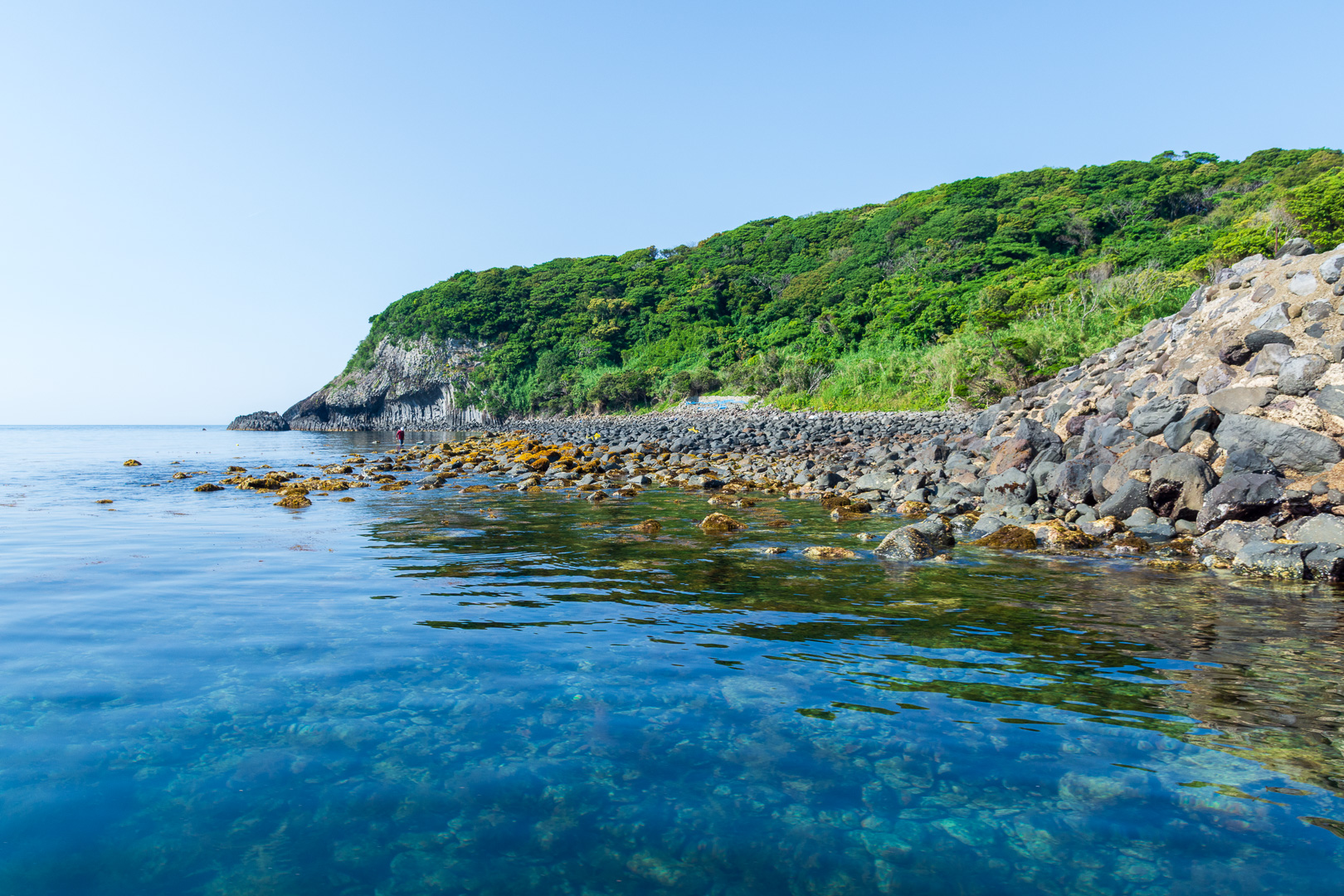
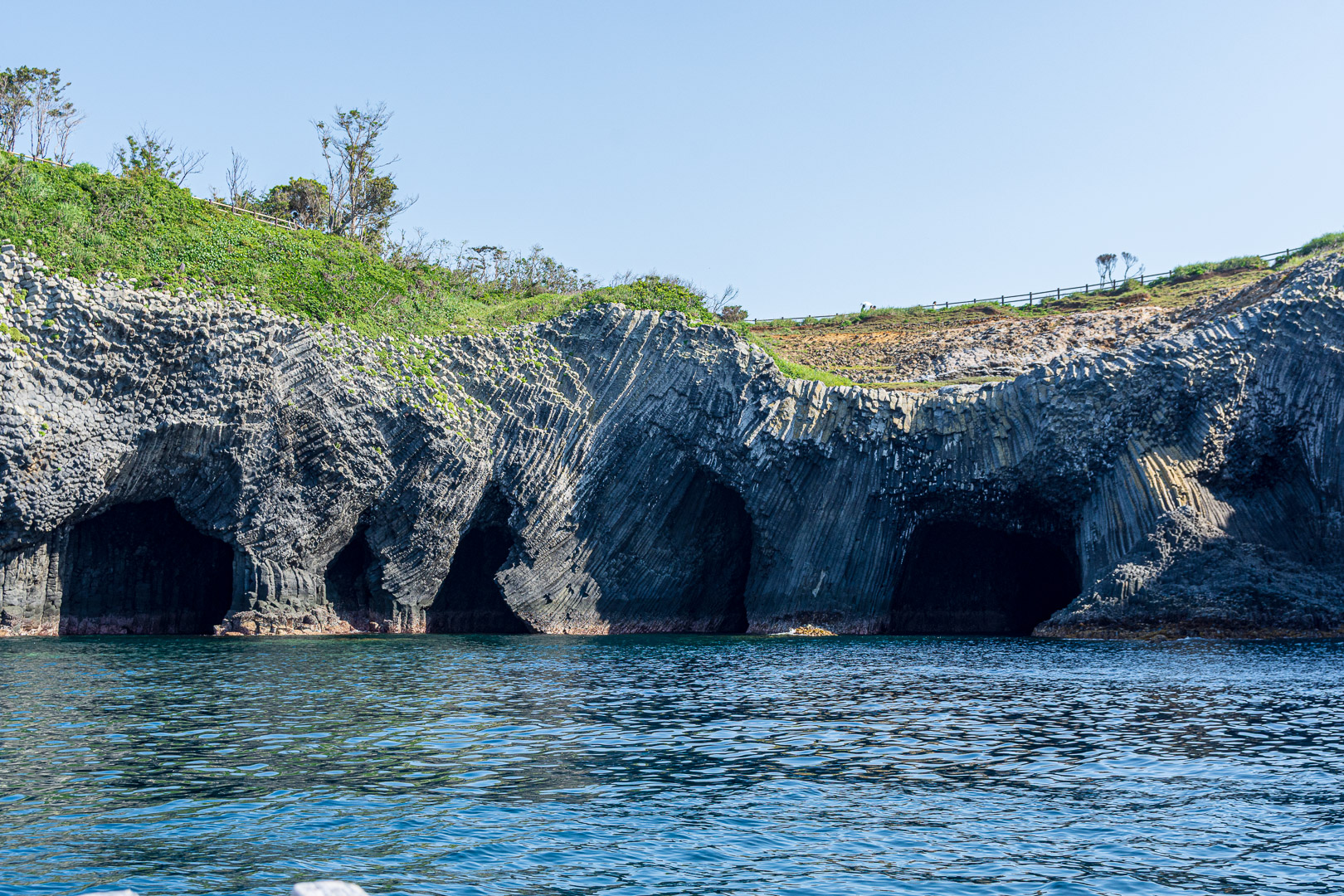
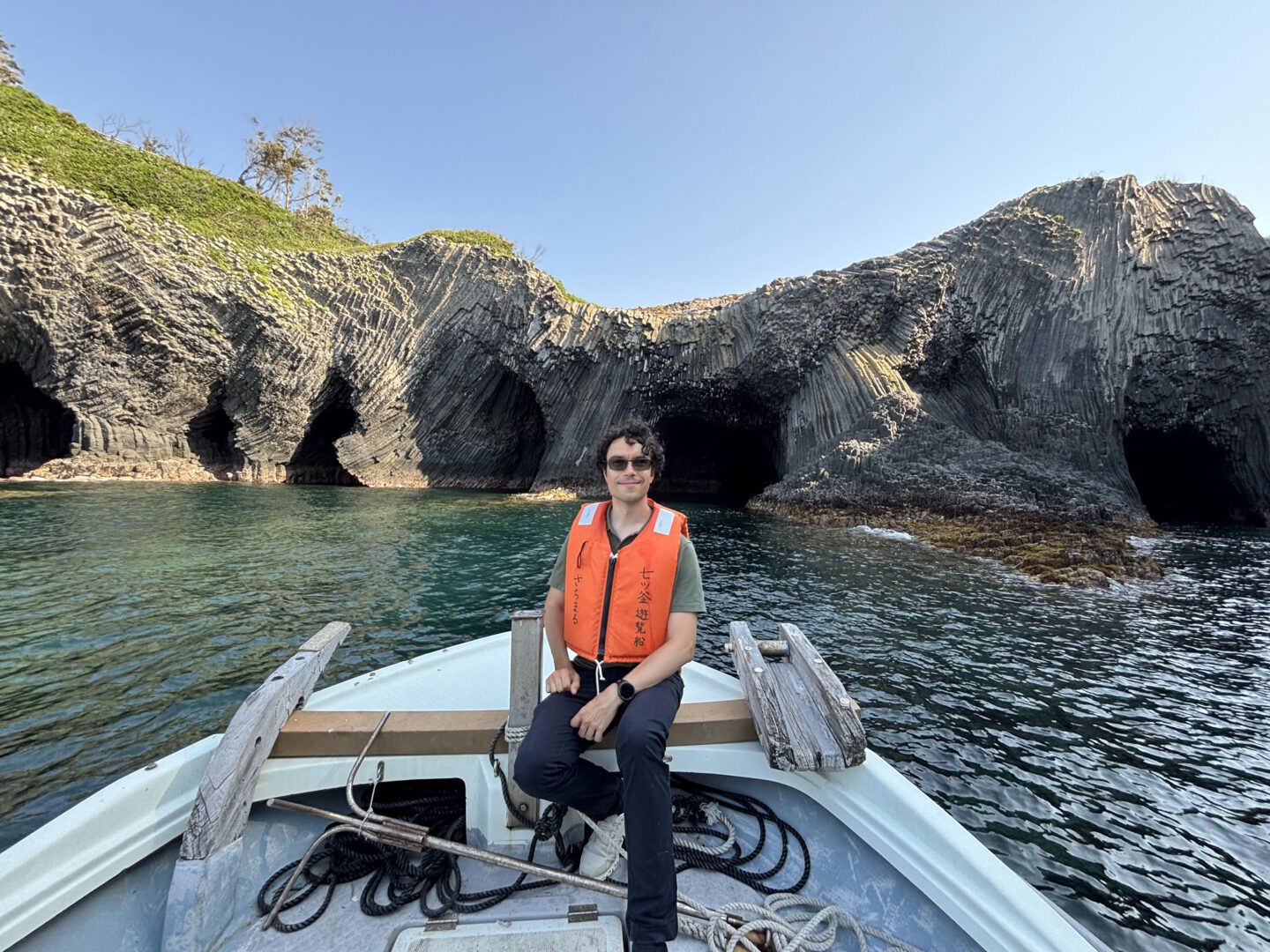
The small boat was the real advantage. It was easy to maneuver and shallow enough to enter the caves. The basalt walls closed around us, and water dripped from the ceiling above.
Above Karatsu Bay
Karatsu was about half an hour away. On the way through the countryside, I passed a rice field where a farmer was watching a controlled burn, with a large cloud of smoke hanging over it. As I drove through, the smell reminded me a little of tea.
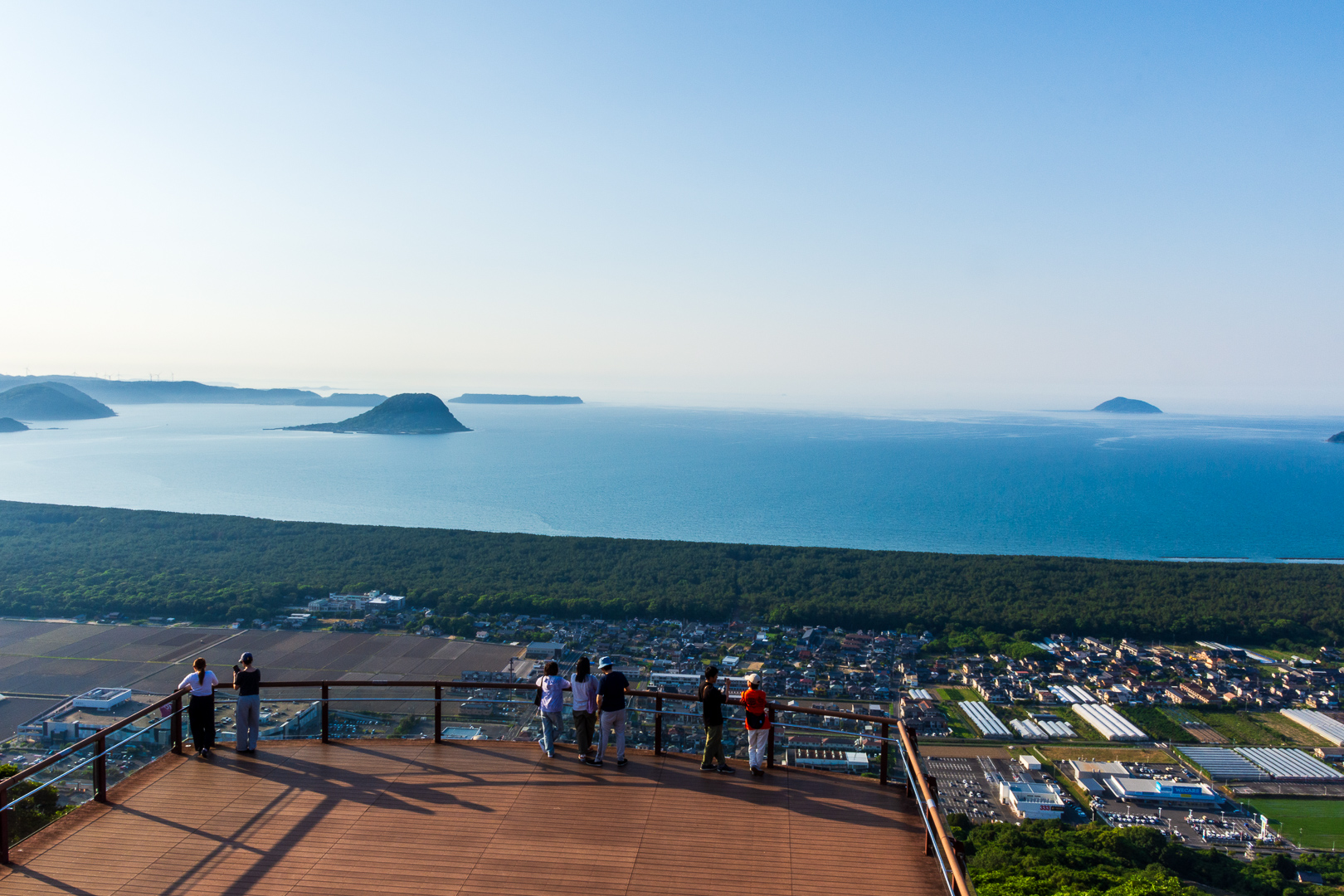
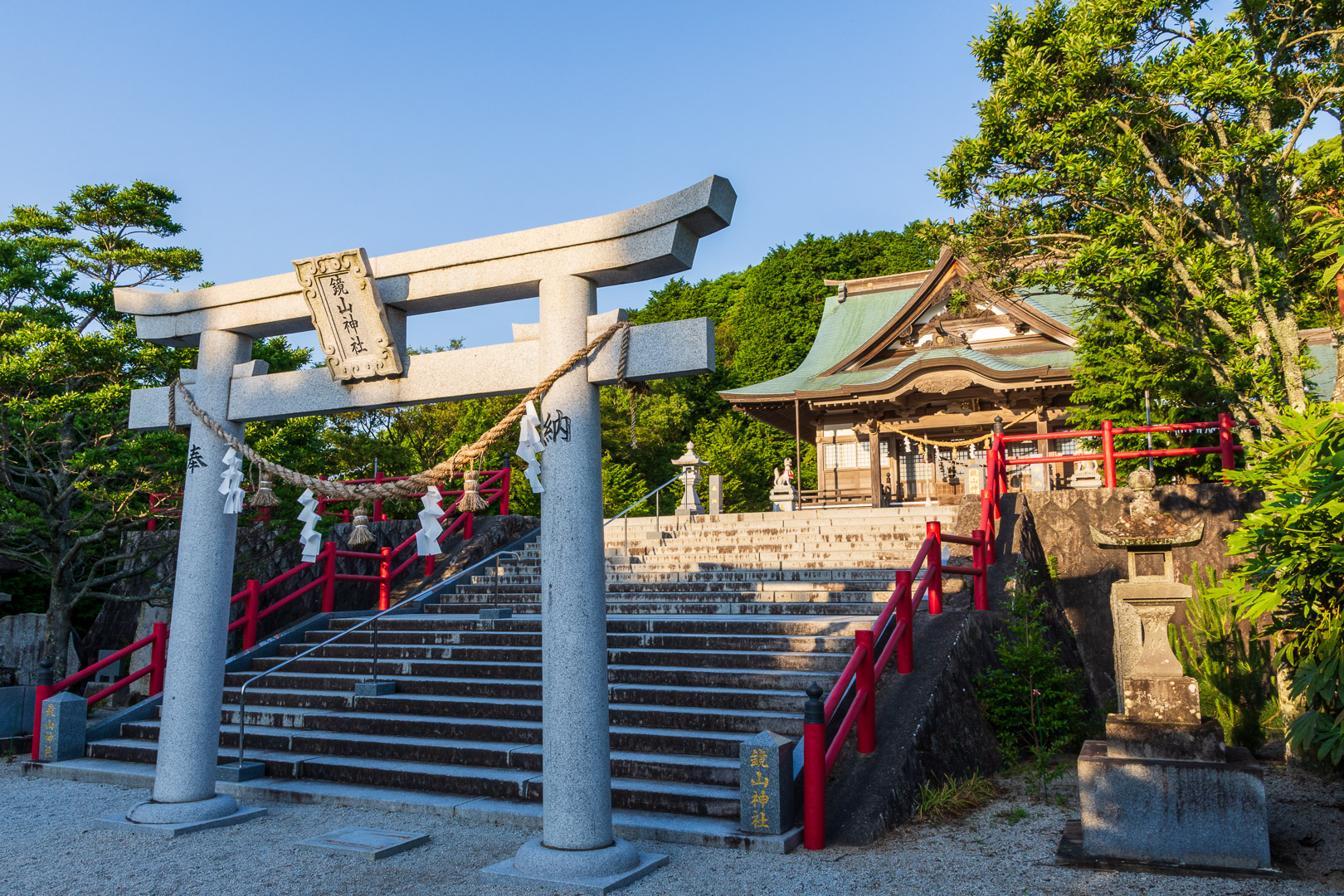
Rather than going into Karatsu itself, I drove up Kagamiyama. A winding four-kilometer road climbed to its 284-meter summit. The mountain is known for cherry blossoms and azaleas; in spring, the road becomes a tunnel of cherry blossoms.
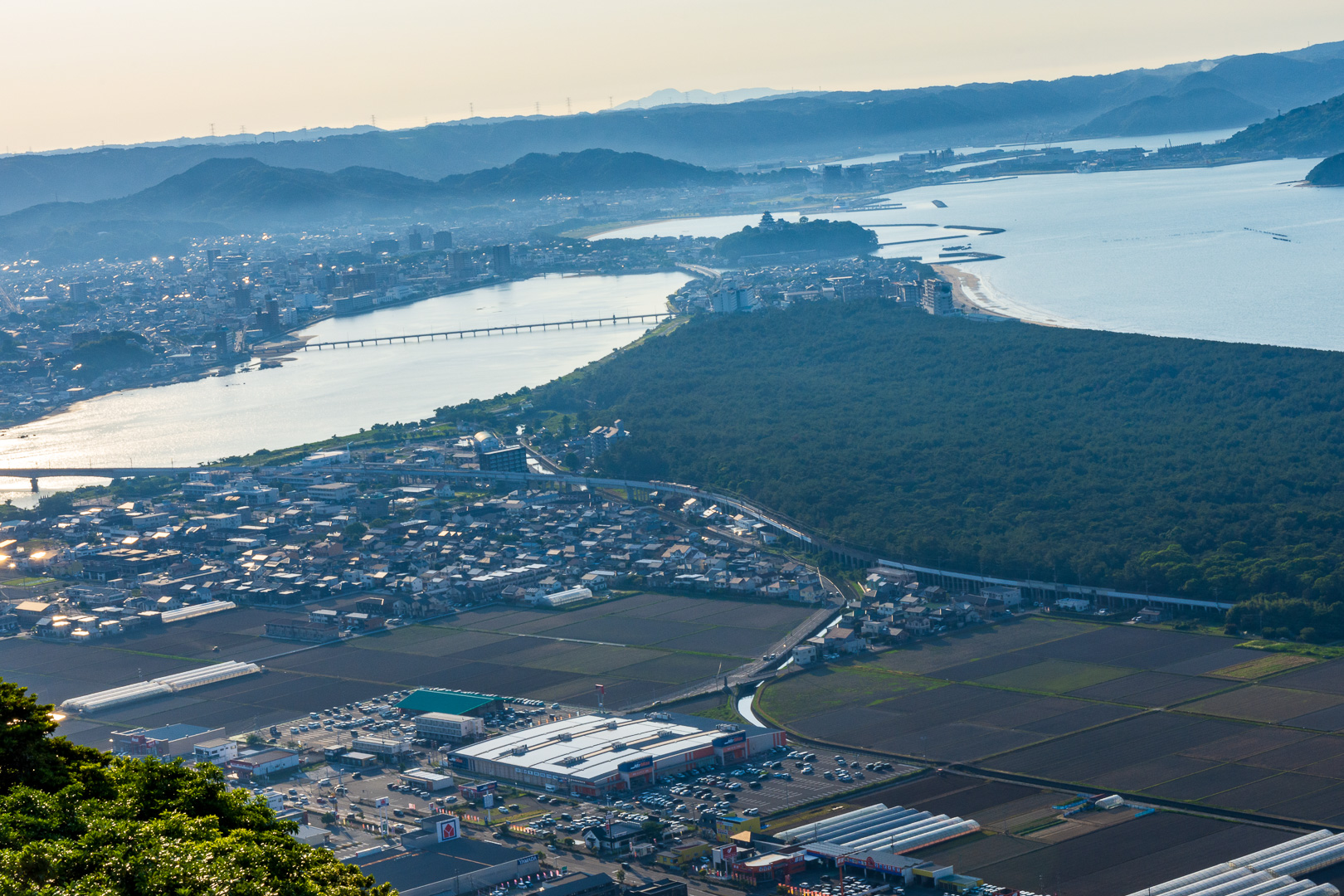
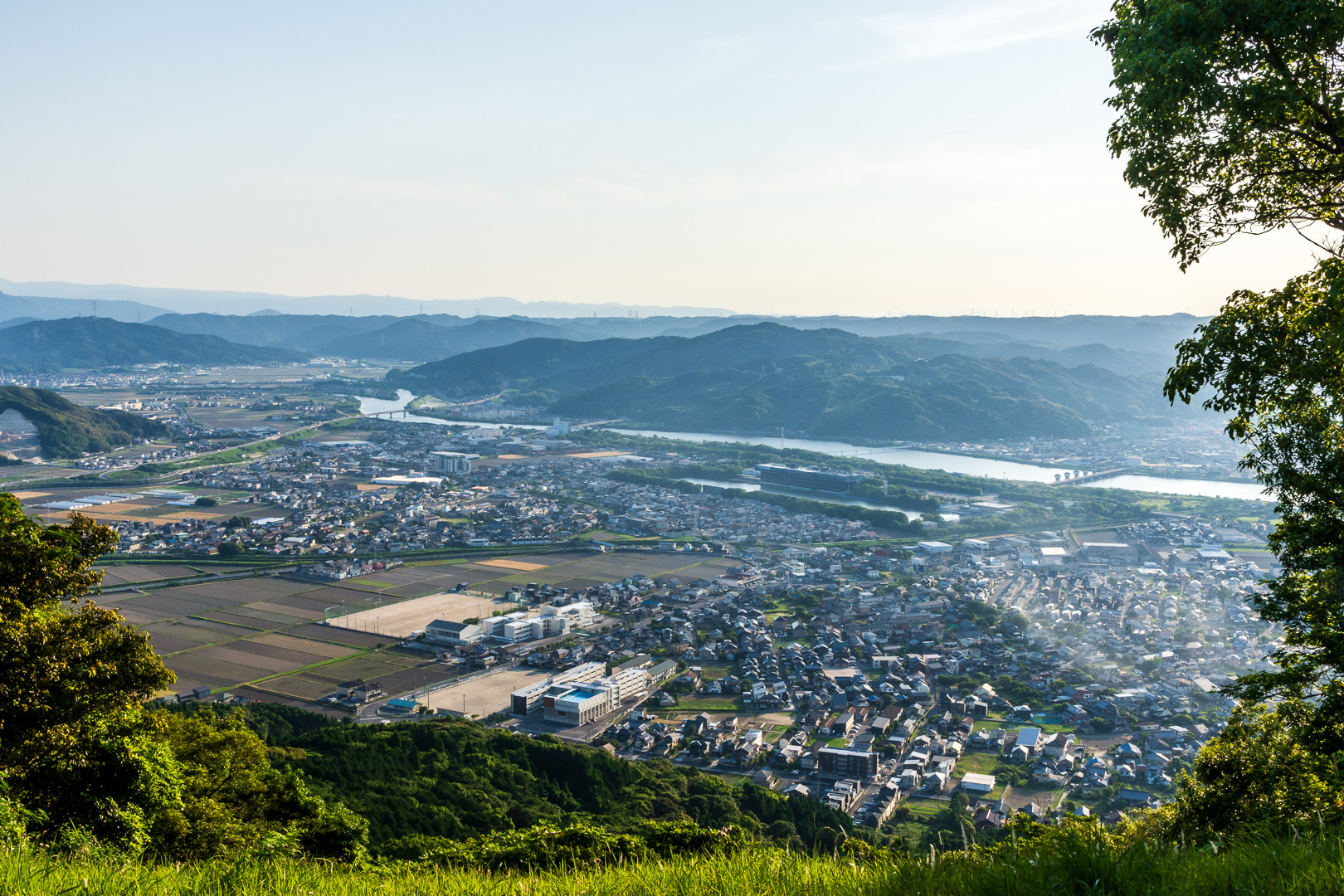
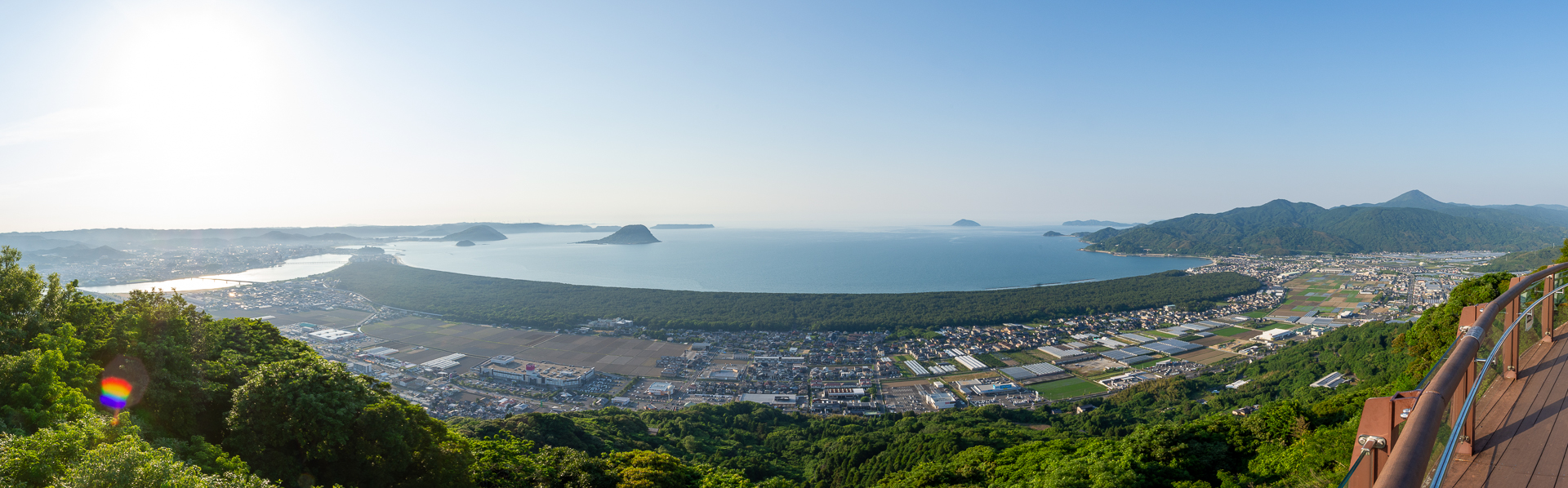
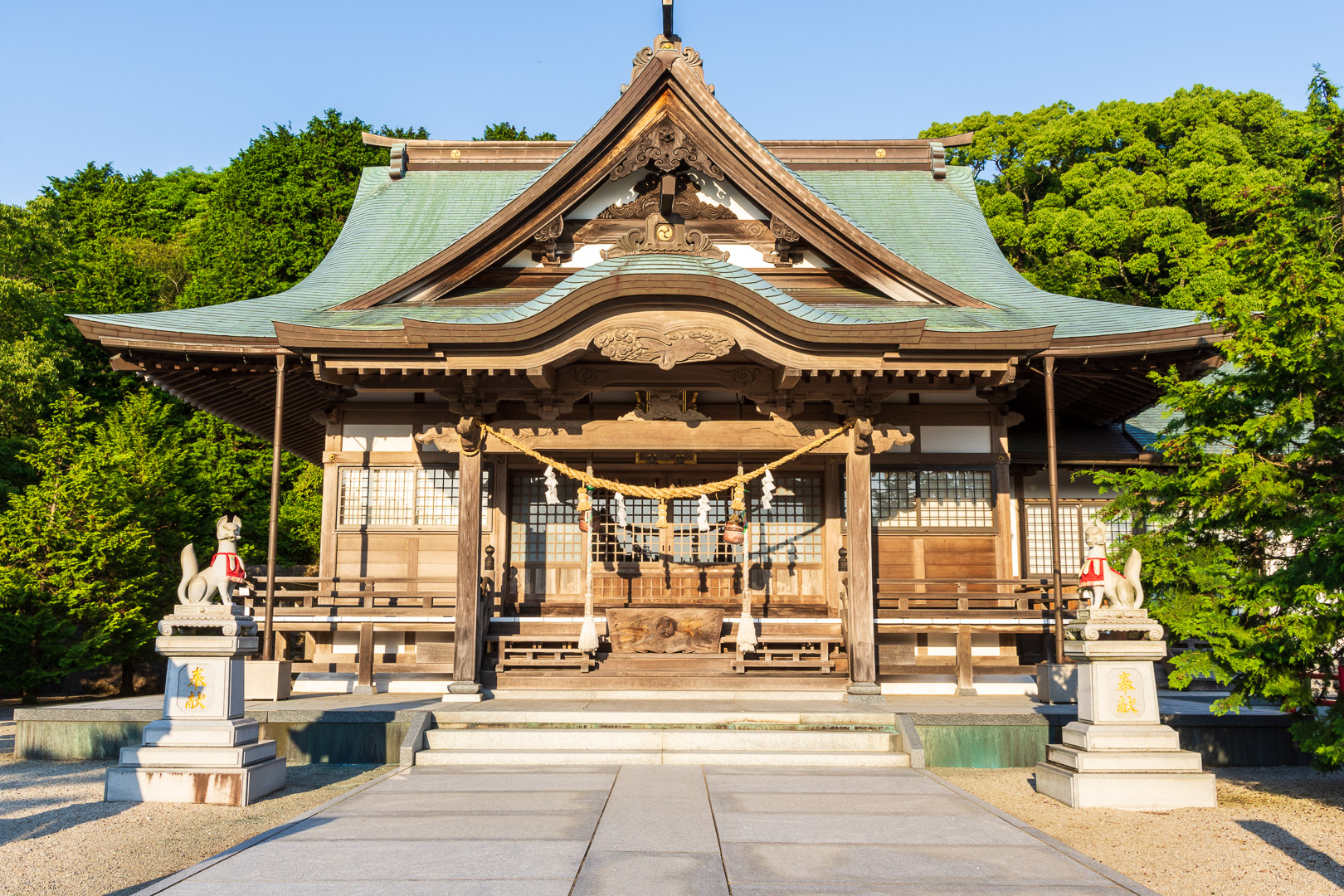
From the summit, a short walk on the park trails led to two observation decks, and I also visited the nearby shrine. In the warm afternoon sun, Karatsu Bay, the 4.5-kilometer Niji no Matsubara pine grove, and the surrounding area spread out below me. Earlier in planning, I had considered staying overnight in Karatsu near the forest. I never did, but seeing it stretch below the mountain made that earlier idea feel understandable. I also had to skip Karatsu Castle; there was simply not enough time left in the day.
The grove was planted around 400 years ago to protect new fields from wind, blown sand, and coastal flooding. It was once called Niri no Matsubara, the Two-ri Pine Grove, for an earlier length of around eight kilometers. Later, its arc of green pines, white sand, and blue sea was compared to a rainbow, giving it the name Niji no Matsubara.
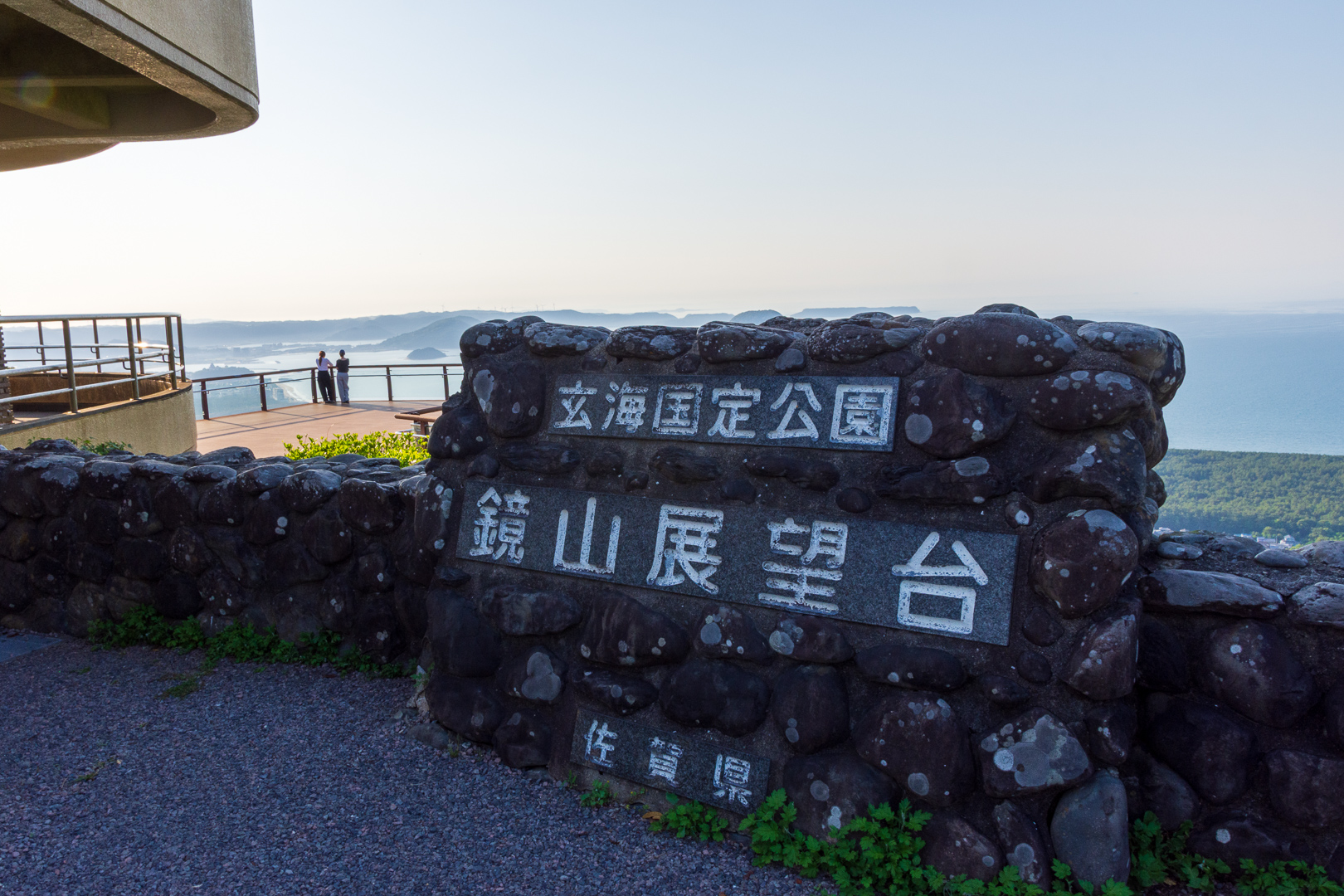
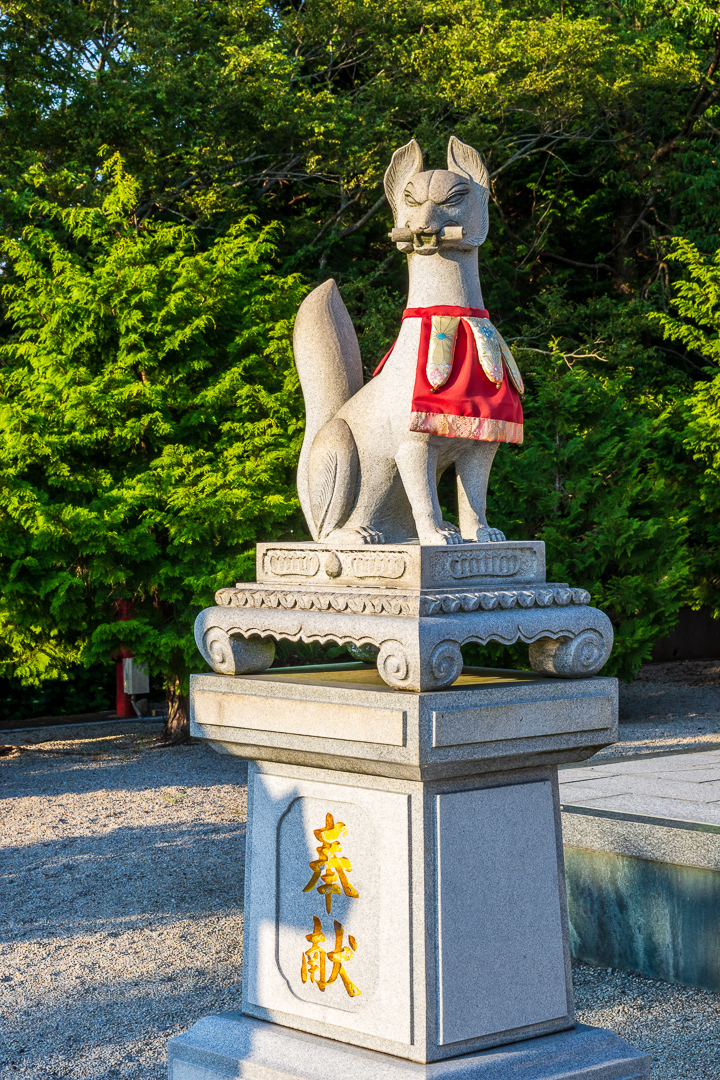
On the way back I discovered Kagamiyama Shrine, a inari shrine that was lit beautifully in the warm afternoon sun.
An Evening Kiln Visit and Fireflies
I drove back to Takeo and returned the car at the agreed time of 7:30 p.m. At the station, I joined a seasonal evening bus tour.
It was Takeo Tourism Association’s seasonal firefly-viewing bus (ほたる観賞バス), a free tour for guests staying in Takeo. I took the Kuromutayaki course, which combined firefly viewing with an evening visit to the Maruta Nobumasa Kiln. It had to be reserved in advance and ran only during the short firefly season, from late May into early June, so I was lucky to be there. I had found it through a flyer at both the hotel and the station. Despite being publicly offered, it had been surprisingly hard to discover. The association’s reservation site also lists bookable activities throughout the year. During the drive, the guide gave a brief introduction to Rōmon Gate and then to Kuromuta, one of Takeo’s pottery areas.
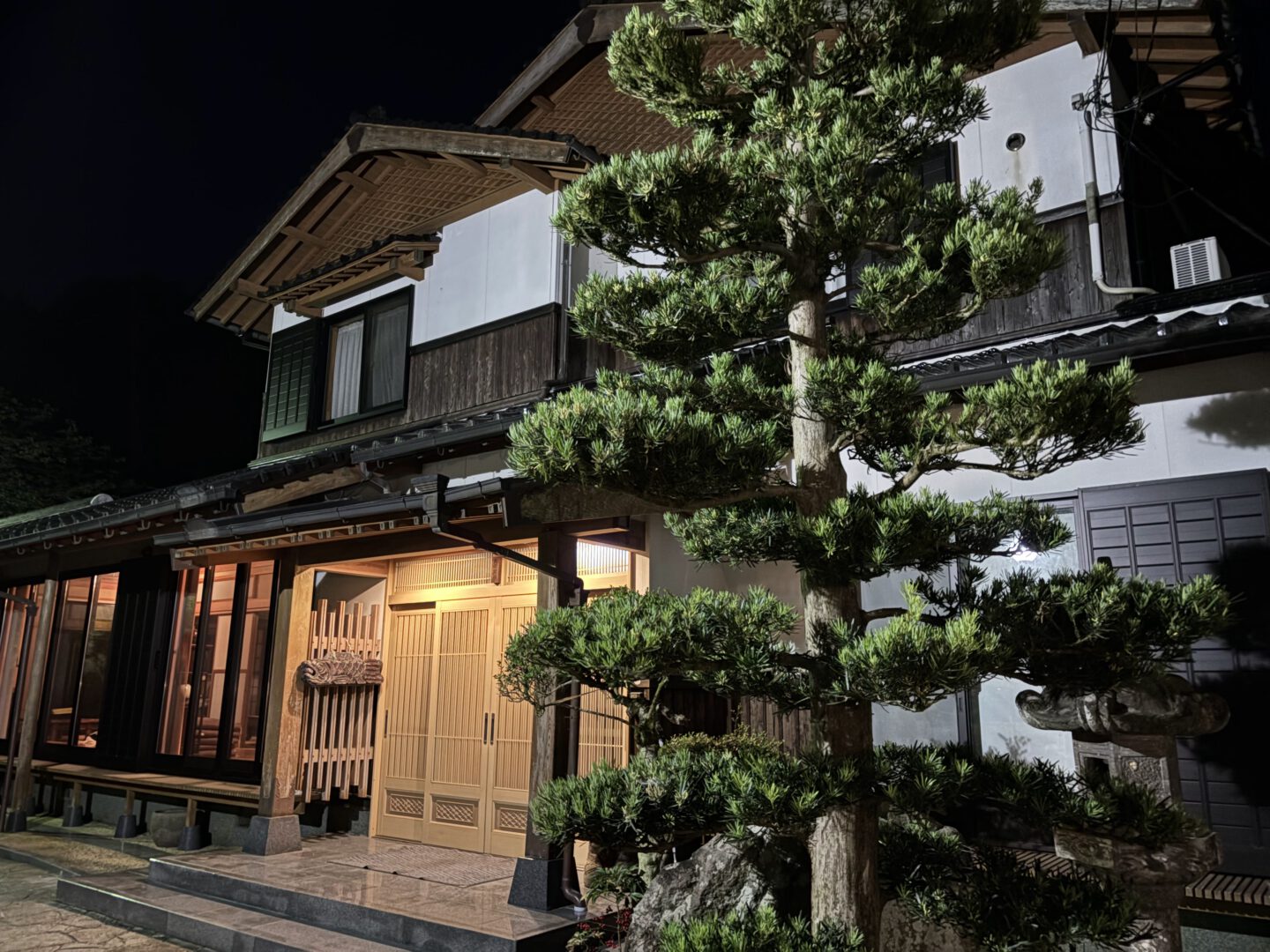
We left town and were soon on an unlit road. Our destination was the Maruta Nobumasa Kiln (丸田宣政窯), which makes Kuromuta ware (黒牟田焼). The owner welcomed us, explained the history of the regional craft, and invited us to look around. The work here was not white porcelain, but often used green, earthy, or blue glazes.
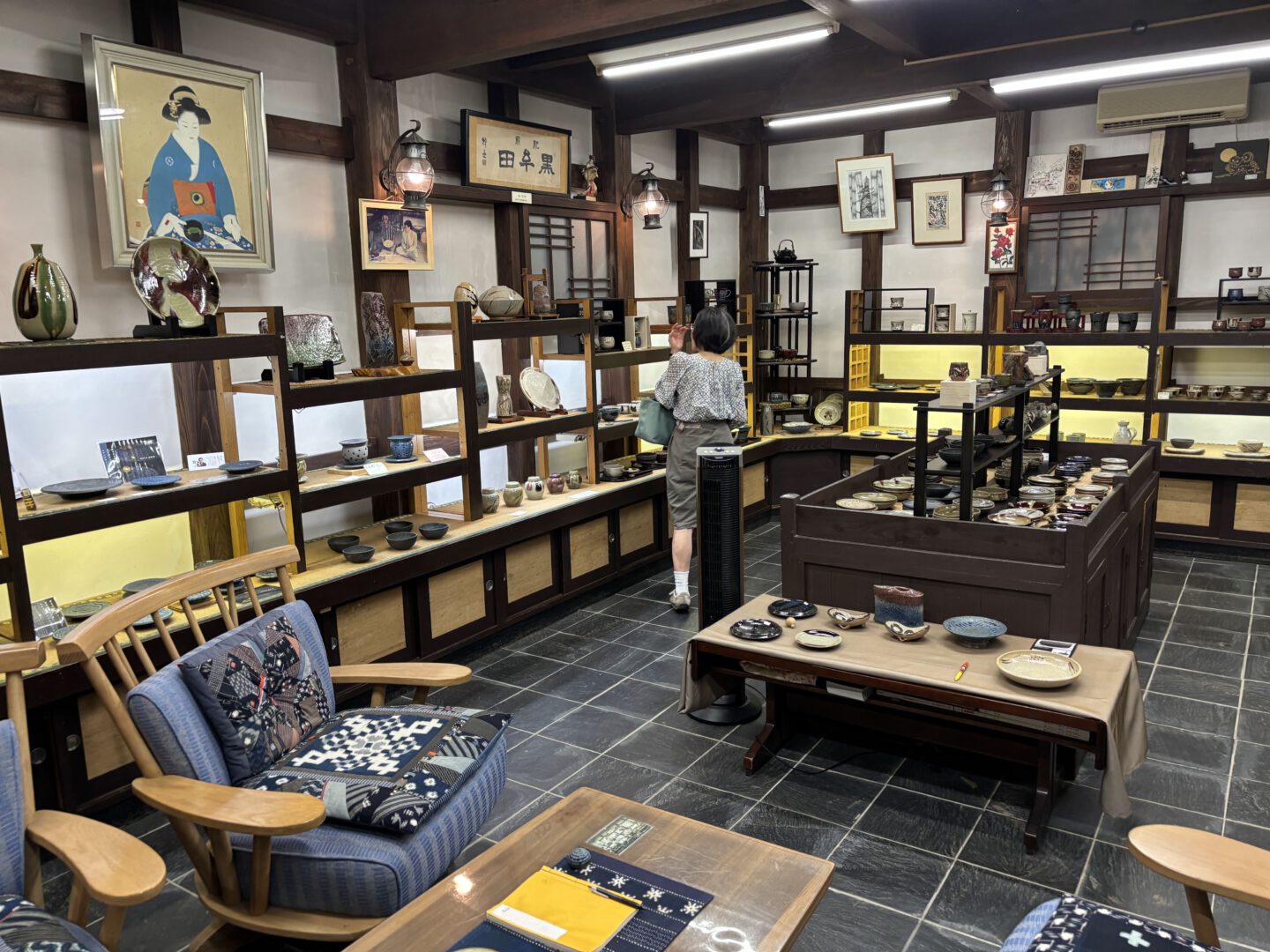
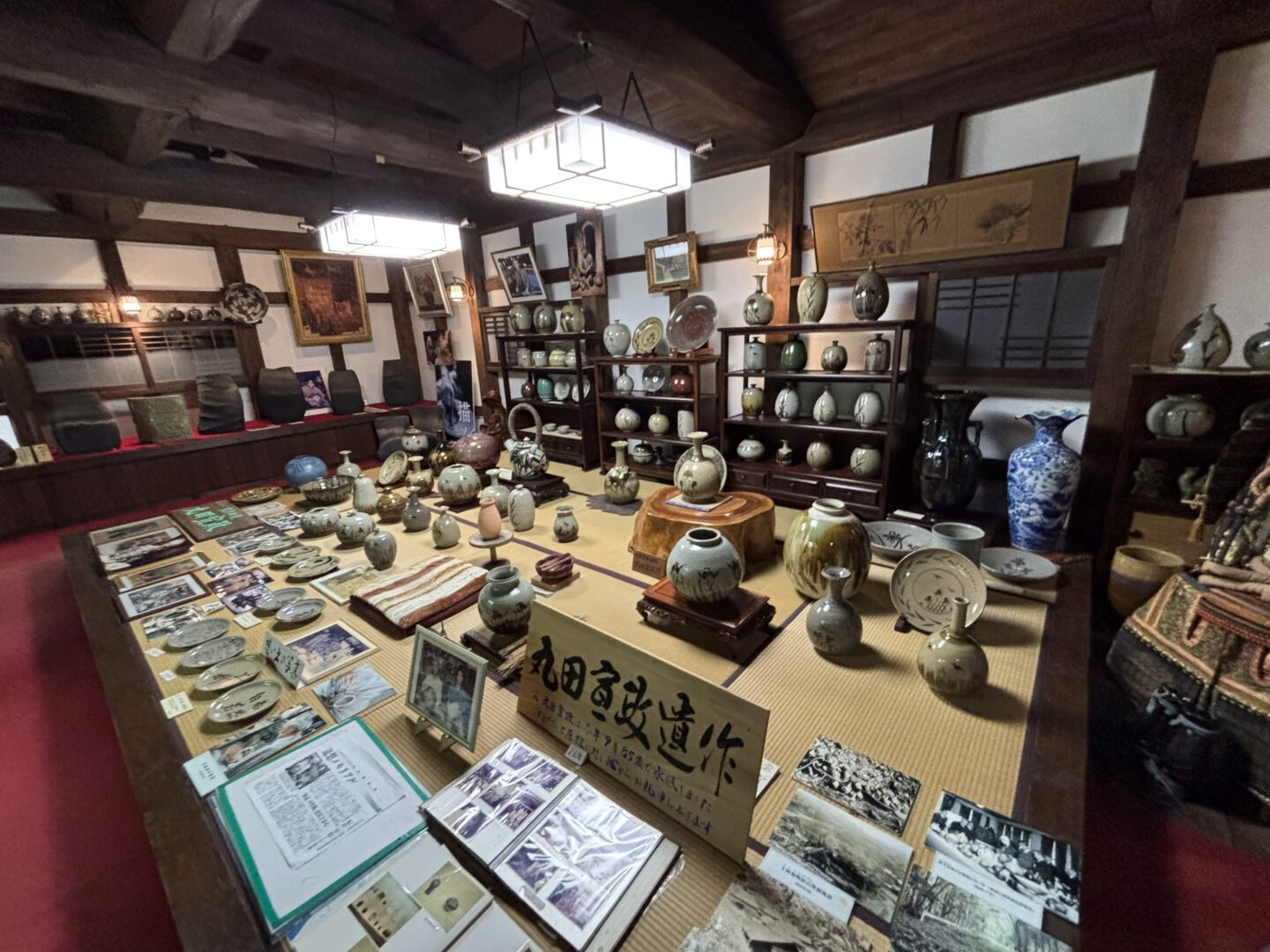
After the kiln visit, the bus drove only a minute farther and dropped us off in a sea of fireflies. Another small stream ran nearby, and under the starry sky their lights blinked in a slow rhythm. There were a few more than the night before, and without other groups or passing cars, the setting felt much more intimate.


We watched for a while, then returned to town. I took a taxi because the hotel shuttle had stopped running for the night.
Back at the hotel, I quickly ate the chicken fried rice from lunch, then refreshed in the bath and sauna. It had been another busy day, and even with the car, the heat and time outside had left me tired.
Japan 2026 · Part 6 of 12
← Previous: Takeo Onsen: Baths, teamLab and Fireflies
Start of the series
Coming next: Fukuoka: Coffee, Shops and Jazz — November 27, 2026.
Entdecke mehr von Tabimonogatari - 旅物語
Melde dich für ein Abonnement an, um die neuesten Beiträge per E-Mail zu erhalten.