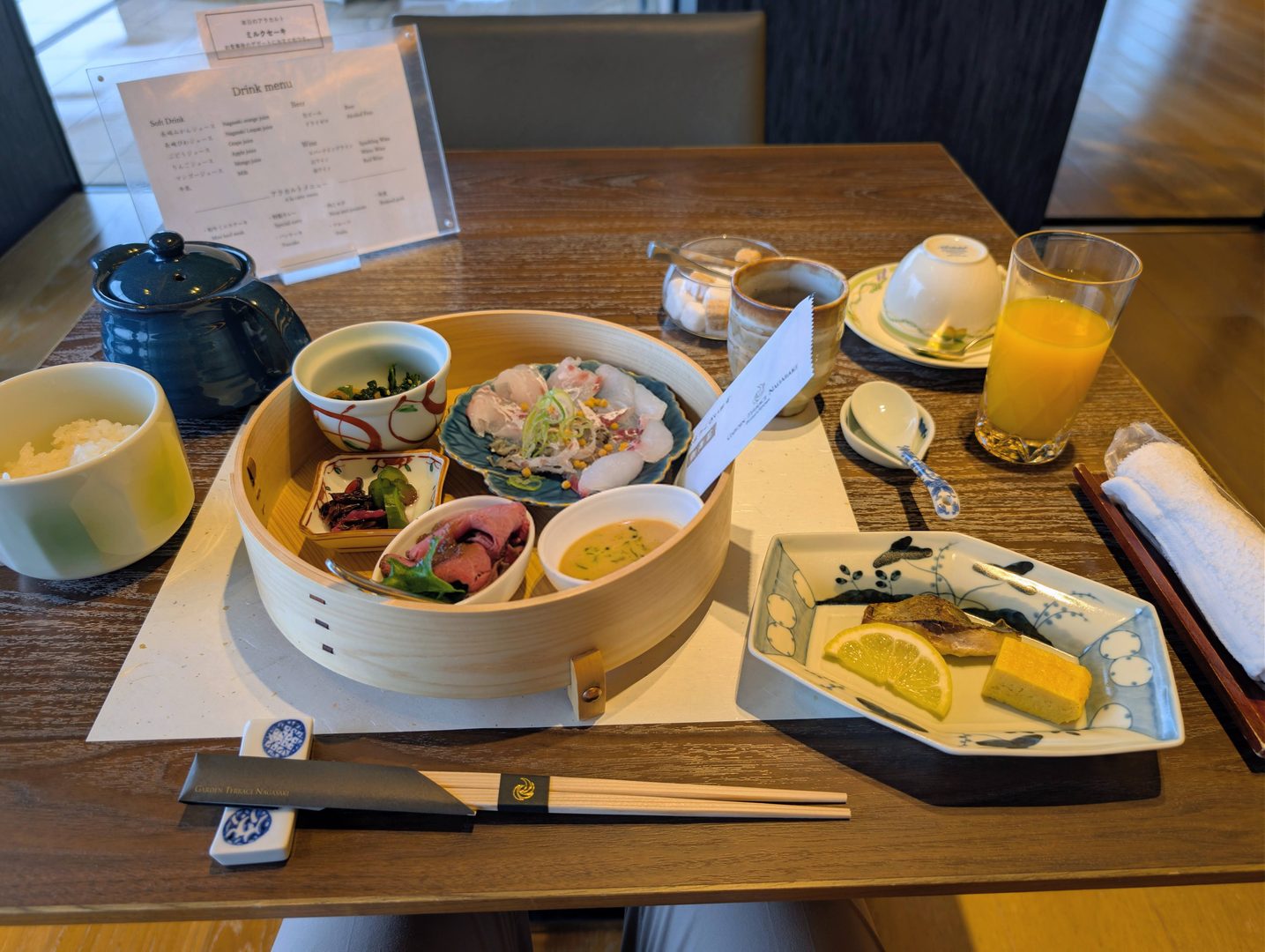
My first full day in Nagasaki began slowly. I woke up refreshed and well rested, although the heavy rain did not encourage an early start. Breakfast was at 8:00 a.m. in the hotel restaurant, where several other guests were already eating. I had a Japanese breakfast with tai sashimi as ochazuke, local orange juice, and several optional extras. Looking down over the bay, I could see that another cruise ship had already arrived.
Before leaving, I made use of the gym. I had it to myself, unsurprisingly, and followed it with a sauna session in both the Finnish sauna and the steam room.
Now I was ready to start the day properly. Walking down from the hotel was possible, but I took the bus to get closer to my first destination.
Gunkanjima without the Boat Trip
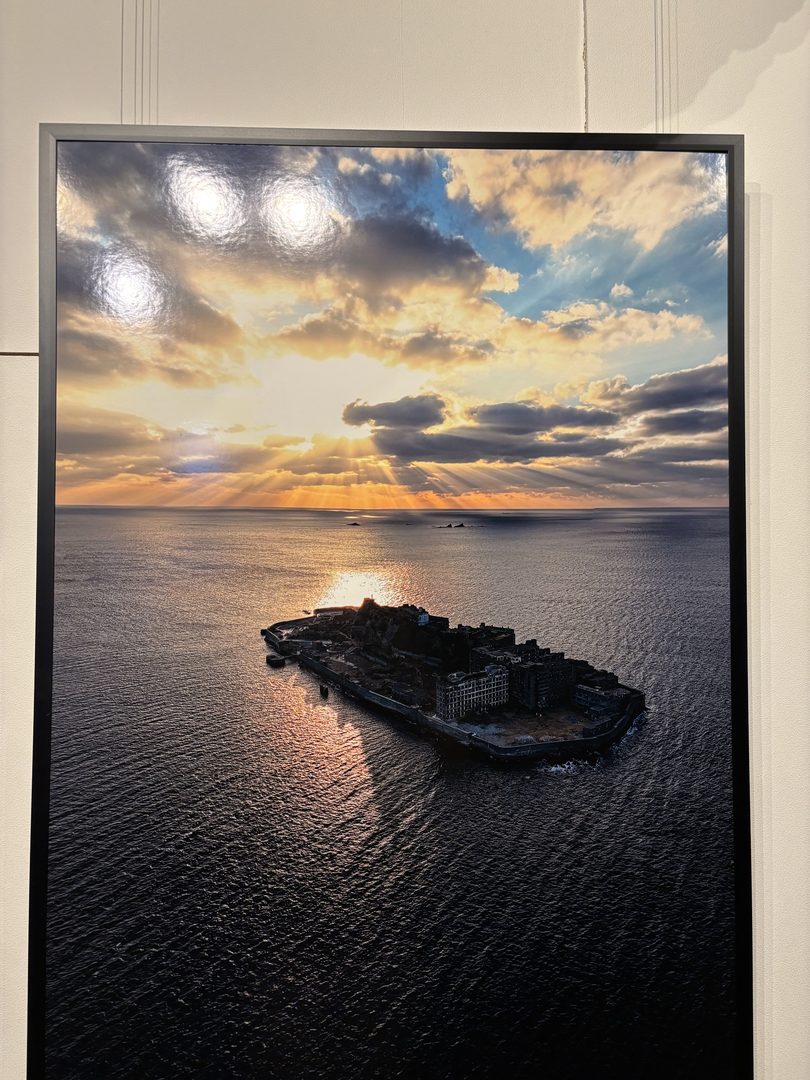
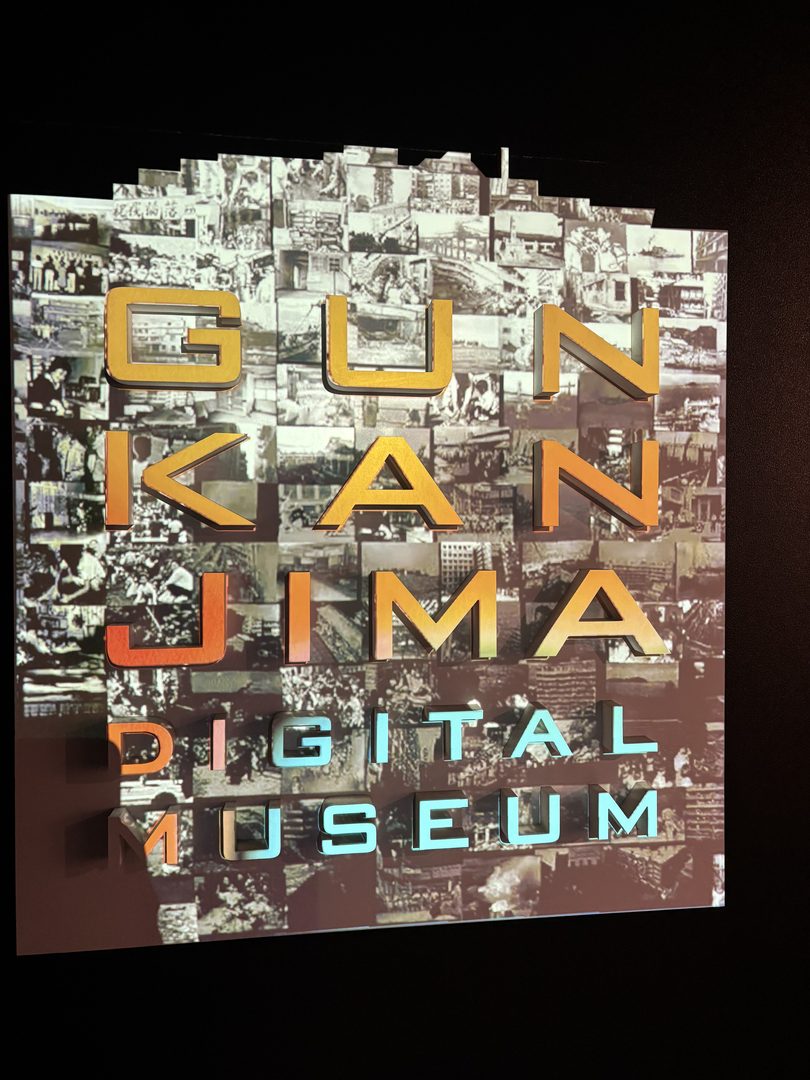
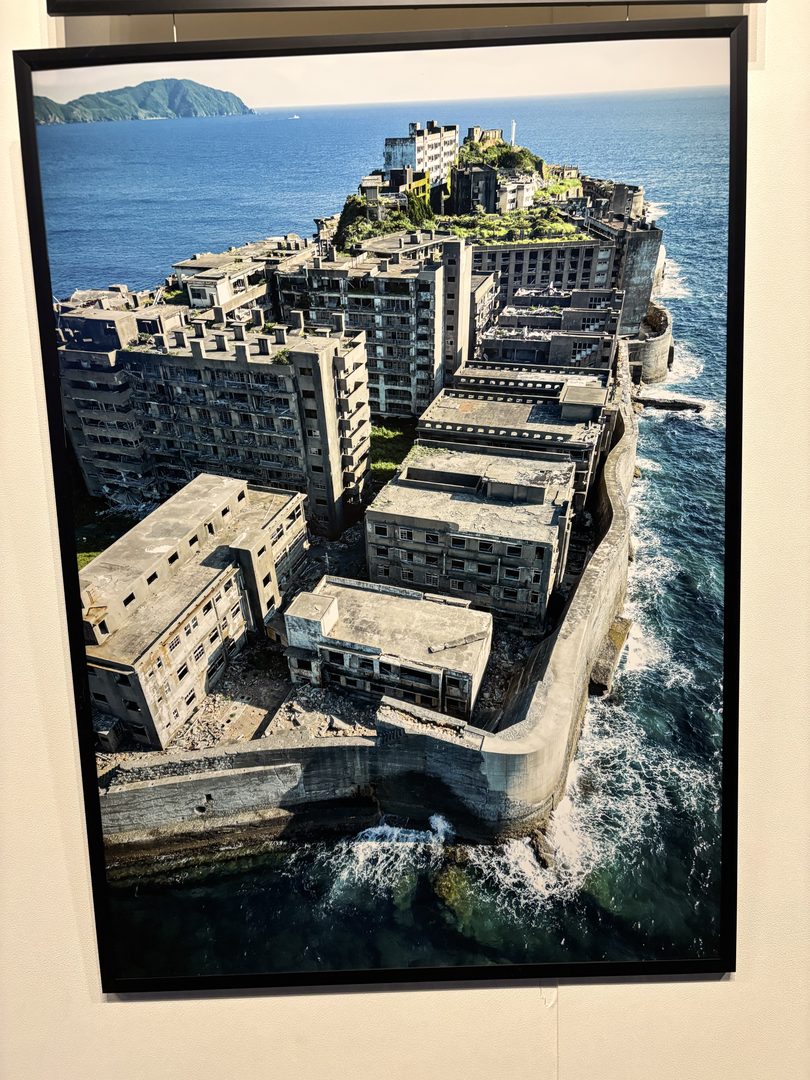
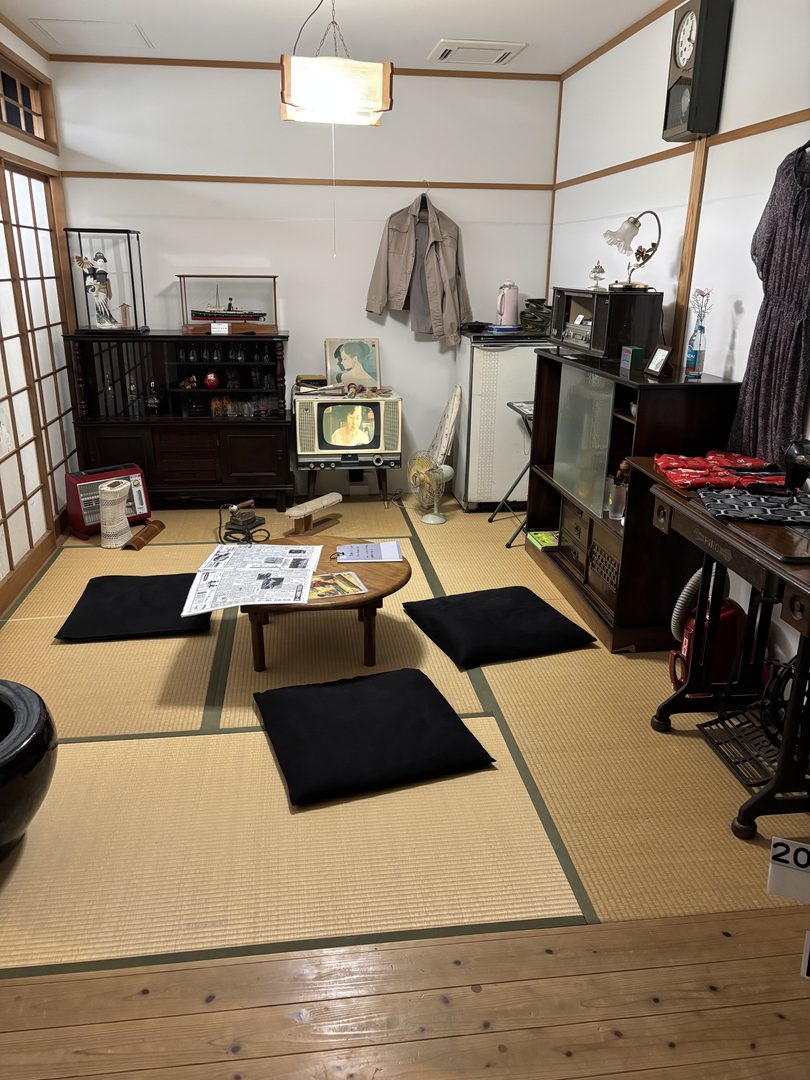
The weather ruled out a boat tour to Gunkanjima, but the Nagasaki Gunkanjima Digital Museum offered a good way to understand the island without leaving the mainland. The ¥1,800 I paid for admission quickly felt worthwhile. Across three floors, digital installations and interactive displays brought the history, culture, and heritage of Hashima—better known as Gunkanjima, or Battleship Island—to life.
Rotatable, zoomable 3D models gave a sense of the island’s layout, while drone and ground-level photographs showed its current state. Other videos explained how this small place had once been an intensely compact company town built around undersea coal mining. I particularly liked the dramatic photographs, the models that let you explore every corner, and the recreated apartments and historic spaces that made its former life feel less abstract.
The mine closed in 1974, as Japan’s energy needs shifted away from coal, and the island was evacuated. But its story is not only one of dramatic concrete ruins and industrial engineering. The museum led me to read more about the wider history: during the war, people from the Korean Peninsula and elsewhere were brought to work at sites including Hashima in harsh conditions. That history belongs alongside the better-known narrative of modernization.
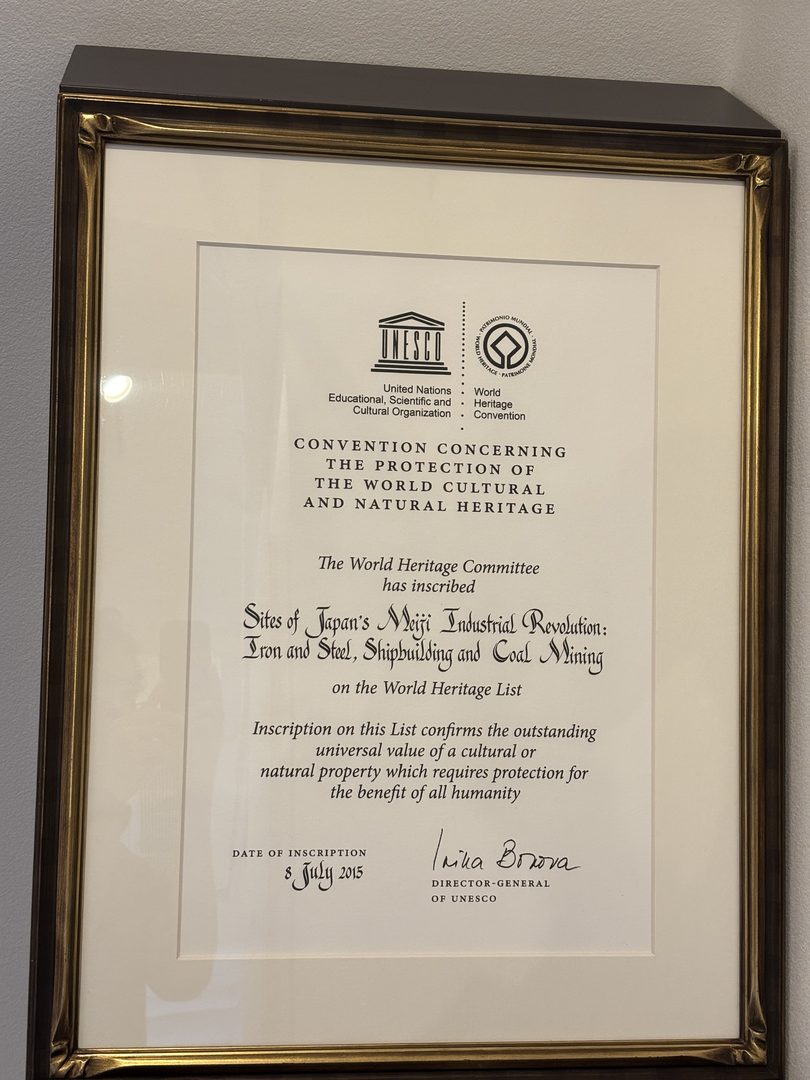
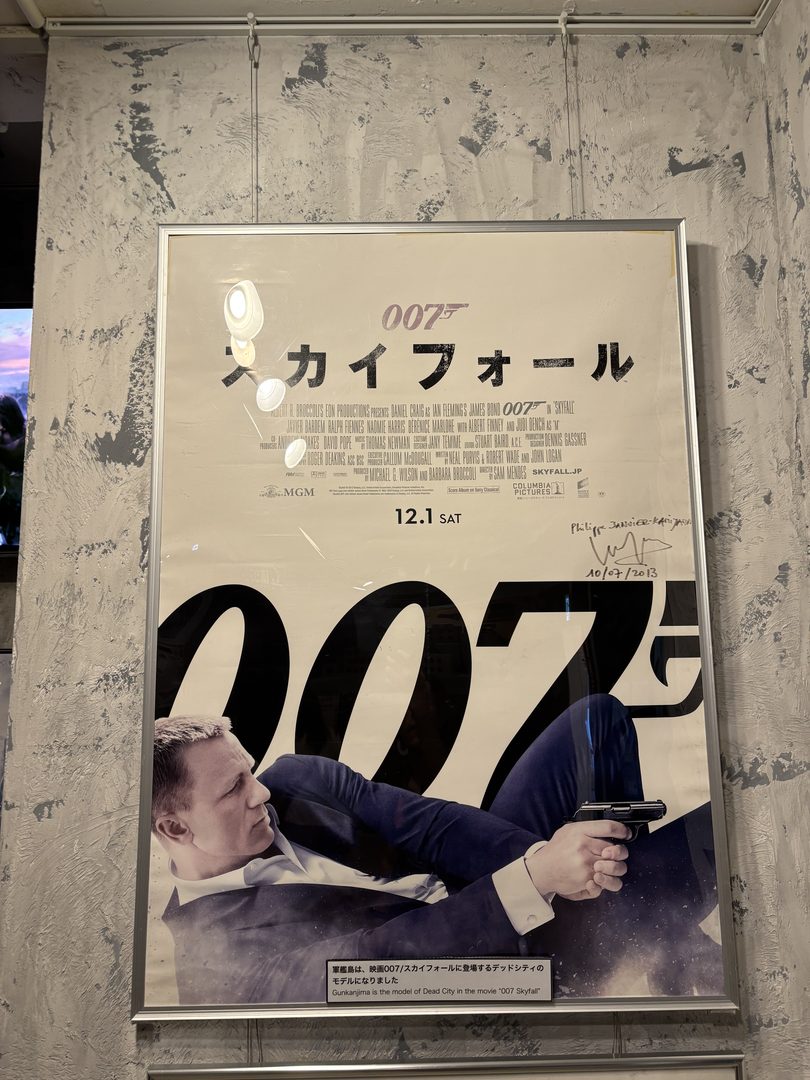
Hashima later became part of a UNESCO World Heritage Site. It has also had a long afterlife in popular culture: it inspired the villain’s island lair in Skyfall and was used for scenes in the live-action Attack on Titan films.
The rain continued, but that did not end the day’s sightseeing. From the museum, I walked to Sofukuji Temple, whose architecture is more reminiscent of Chinese temples than of most temples in Japan.
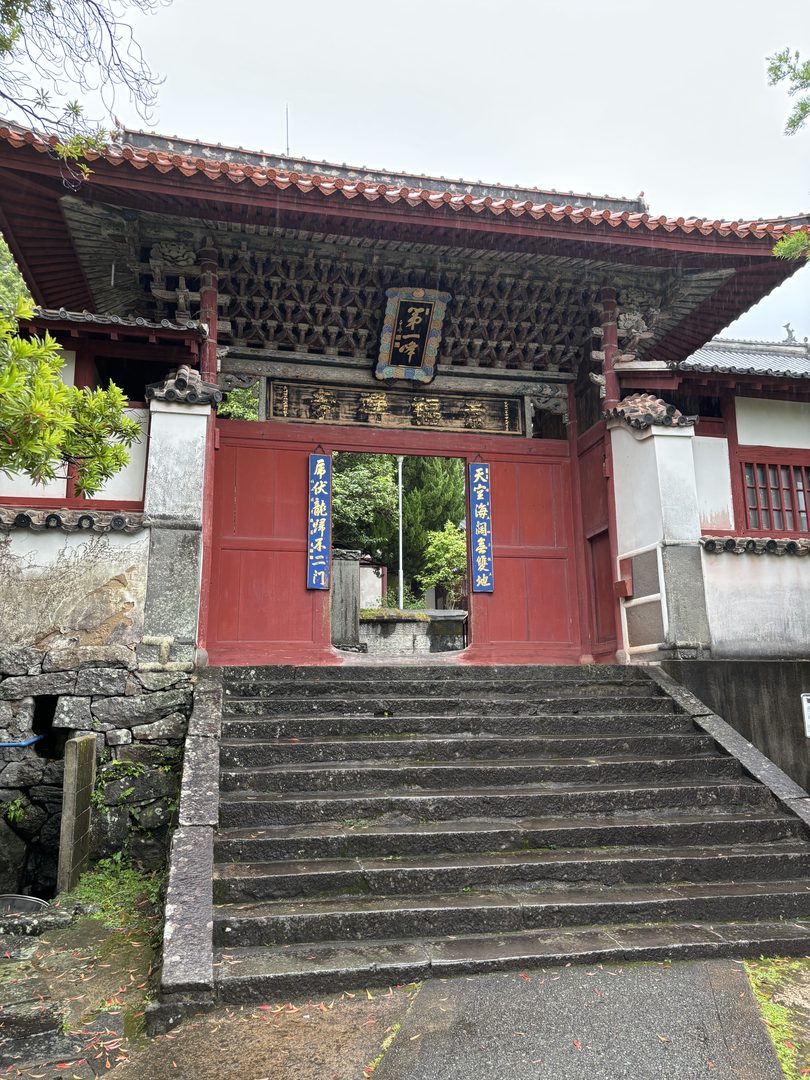
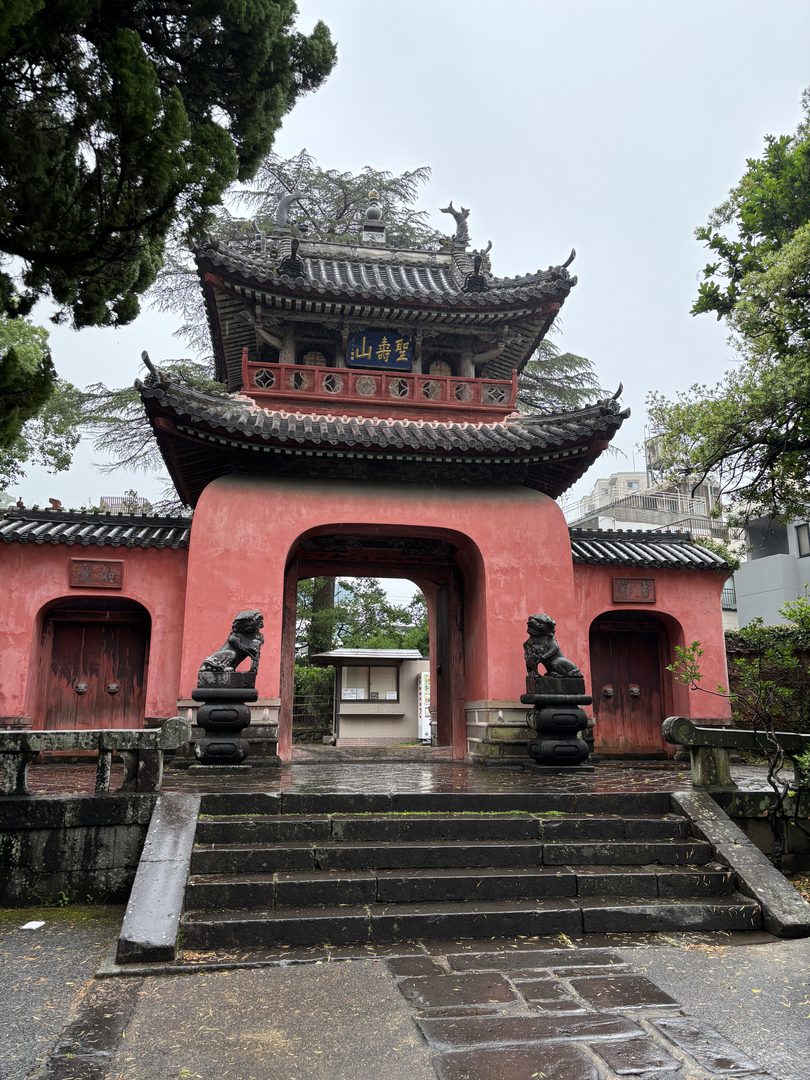
The Atomic Bomb Museum and Memorial Hall
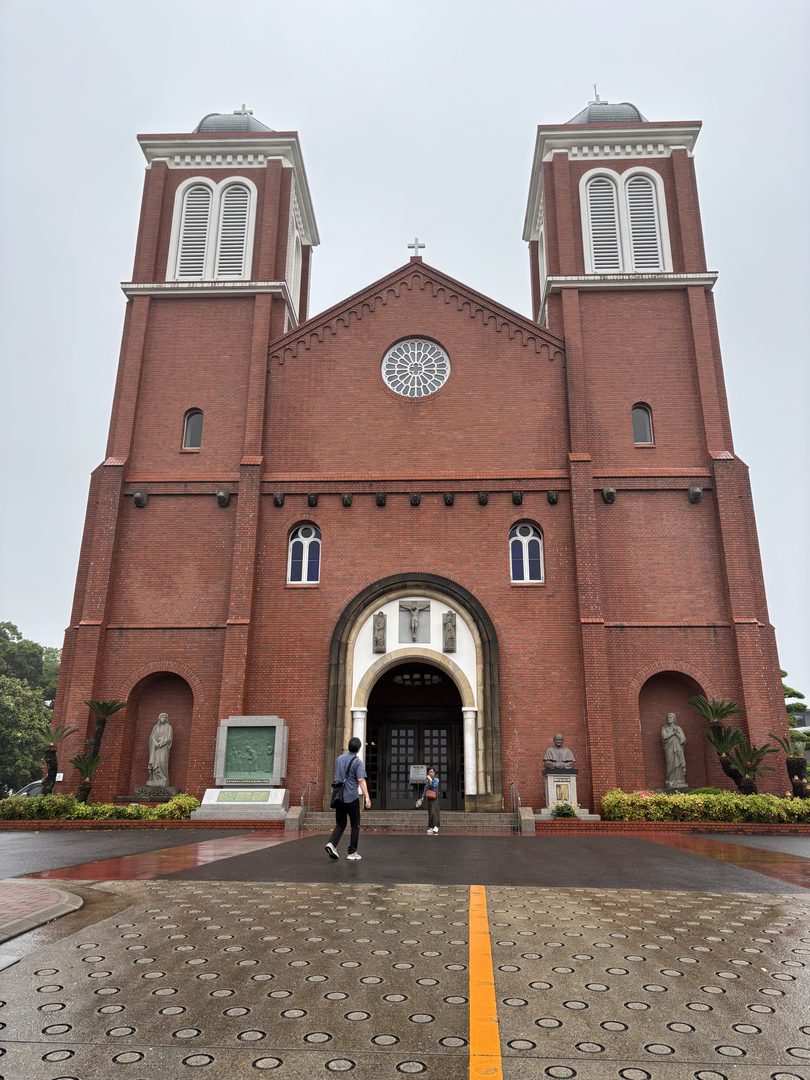
I then took the streetcar north to the Peace Park and Atomic Bomb Museum area. On my first visit to Nagasaki, I had not seen Urakami Cathedral, so I went there first. The nuclear blast had severely damaged the original building. Rebuilt in concrete in 1959 and later given its red-brick appearance, it recalls what had been Asia’s largest cathedral. Entry was free, but I could only walk along the back row, looking at the restored stained-glass windows and artifacts that showed the scale of the destruction.
From there, it was a short uphill walk to the Peace Park. On my previous visit I had arrived from the back, so I again missed the escalators, but the walk through the back streets was pleasant.
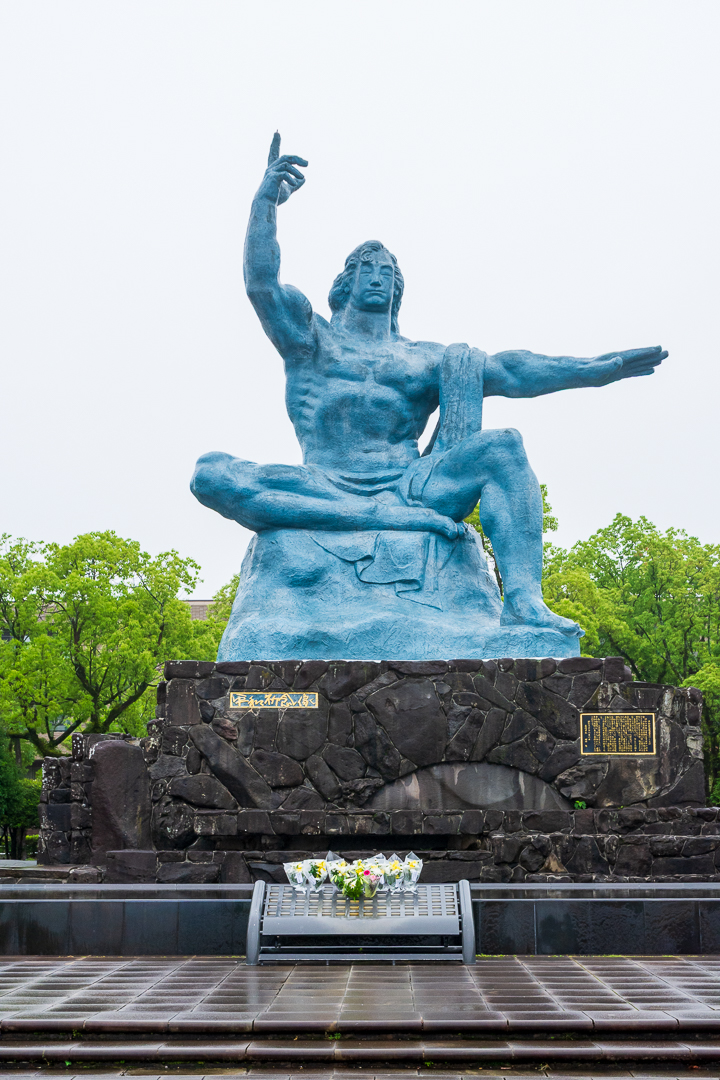
School groups seemed to be touring Nagasaki that day; I encountered them repeatedly across the city. One or two classes were assembling in front of the Peace Statue as I passed by.
After that, I went to the Atomic Bomb Museum. Artifacts and survivor accounts document the terrible fate of those caught in the bombing: around 70,000 people had died by the end of 1945, and many more lived with its consequences. Although the exhibition is graphic, I found it a little easier to process than Hiroshima’s.
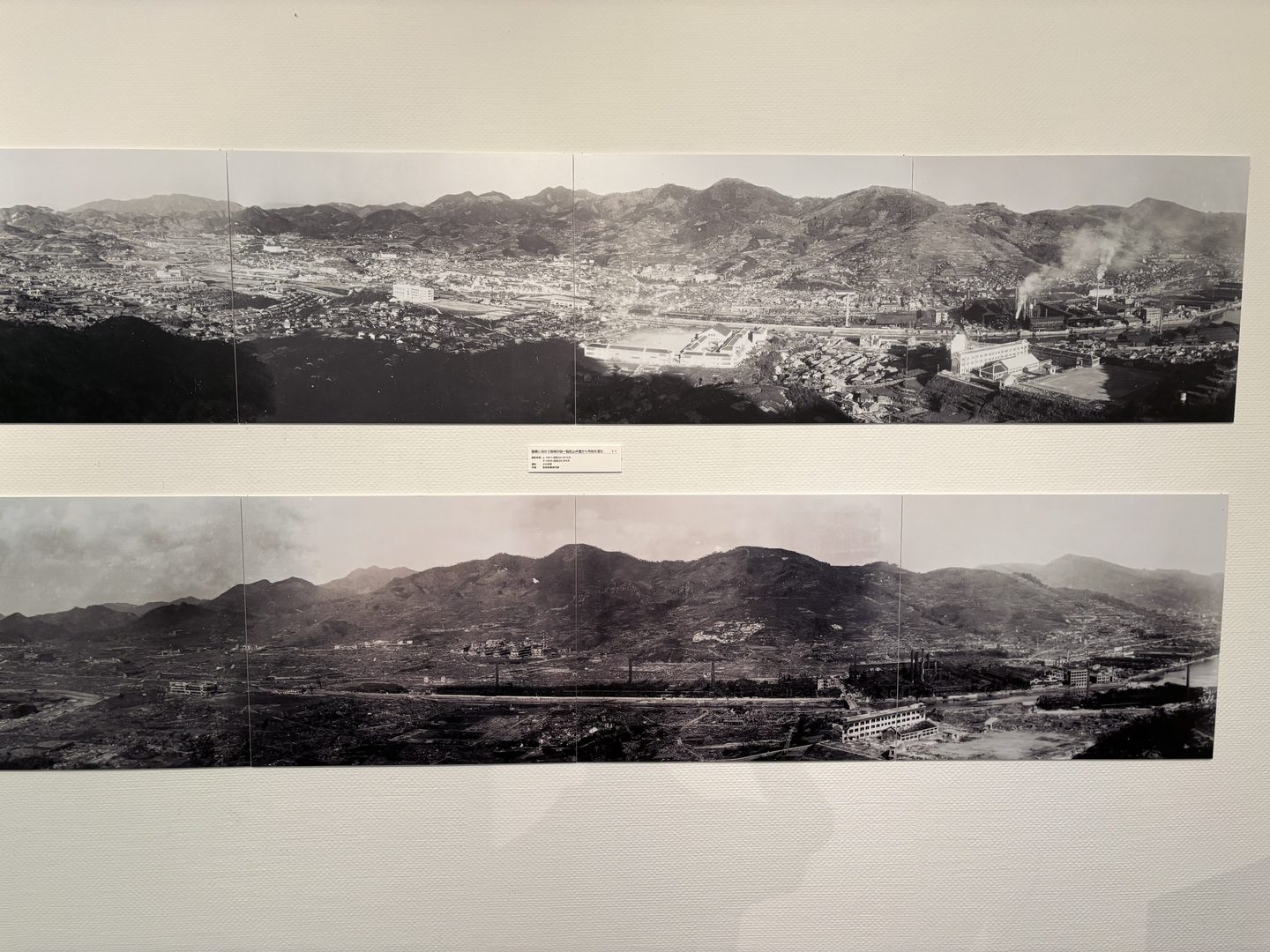
The final part of the exhibition seemed to include a newer, small display explaining the Pacific War events leading up to the bombing. It was only in Japanese, but it still felt like an improvement on my earlier visit, when I did not remember this context being included at all.
The museum also covers the Cold War and the continuing global reality of nuclear weapons. Several videos were shown throughout; some were genuinely difficult to watch, with moving images of people suffering in the aftermath of the blast and radiation.
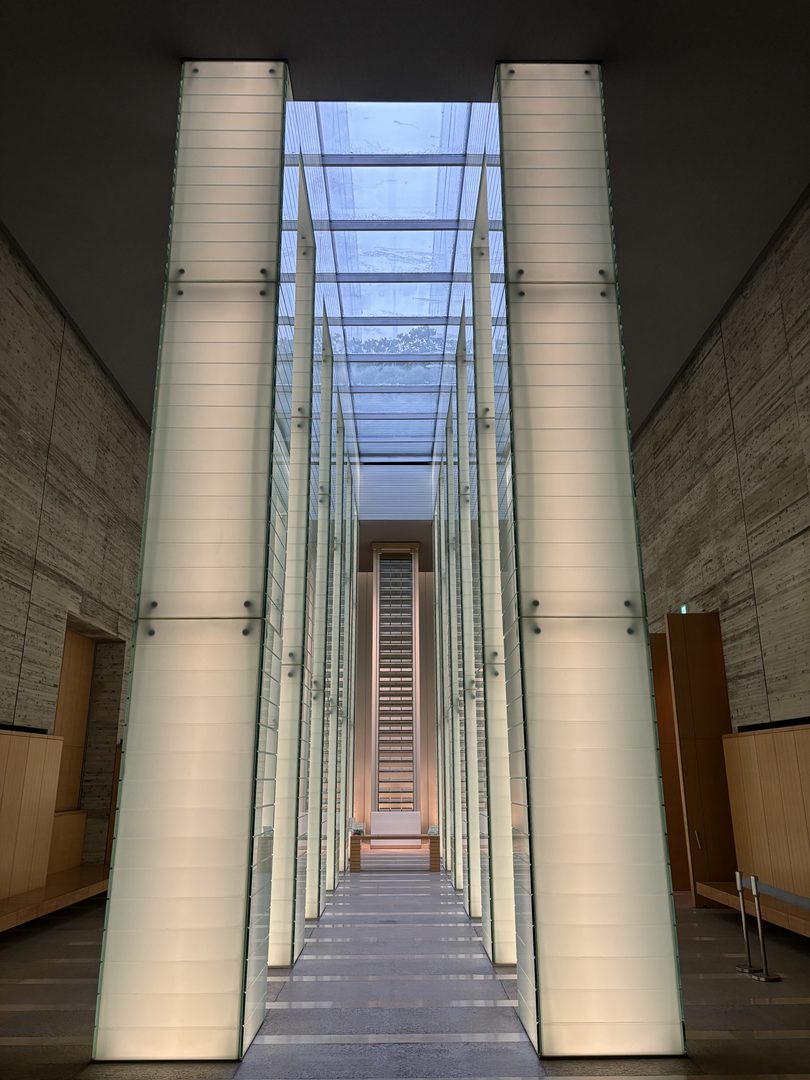
On my previous visit, I had missed the adjacent Nagasaki National Peace Memorial Hall for the Atomic Bomb Victims. It added more context and testimonies, as well as a place to pause after the museum. At ground level, a sculpted water basin recalls the water desperately craved by bombing victims. Corridors of light rise from the Remembrance Hall below, creating a quiet threshold before entering the underground building.
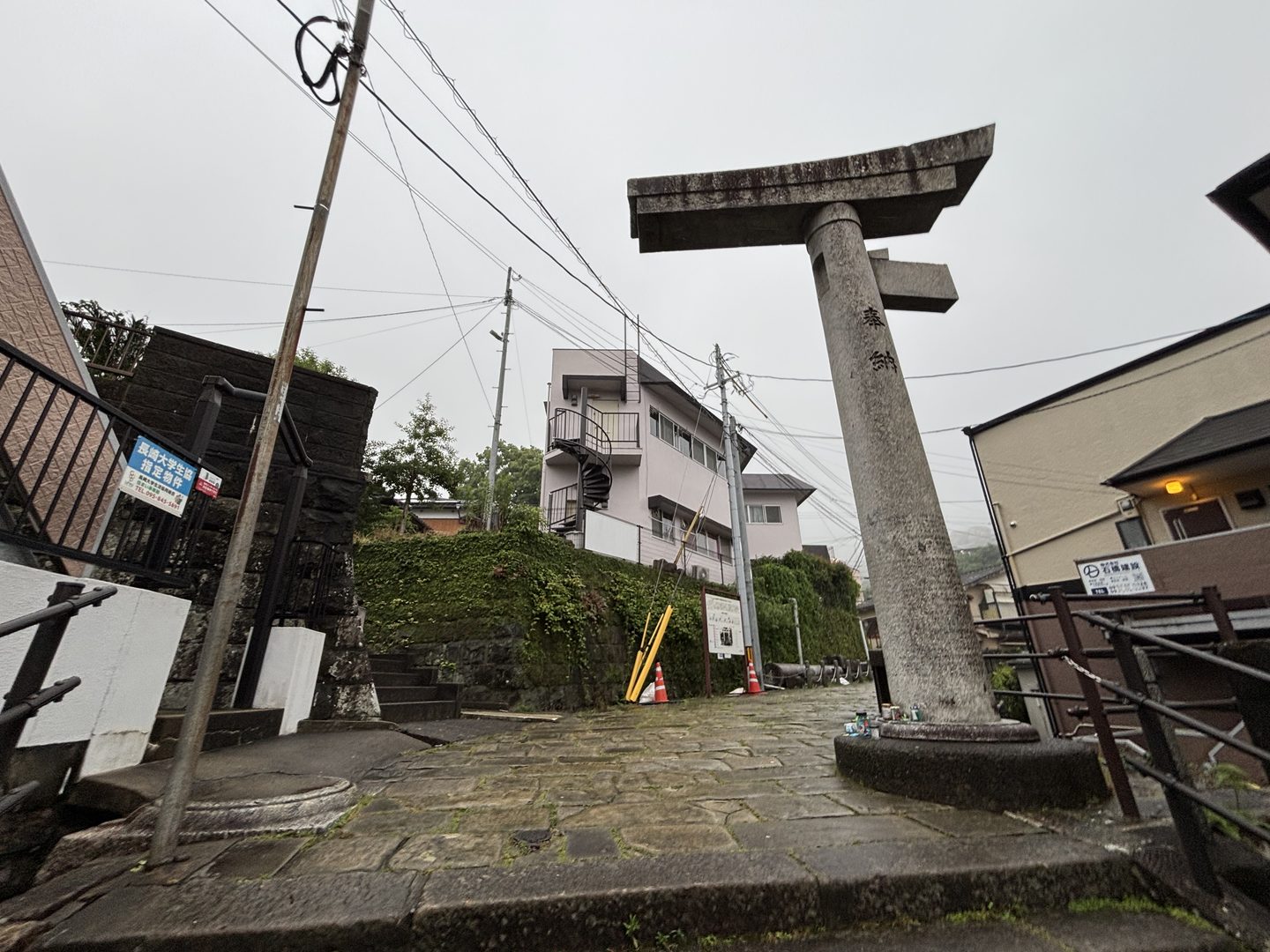
Back outside, I headed to the one-legged torii of Sanno Shrine. The blast had left only half of it standing. Exposed on a hill, it remains another memorial to that day.
Passing through a hilly area, I found Sakamoto International Cemetery, where Thomas Glover and his family are buried alongside people from many other countries who made their lives in Nagasaki. There was little interpretive material, but it was an interesting stop.
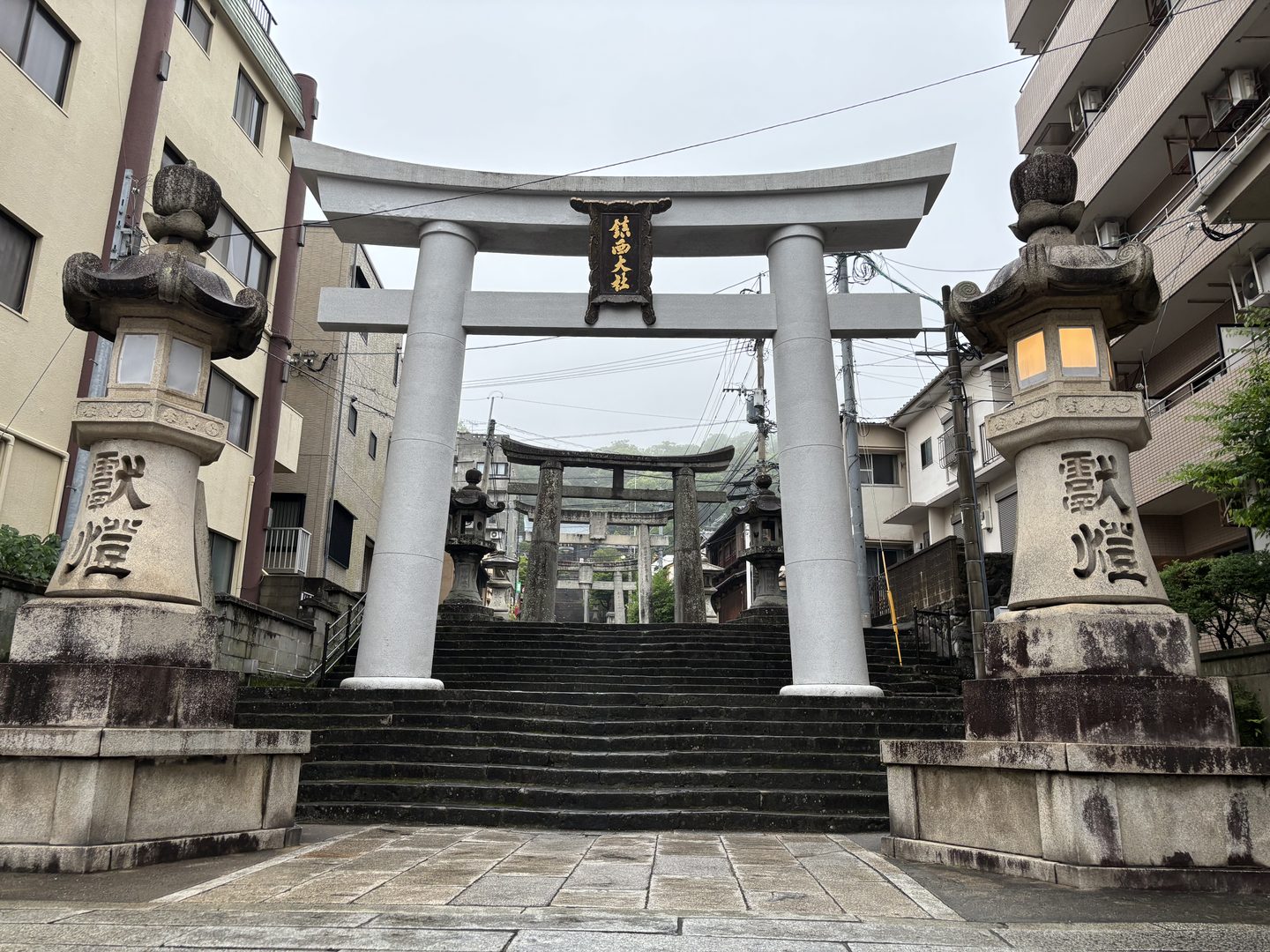
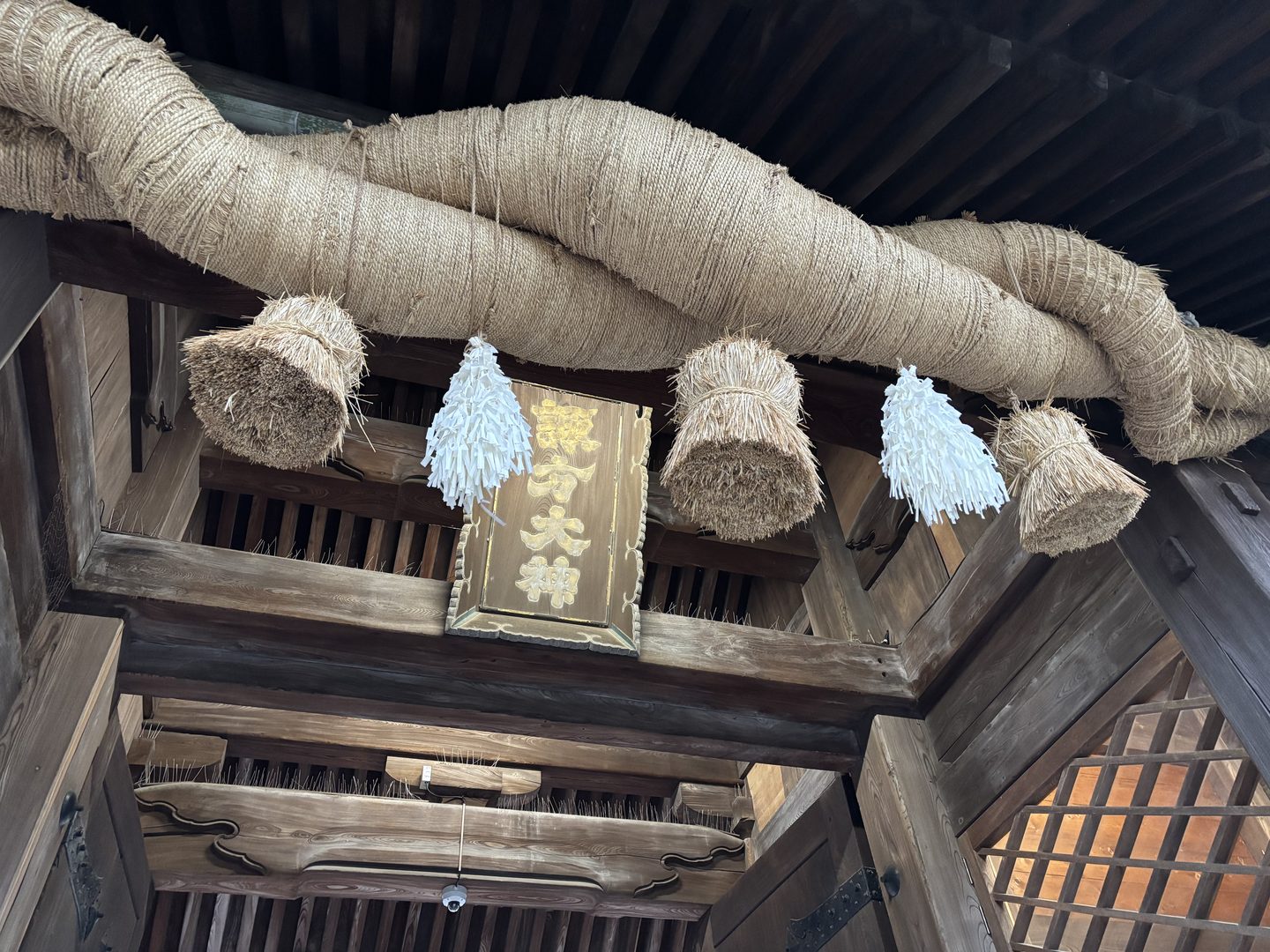
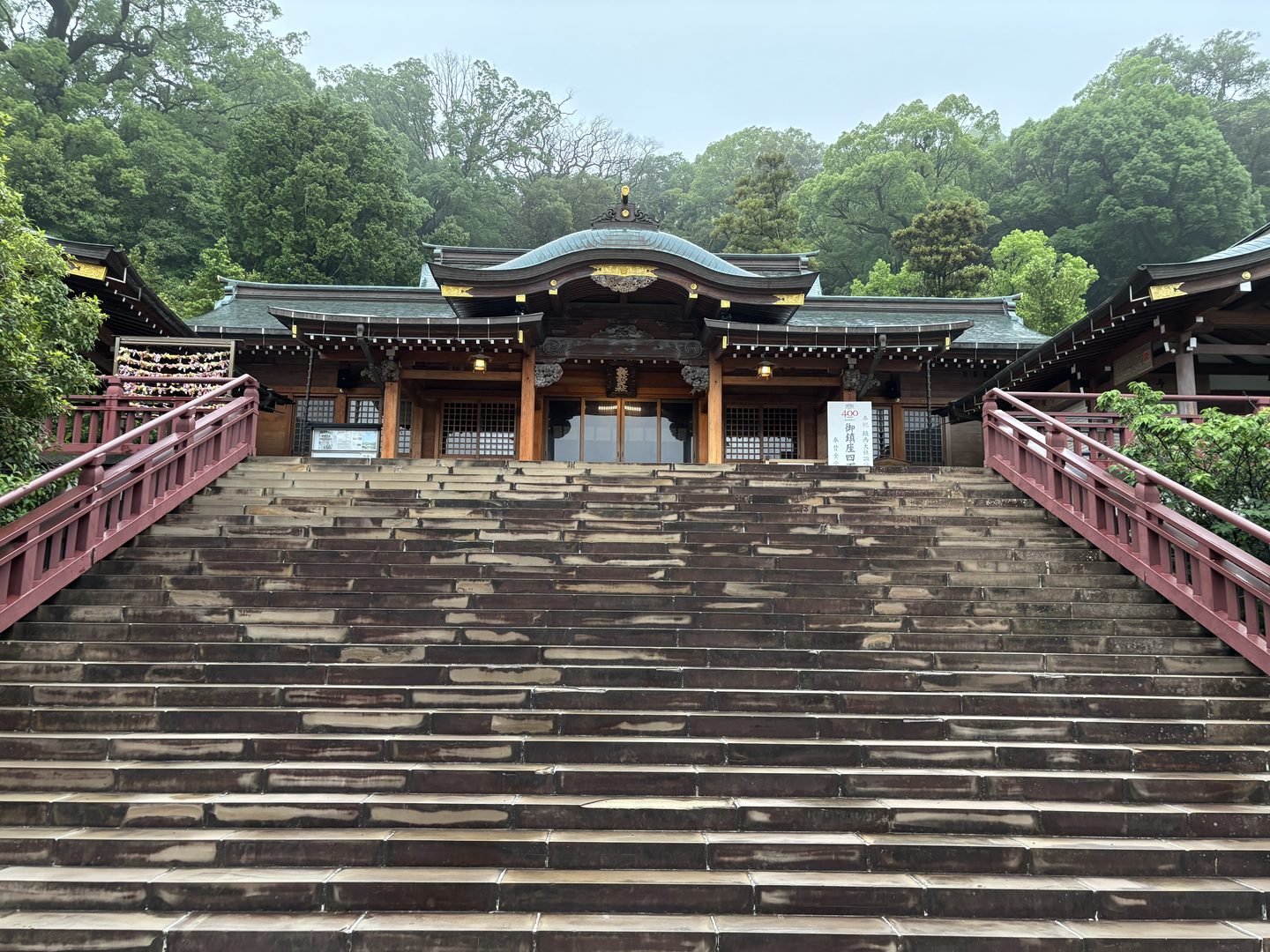
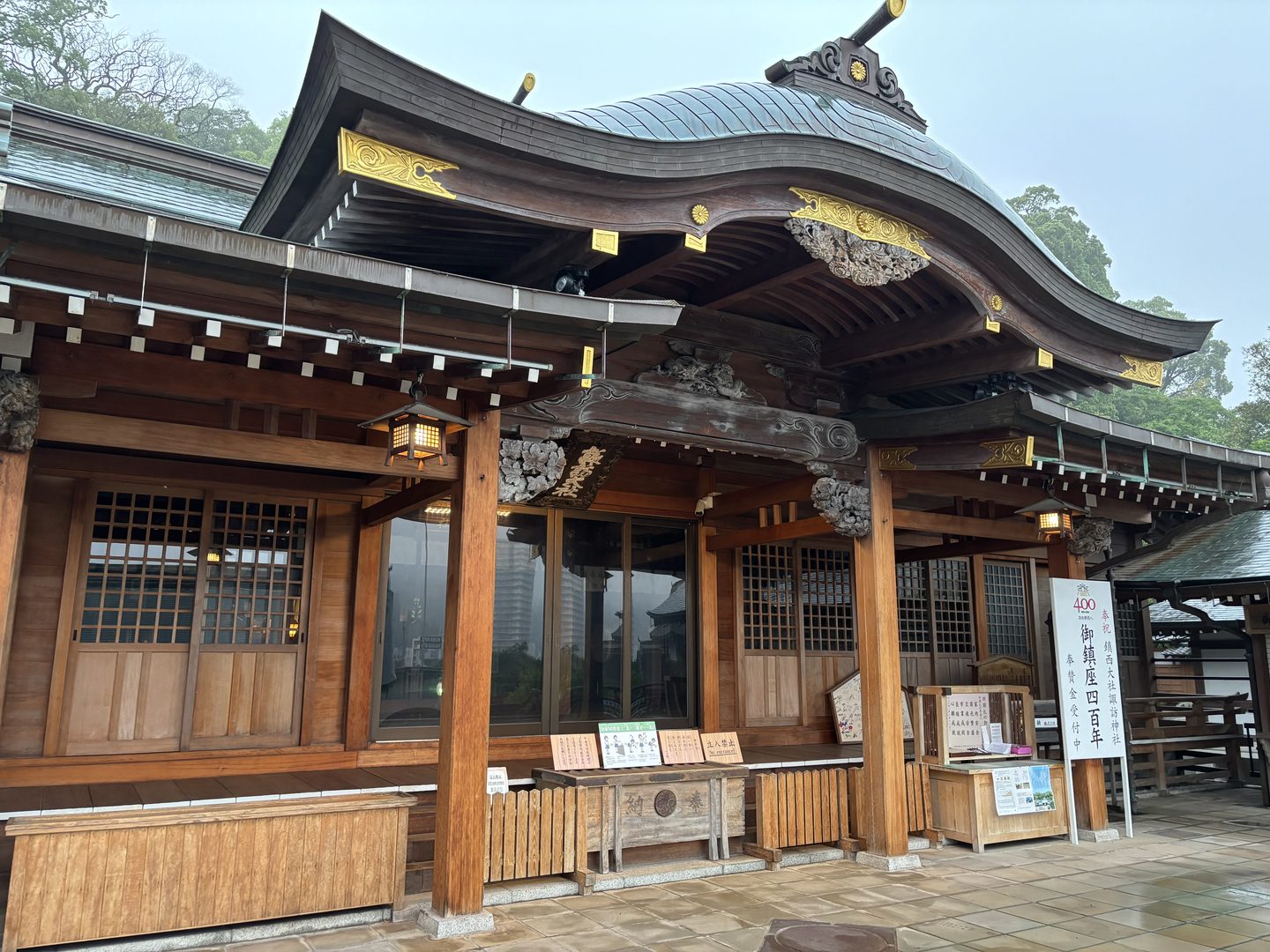
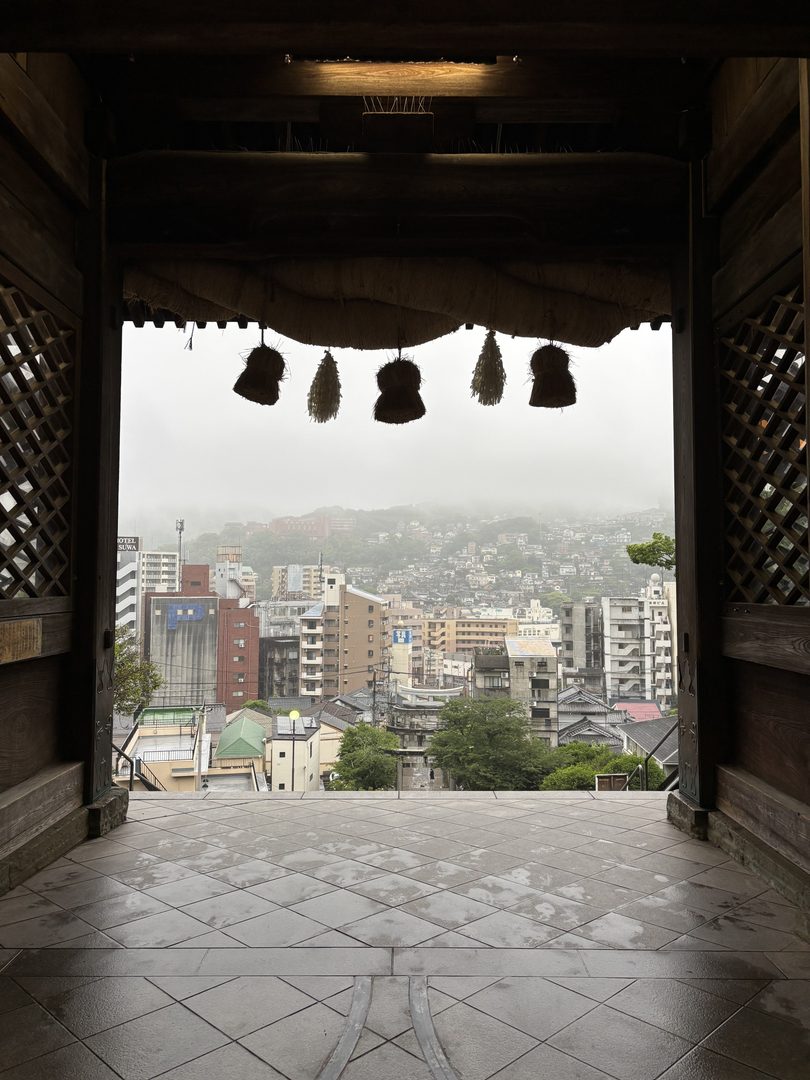
Heading farther south, I made my way to Suwa Shrine, one of Nagasaki’s biggest shrines and famous for the Kunchi festival in October. From the lowest flight of its long staircase, I climbed the hill toward the shrine. Three stone torii gates stood before the main area even began. By the time I reached the top, parts of the shrine were already closed, but I could still visit some of the grounds. Next door, Nagasaki Park’s Animal Square is a small animal park, but I arrived too late to see it properly.
An Evening around Megane Bridge
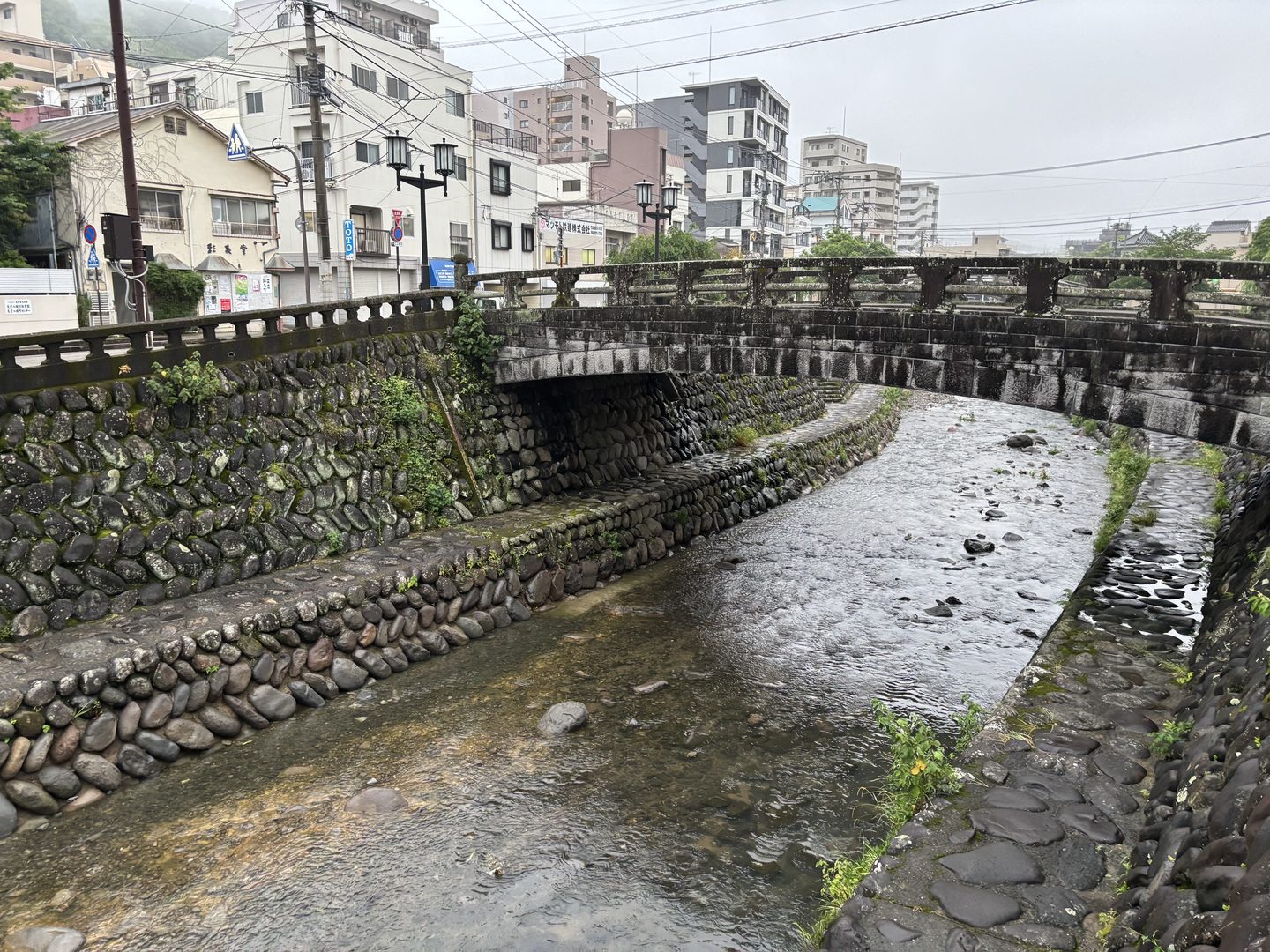
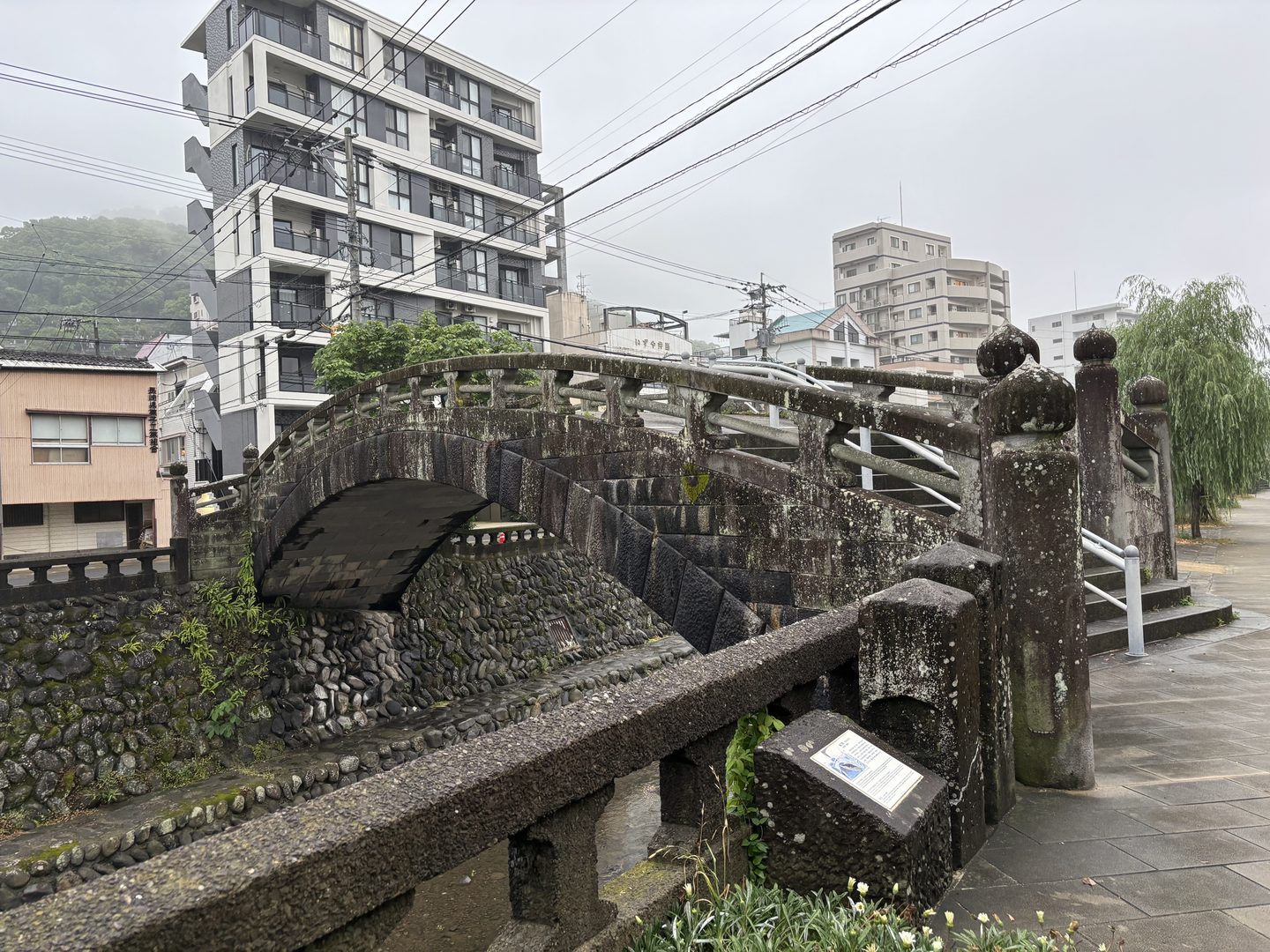
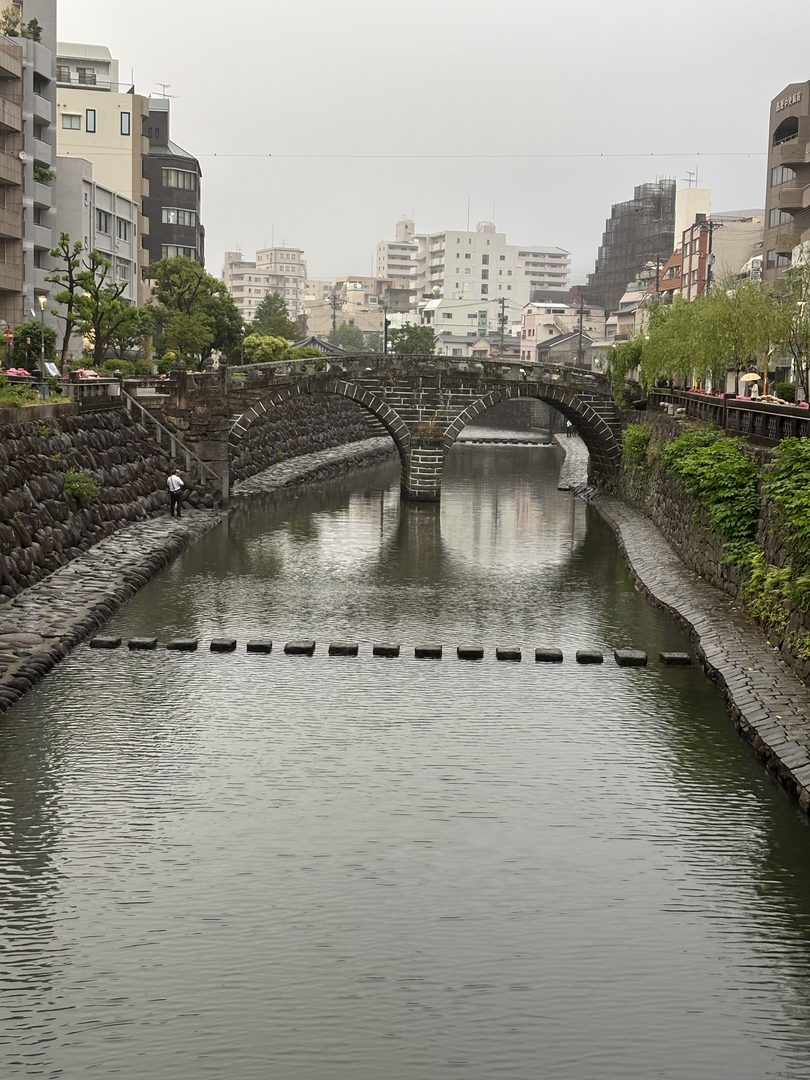
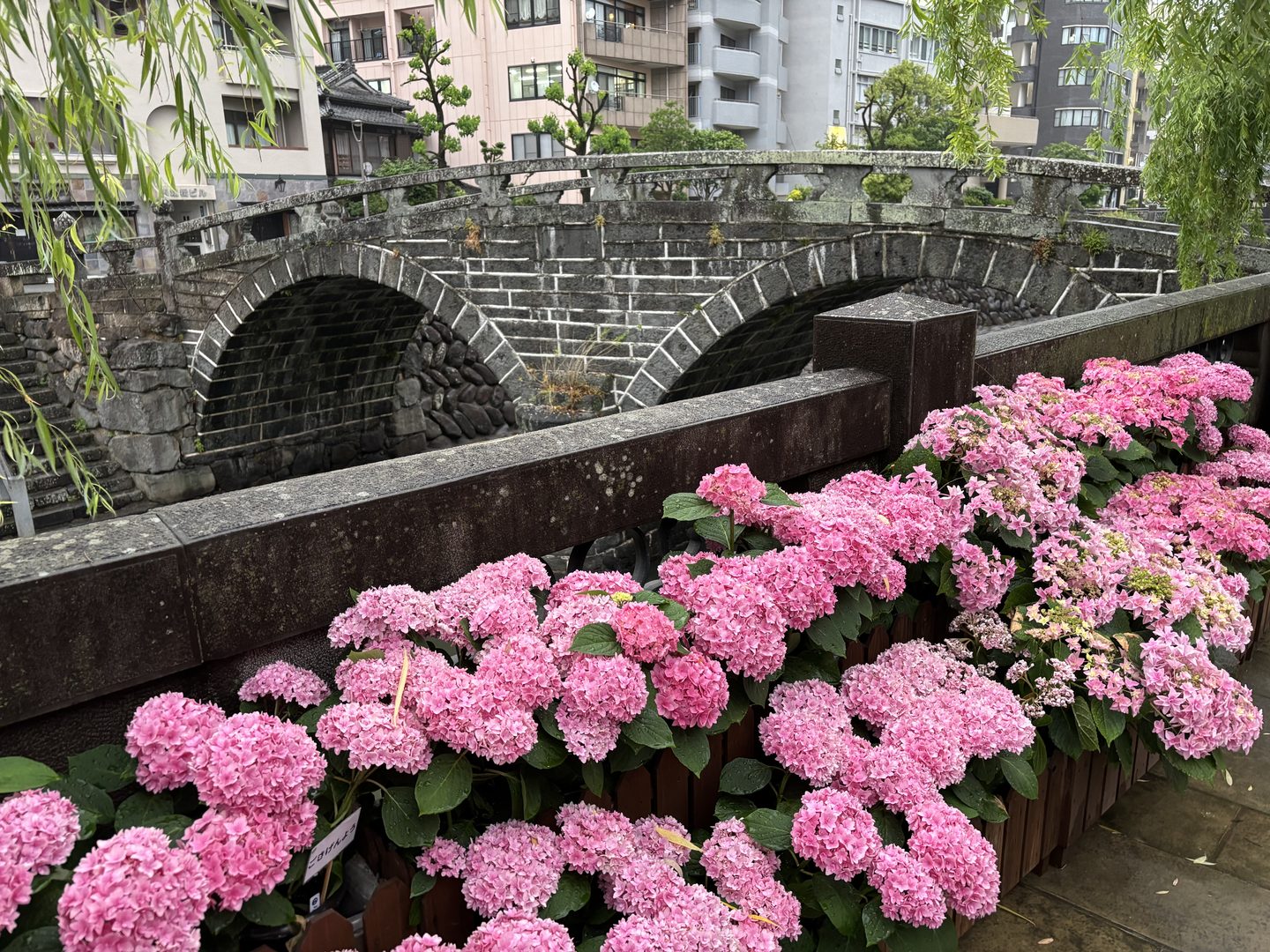
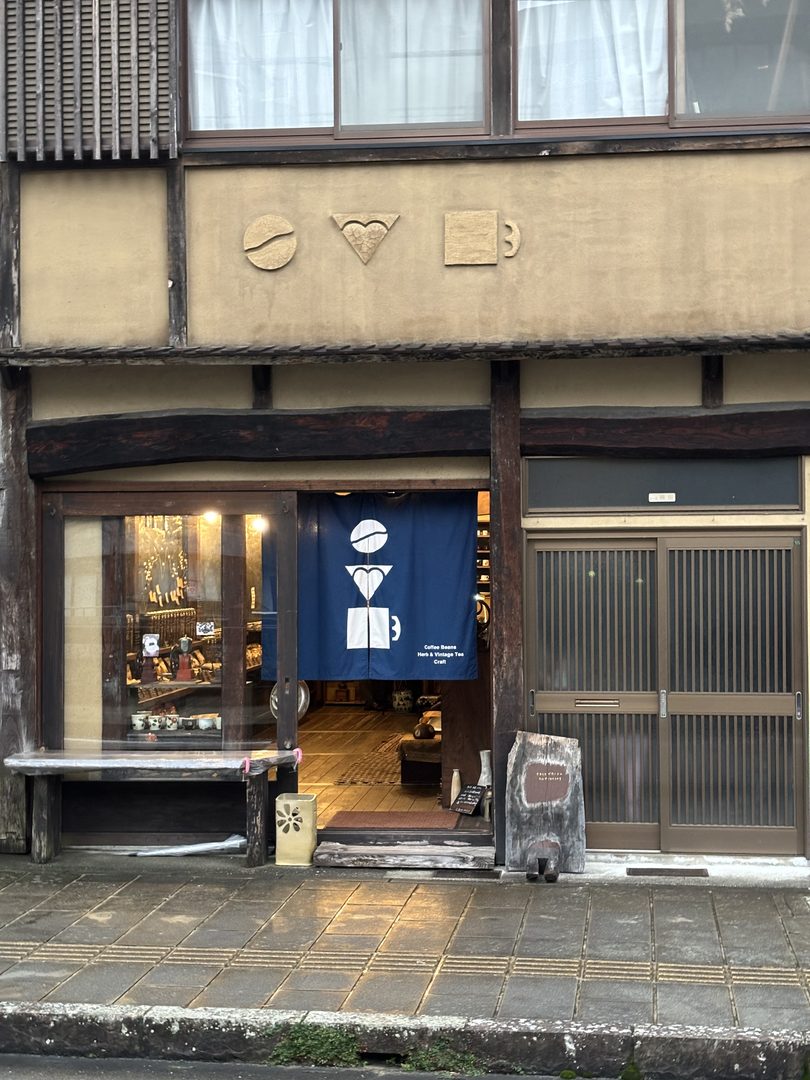
It was finally time for dinner, so I followed the river past several historic stone bridges, including Megane Bridge. Near the bridge, I came across Maru Sankaku Shikaku, a coffee shop that was about to close but still had time to sell me beans to enjoy later on the trip. I then made my way to the izakaya I had chosen for the evening: Makurou (居酒屋茶漬け まくろう).
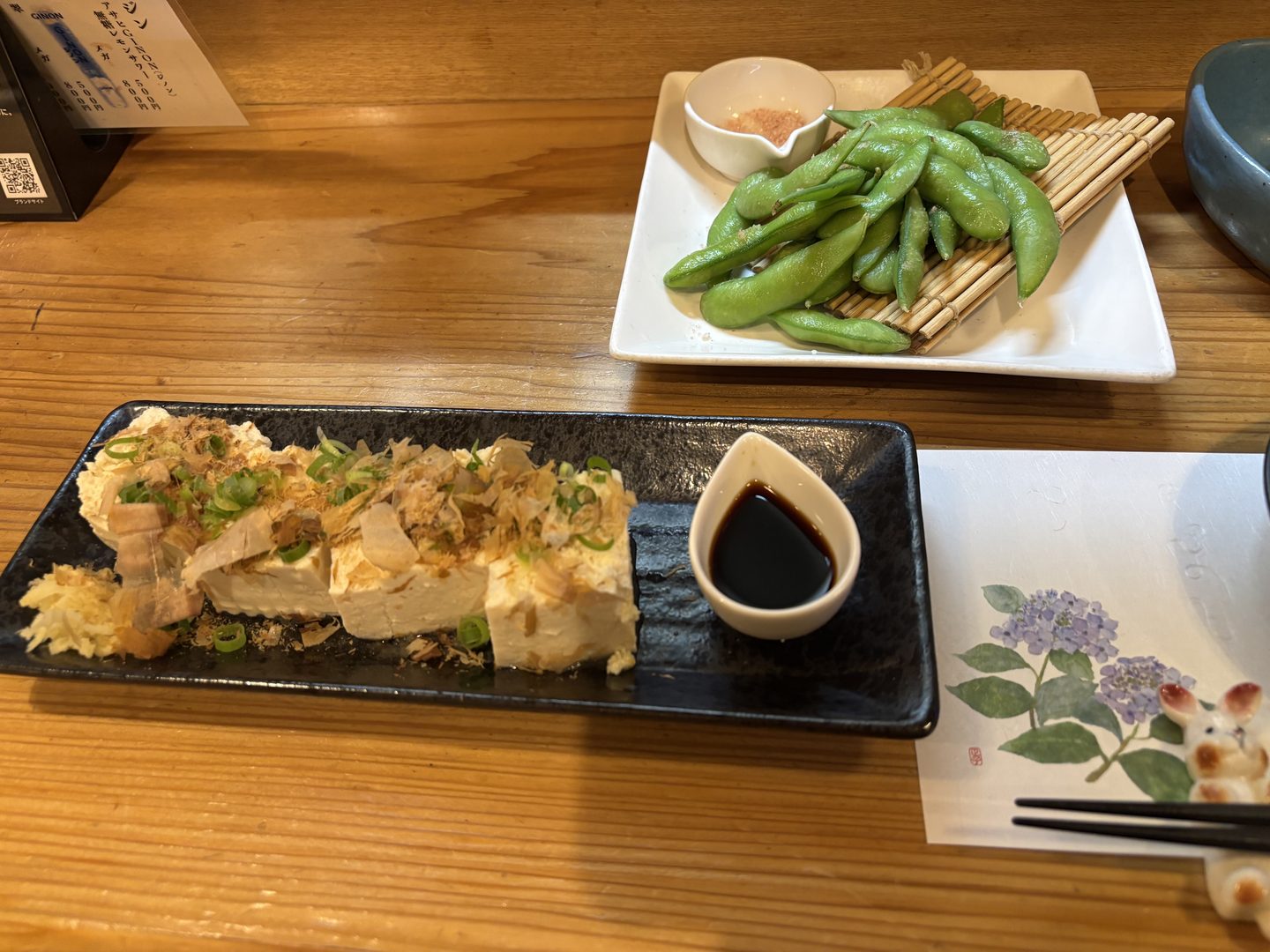
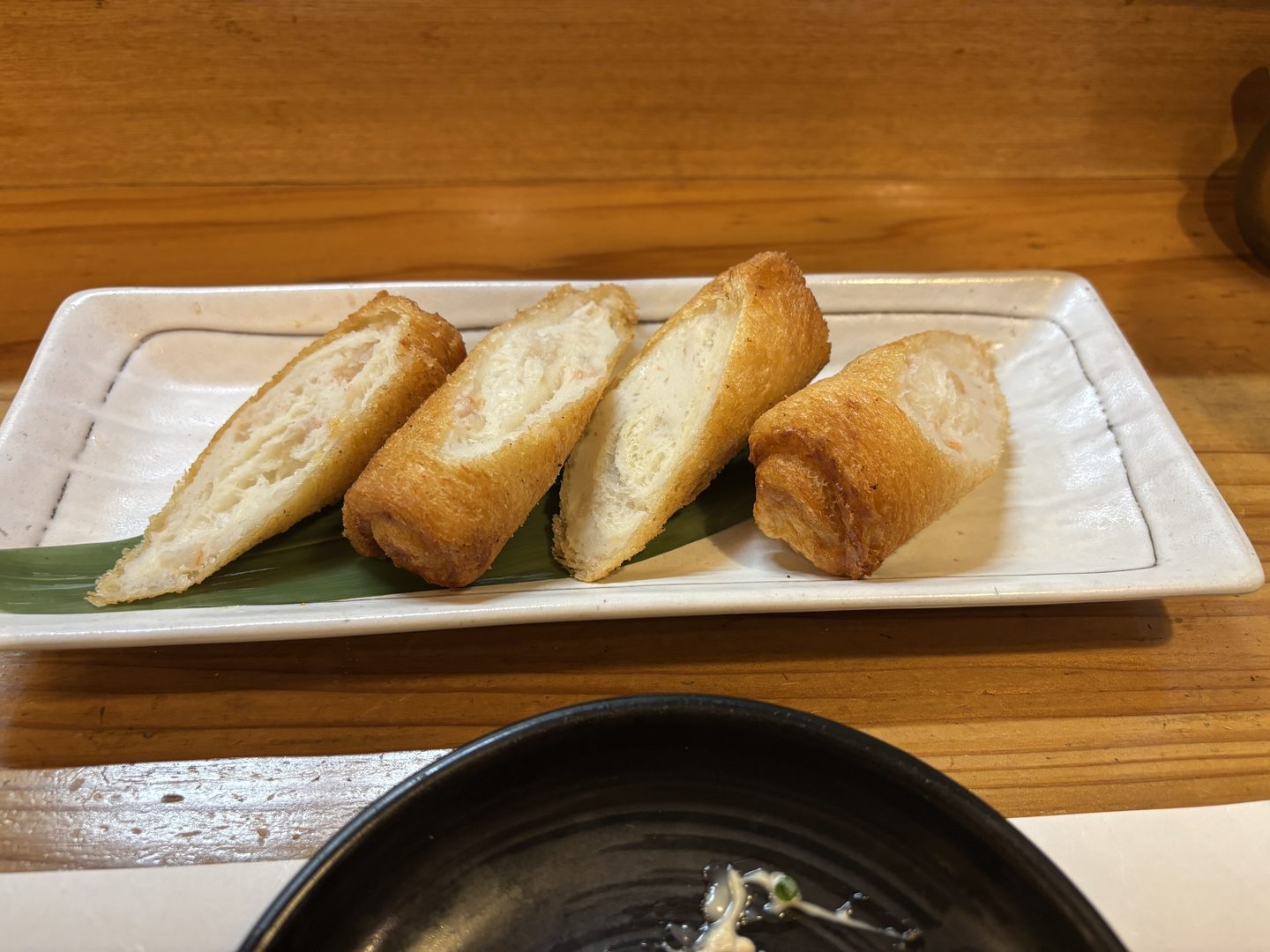
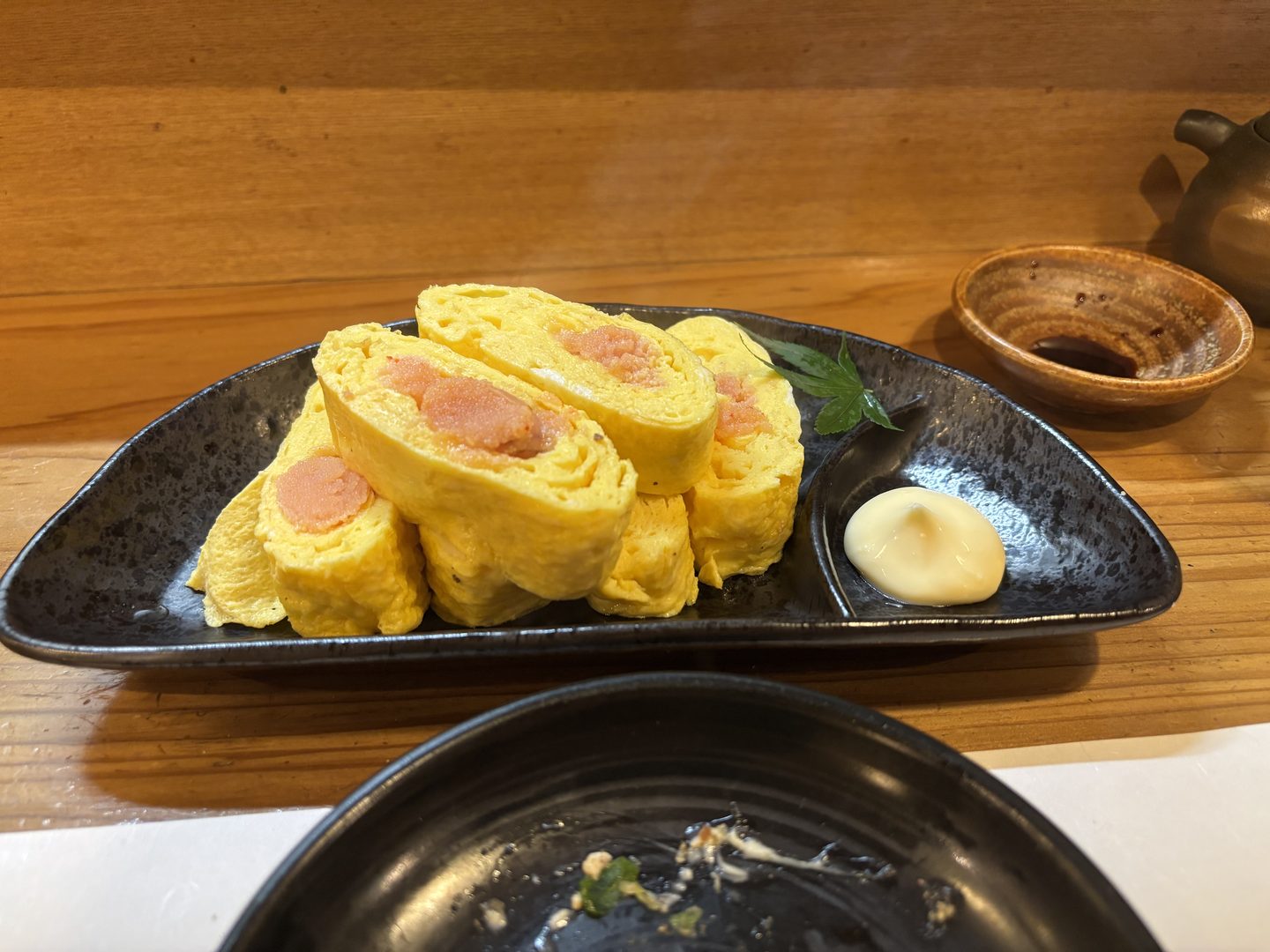
When I arrived, it was still fairly empty, but the seats filled soon after, so reserving in advance had been a good idea. The QR-code menu opened a web app that translated itself automatically into English, making the menu and its food previews much easier to understand. I had edamame, hiyayakko tofu, tamagoyaki with mentaiko, and hatoshi roll: Nagasaki-style shrimp toast, a deep-fried bread roll filled with shrimp paste. A highball went well with it all.
After dinner, I walked around the area a little longer. It was an easy, pleasant way to keep exploring Nagasaki on foot before heading to the station and taking a taxi back to the hotel.
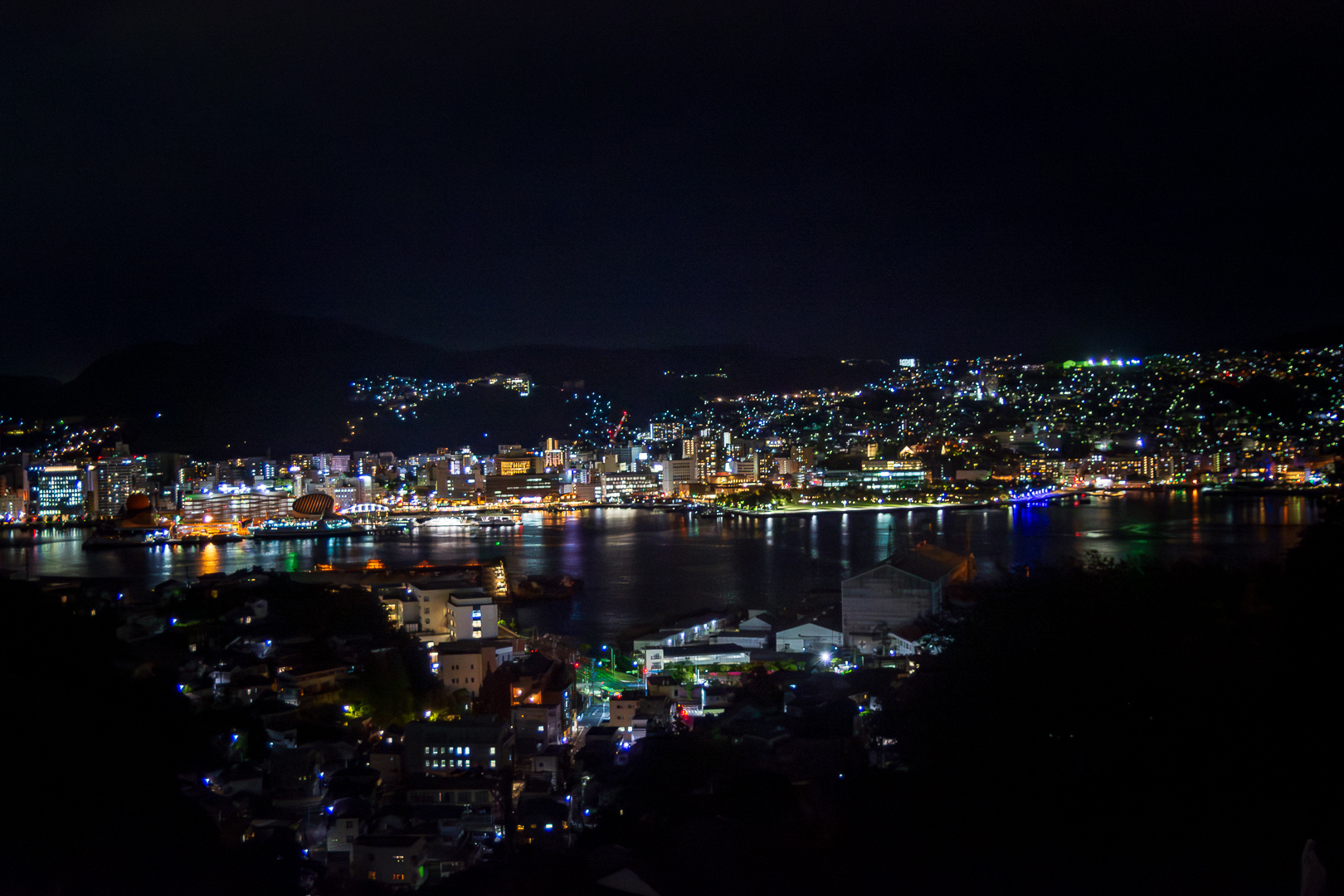
From my room I could take in the beautiful night view over the bay of Nagasaki whilst enjoying the jacuzzi.
A Clearer Morning at Dejima
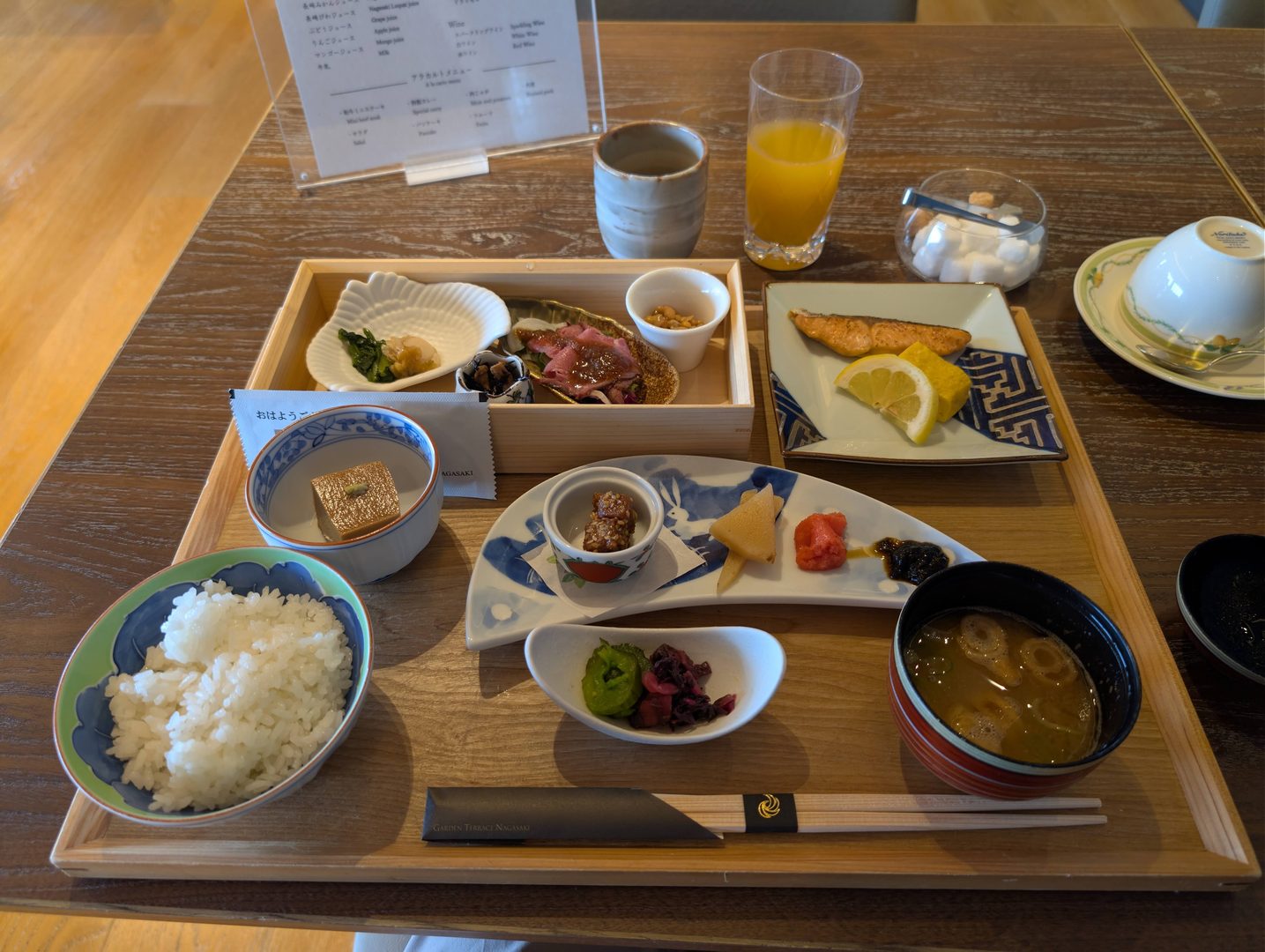
The next morning, the rain had stopped. It was still cloudy, but I was ready to explore more of Nagasaki. At breakfast, a different Japanese set meal was waiting: fried salmon, vegetables, natto, rice, miso soup, and various condiments. I always enjoy this variety of textures, colors, and flavors.
At 11:00 a.m., I checked out and took the shuttle bus to the station. I put my luggage in a coin locker so I could explore without having to return to the hotel.
I walked to Dejima, the former Dutch trading post. This fan-shaped artificial island was built in 1636 to confine Portuguese residents and limit the spread of Christianity. After the Portuguese were expelled, the Dutch trading post moved from Hirado in 1641—the route I would retrace in reverse the next day. For the next 218 years, until Nagasaki reopened to international trade in 1859, Dejima was the tightly regulated channel for Dutch trade, while Chinese trade was separately controlled nearby. What had once been an island is no longer recognizable as such because the city developed around it after the port opened. Today, Dejima is an open-air museum with surviving buildings and reconstructions, including residences, warehouses, walls, and gates.
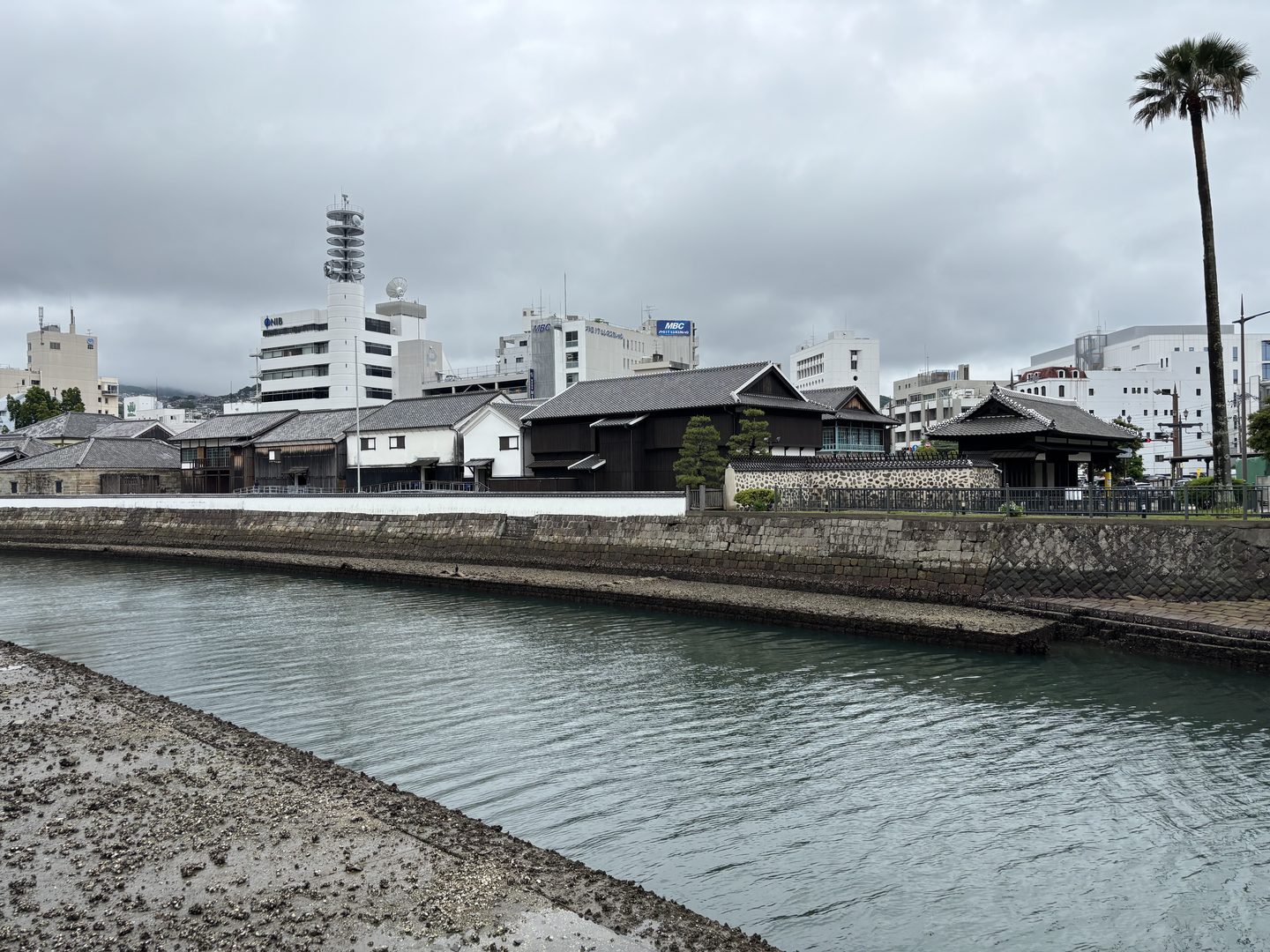
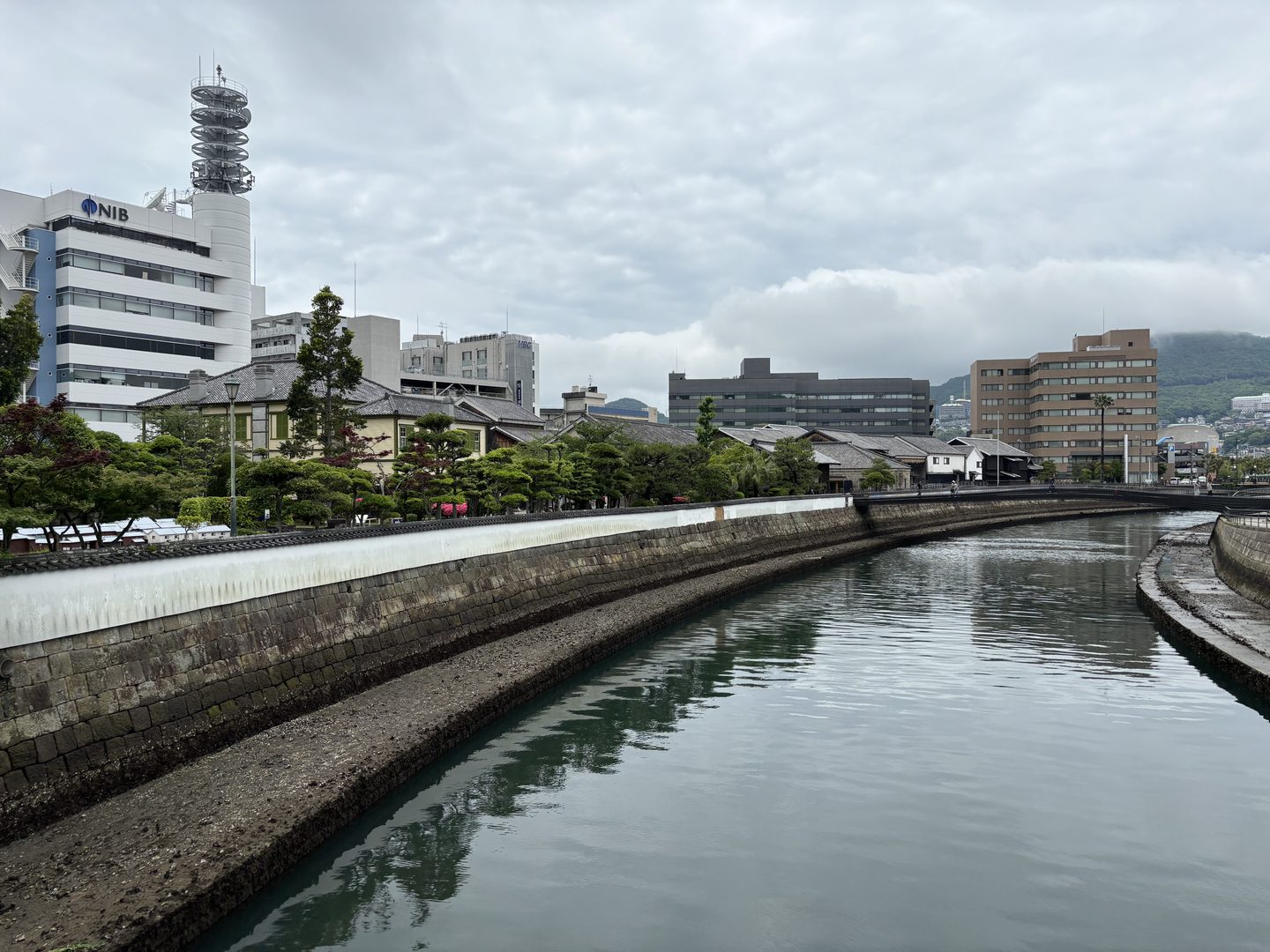
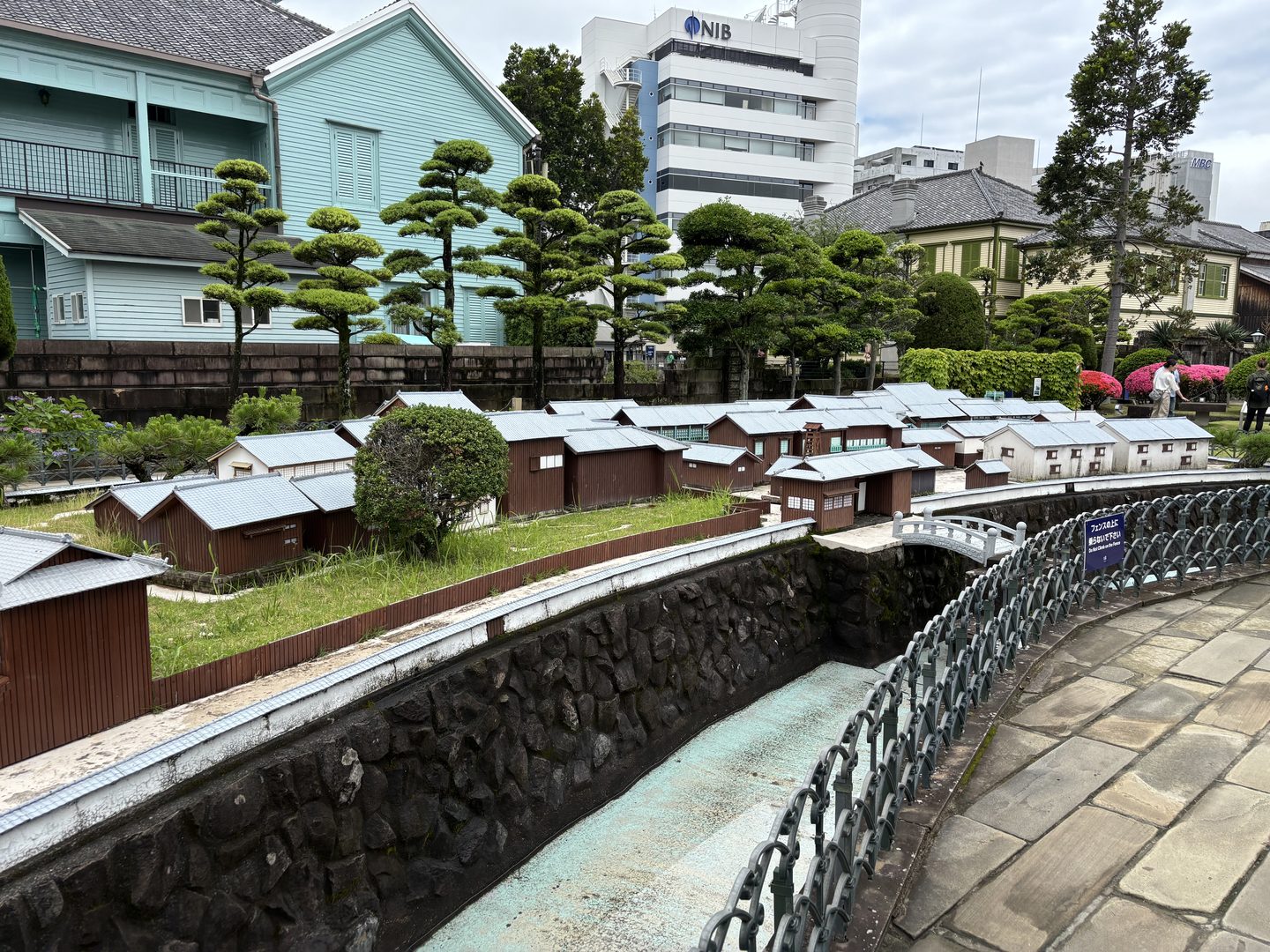
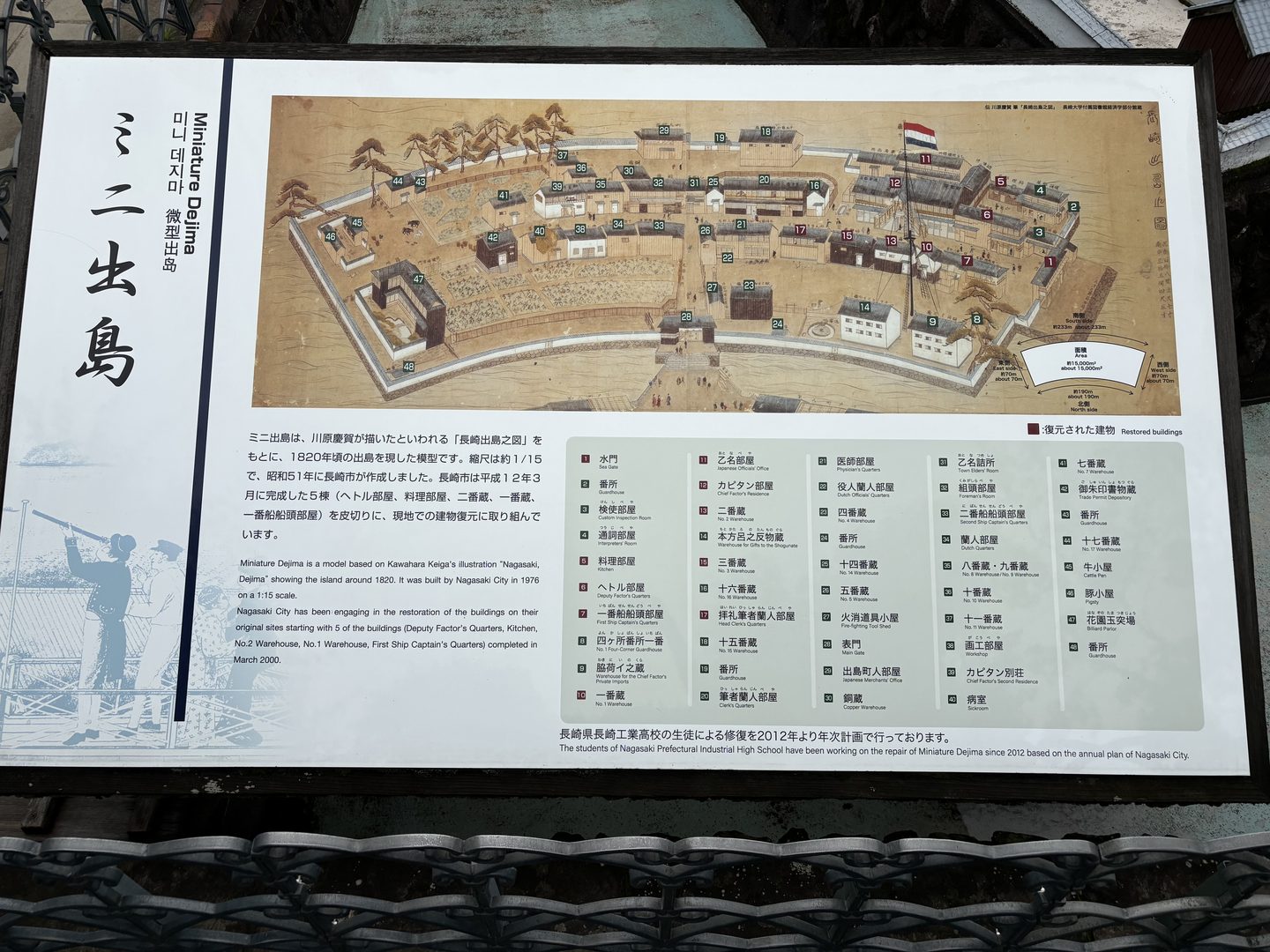
Dejima was not only a place for goods to change hands: it was a channel for European science, technology, and culture to enter Japan. One highlight for me was learning about the ceramic trade in both directions, with Dutch ceramics coming to Japan and Japanese ceramics traveling back to Europe. The Sugar Road gave this history another dimension. Sugar imported through Dejima traveled along the Nagasaki Kaido toward Kokura, carrying a new ingredient—and eventually a new sweets culture—far beyond Nagasaki.
By then, it was time for lunch in the Kankō-dōri shopping arcade. So far, I mainly knew Sasebo for the influence of the U.S. Navy base on its food culture and for its local burger. Thinking about it so much, I could not resist a quick burger in Nagasaki at THE STAND HILL.
Chinese Trading Streets and Hillside Views
Backtracking south, I found myself again in the small Chinatown district, which was at least open during the day, unlike the previous evening. It was smaller than I remembered: one block, a few streets, and mostly touristy shops.
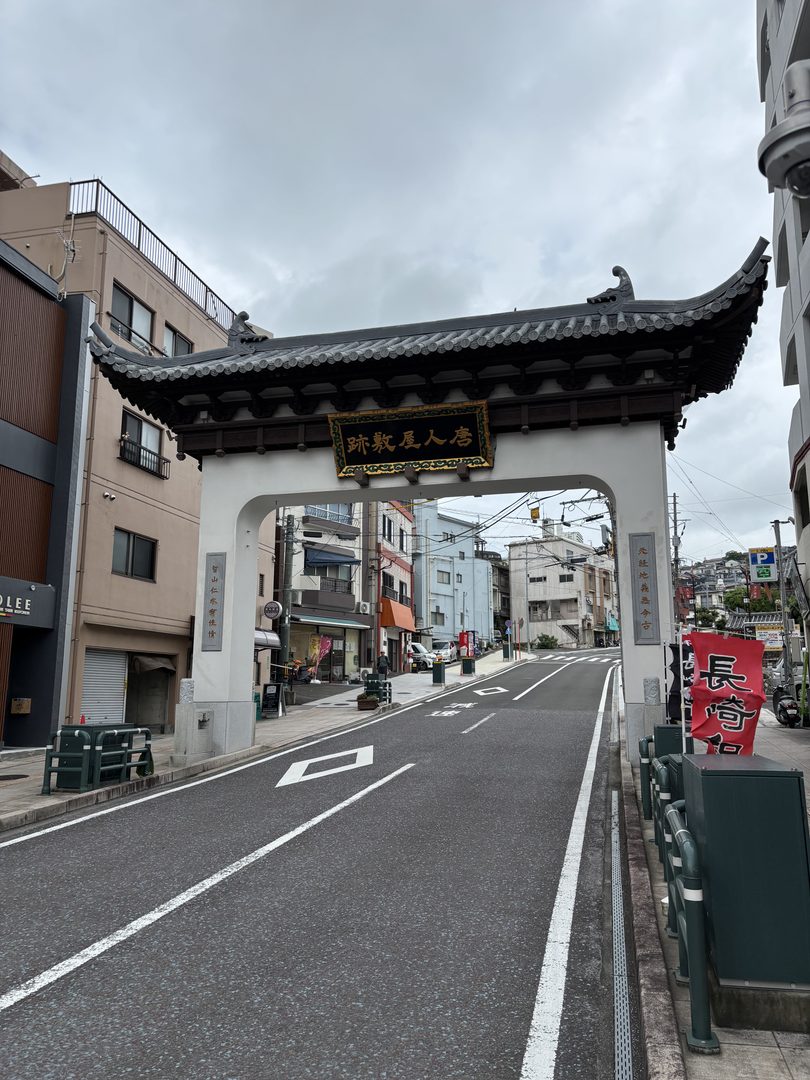
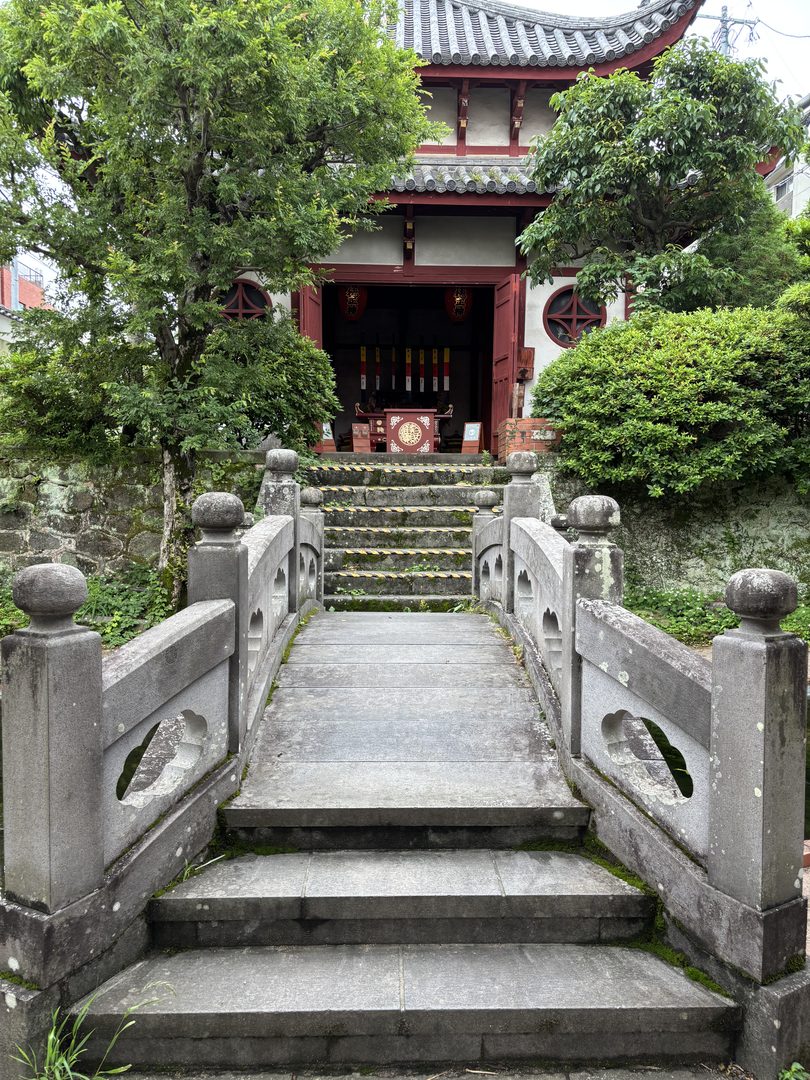
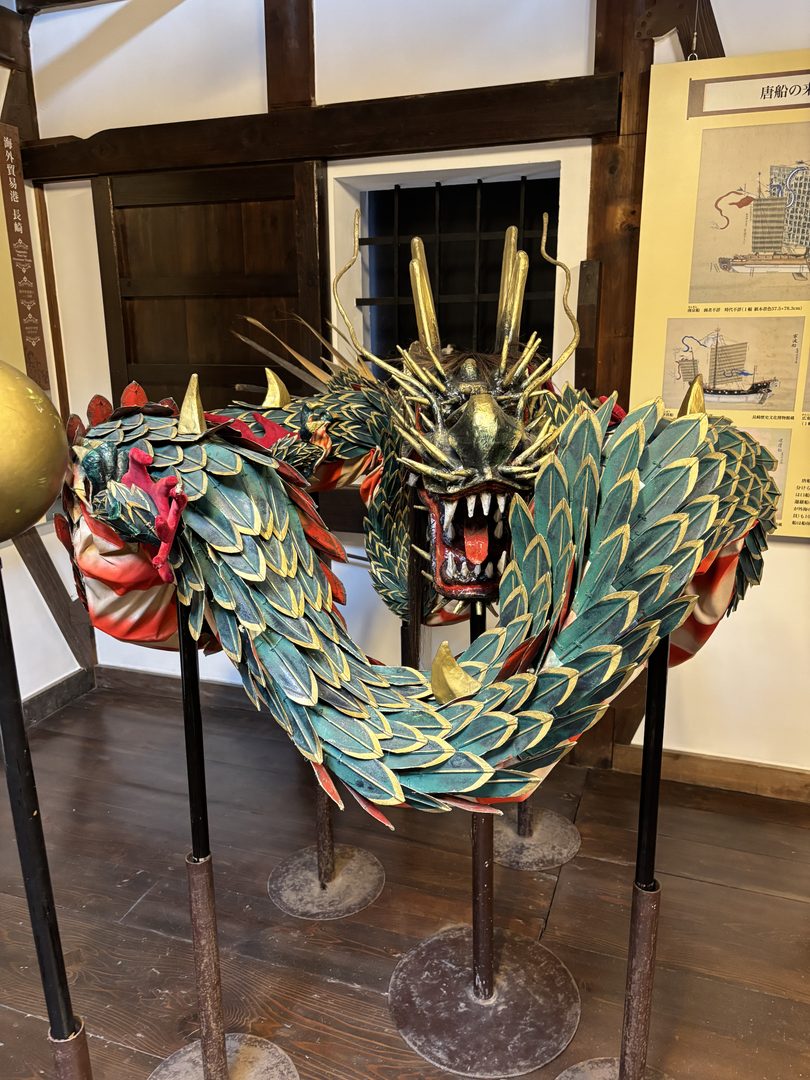
Behind it, though, was the former Chinese Quarter, or Tojin-yashiki, where the history of Chinese merchants in Nagasaki remains visible. A Chinese-style gate leads into a small district with several shrines. A surrounding moat once helped restrict movement in and out of this walled quarter.
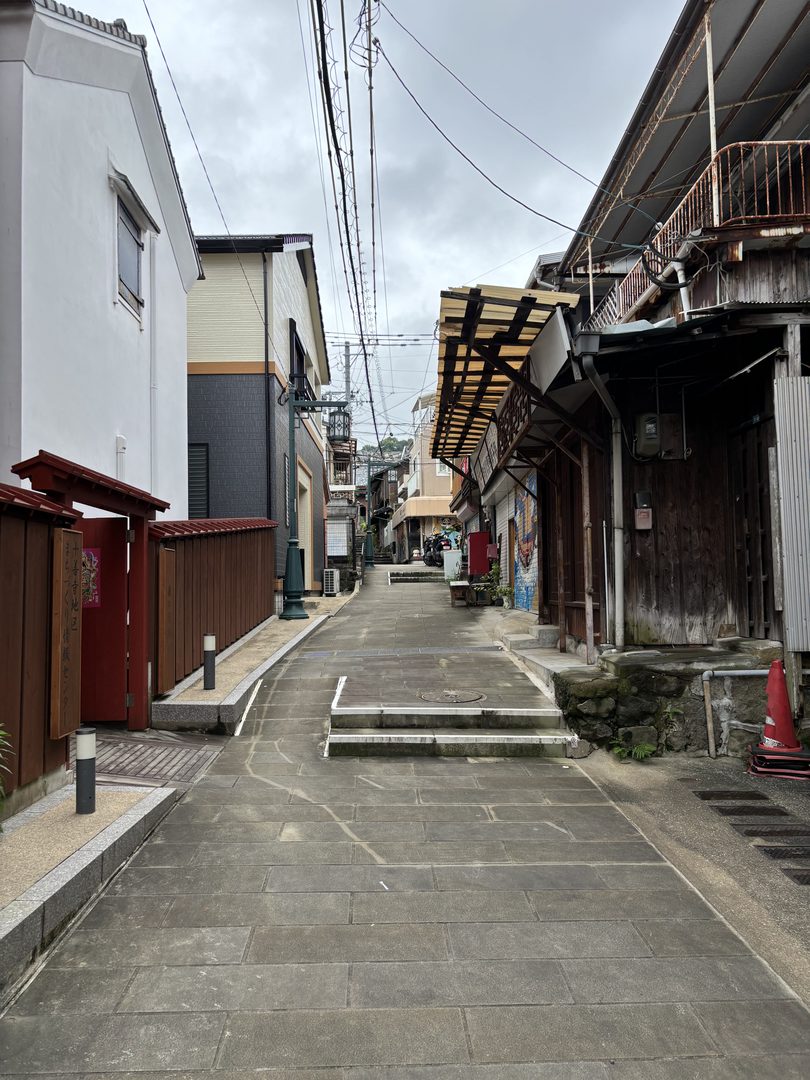
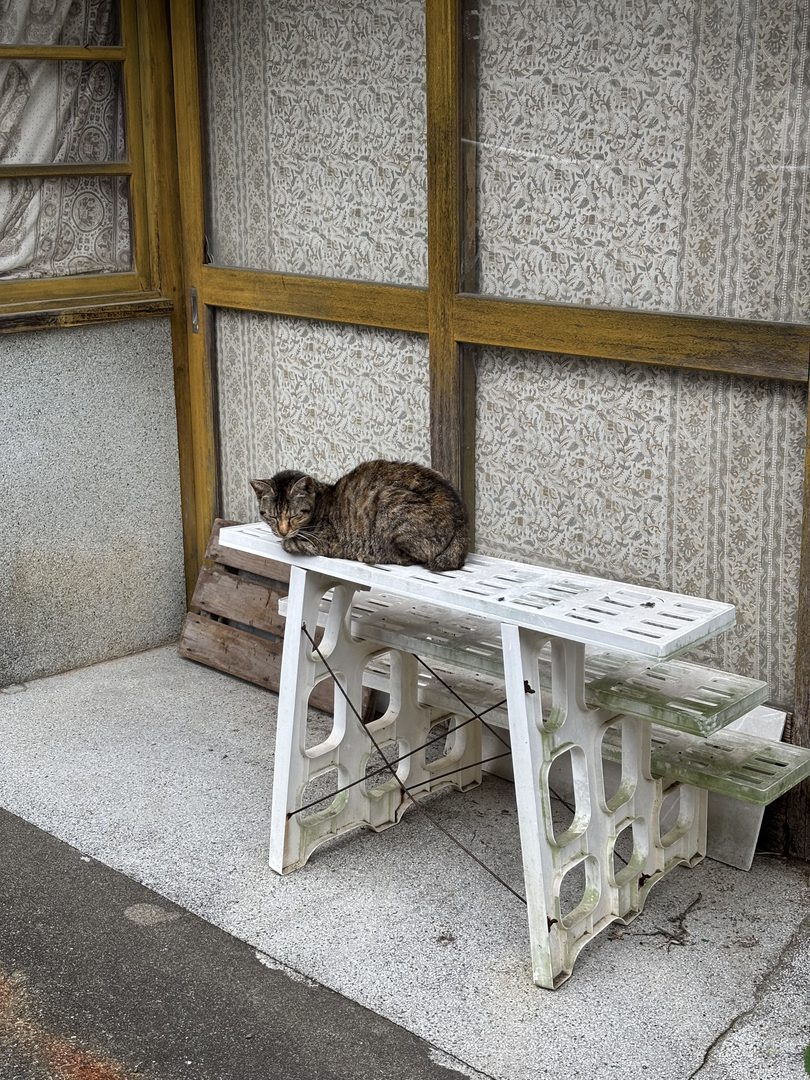
Retracing my steps almost to Chinatown, I turned left into another small road and climbed the hill again, toward the Dutch Slope area. I found another quiet neighborhood where there seemed to be more cats than people on the street. I also learned that Nagasaki is known for its kinked-tail cats, or omagari neko. They are believed to have arrived on ships from the Dutch East Indies, where they hunted rats before making a home in this port city.
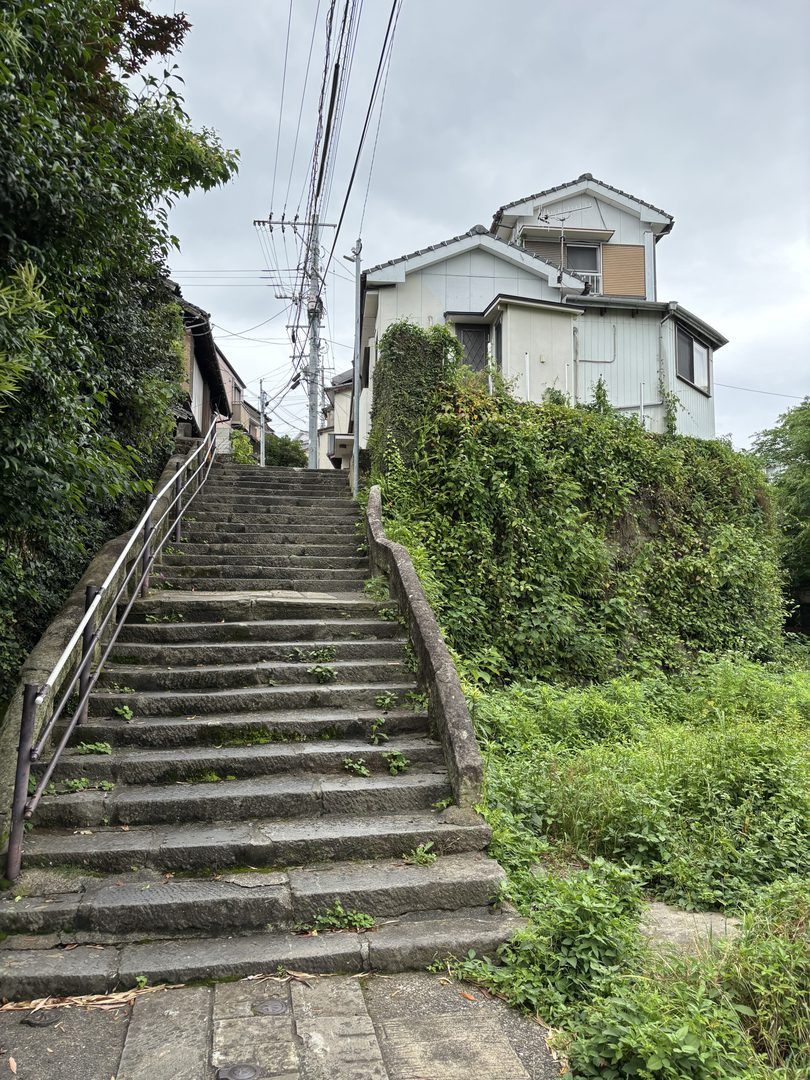
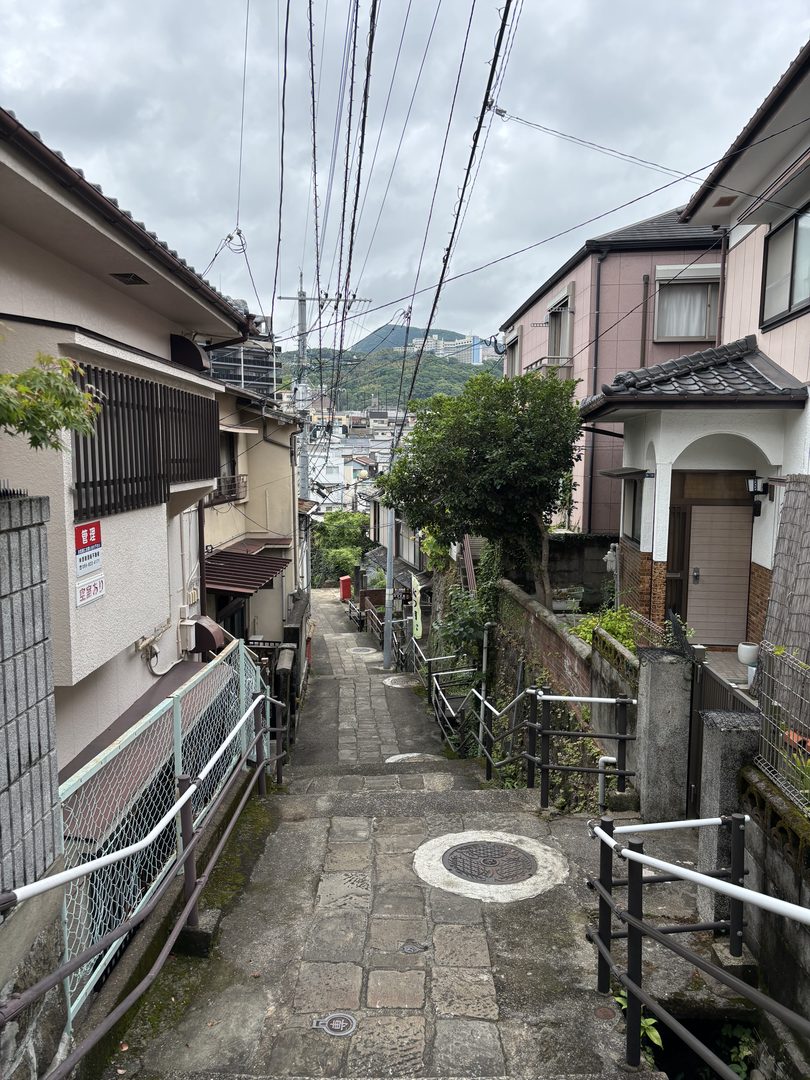
The street eventually descended sharply toward one of the tram stops. Another hill, home to Glover Garden, came into view. This time I did not have to climb all the stairs: the Glover Sky Road, a slanted elevator, takes you almost to the top. It smelled strange inside, but it was still the right decision.
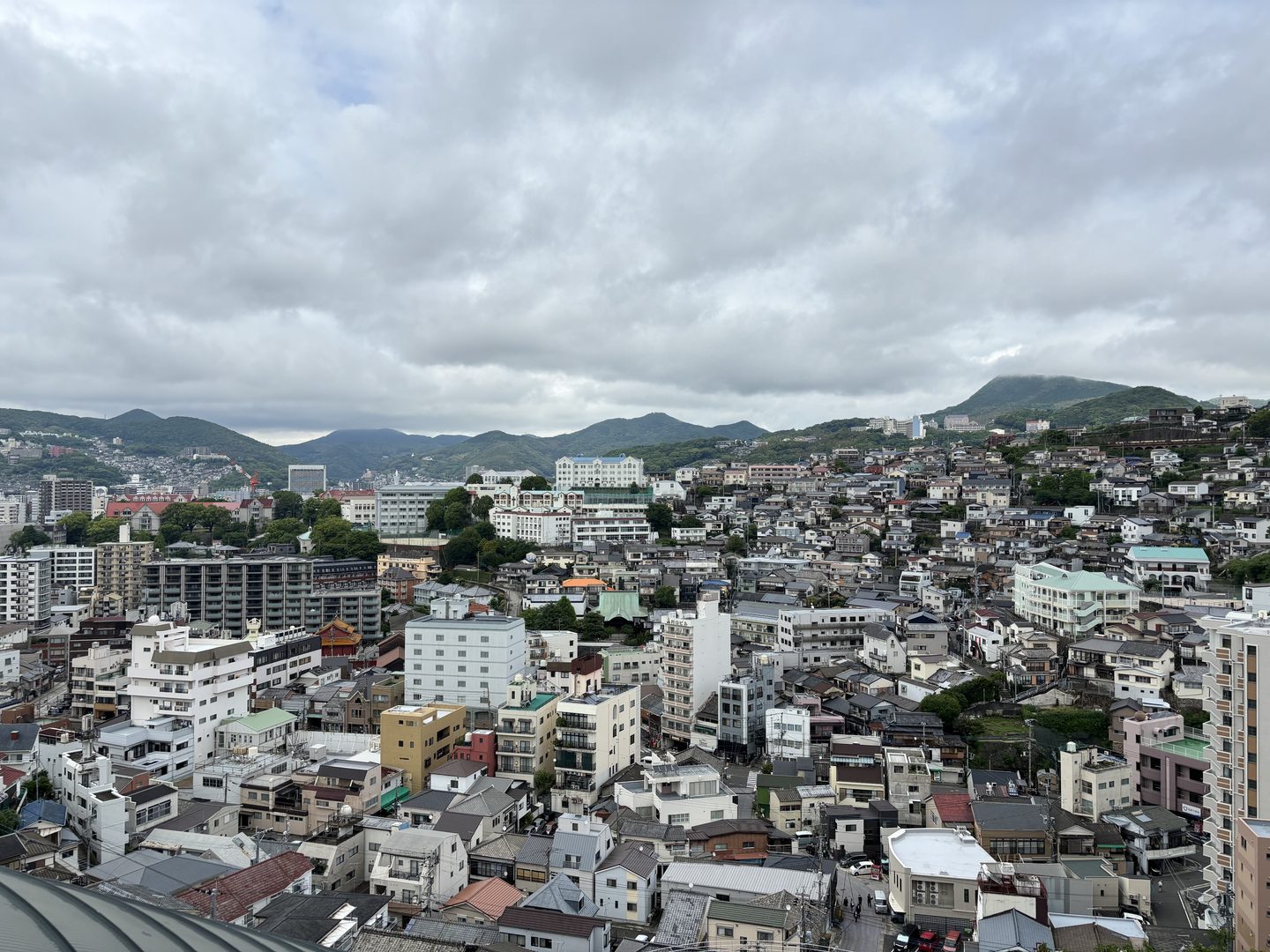
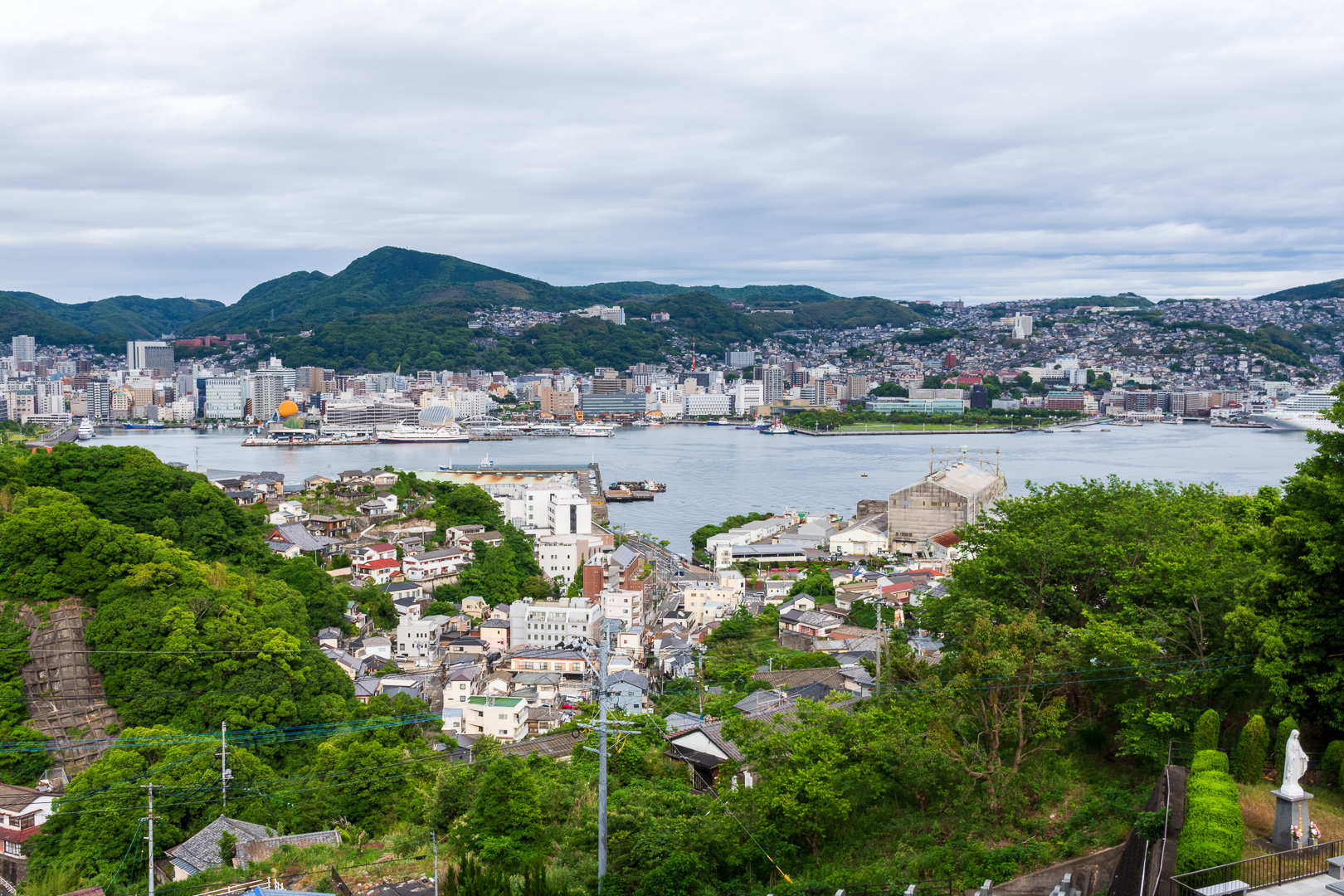
The view from there was already excellent, but it became better still soon after. Glover Garden is well worth visiting, but I had been there on my last trip, so I skipped it and climbed farther uphill under my own power to the observatory at Nabekanmuri Park. From the 169-meter hill, the view opened across Nagasaki’s harbor and city, all the way to my hotel on the other side. A wild hawk circled close overhead again and again. I never saw any prey, and it never made a dive, but I managed to film it.
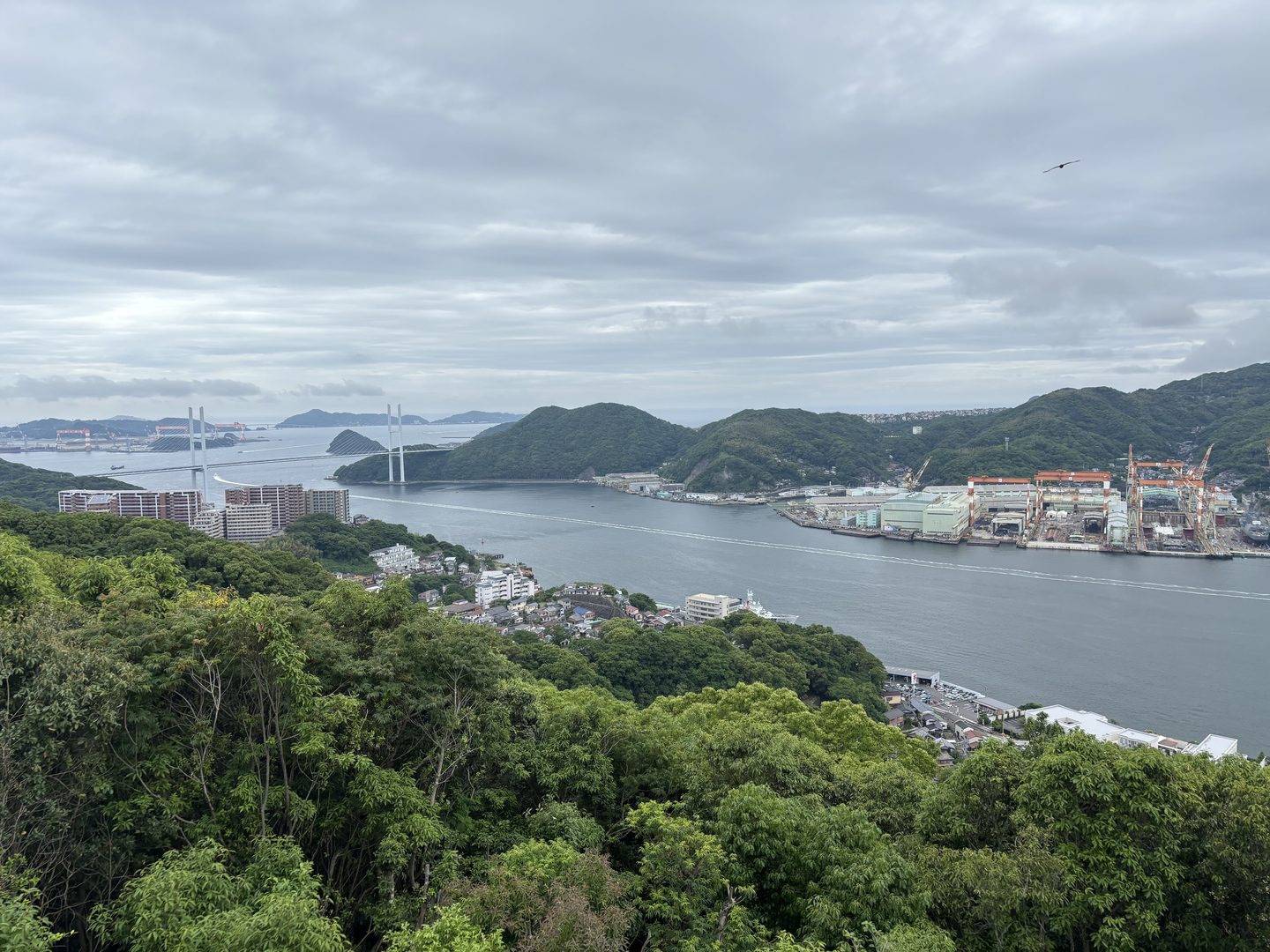
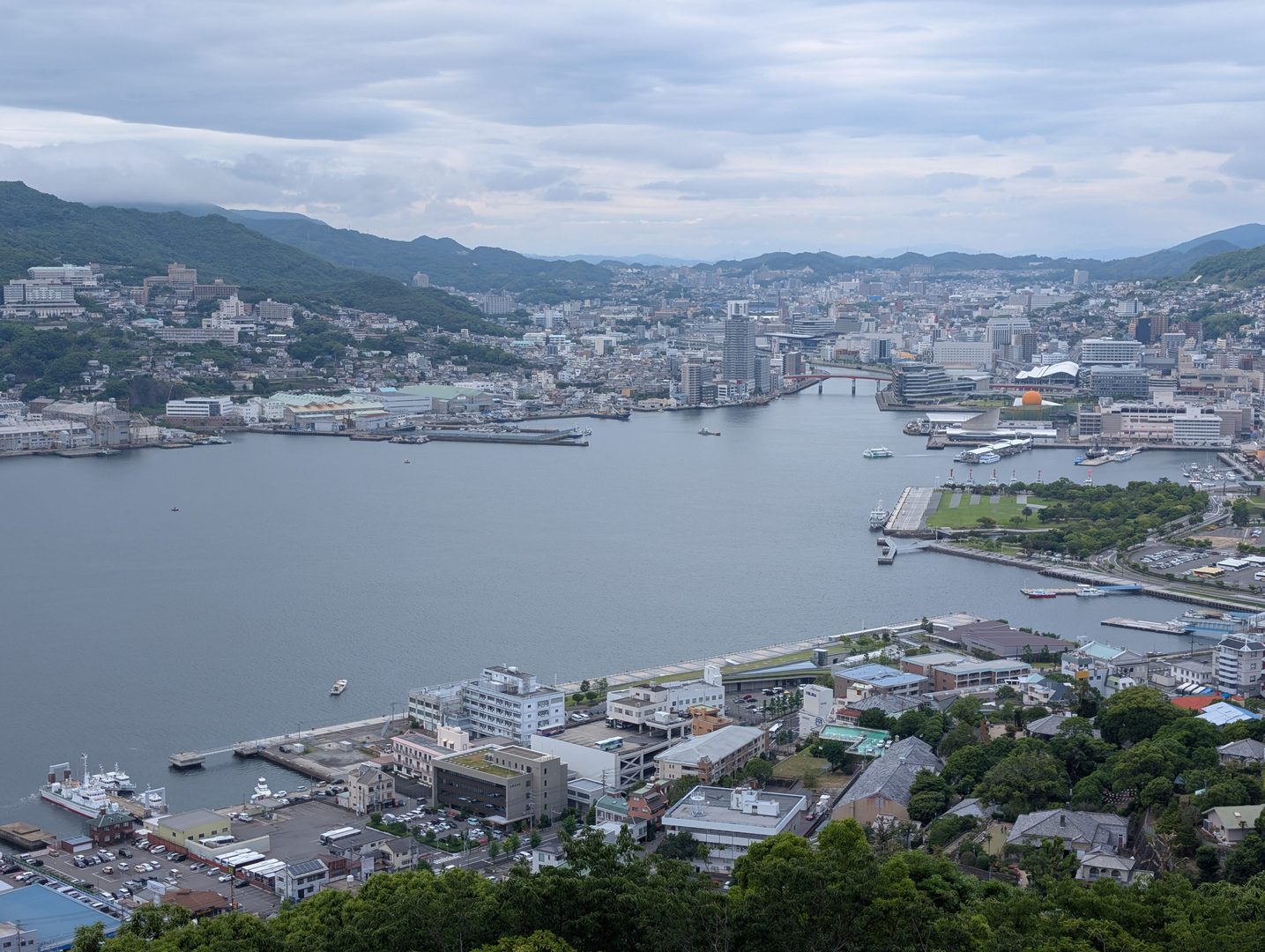
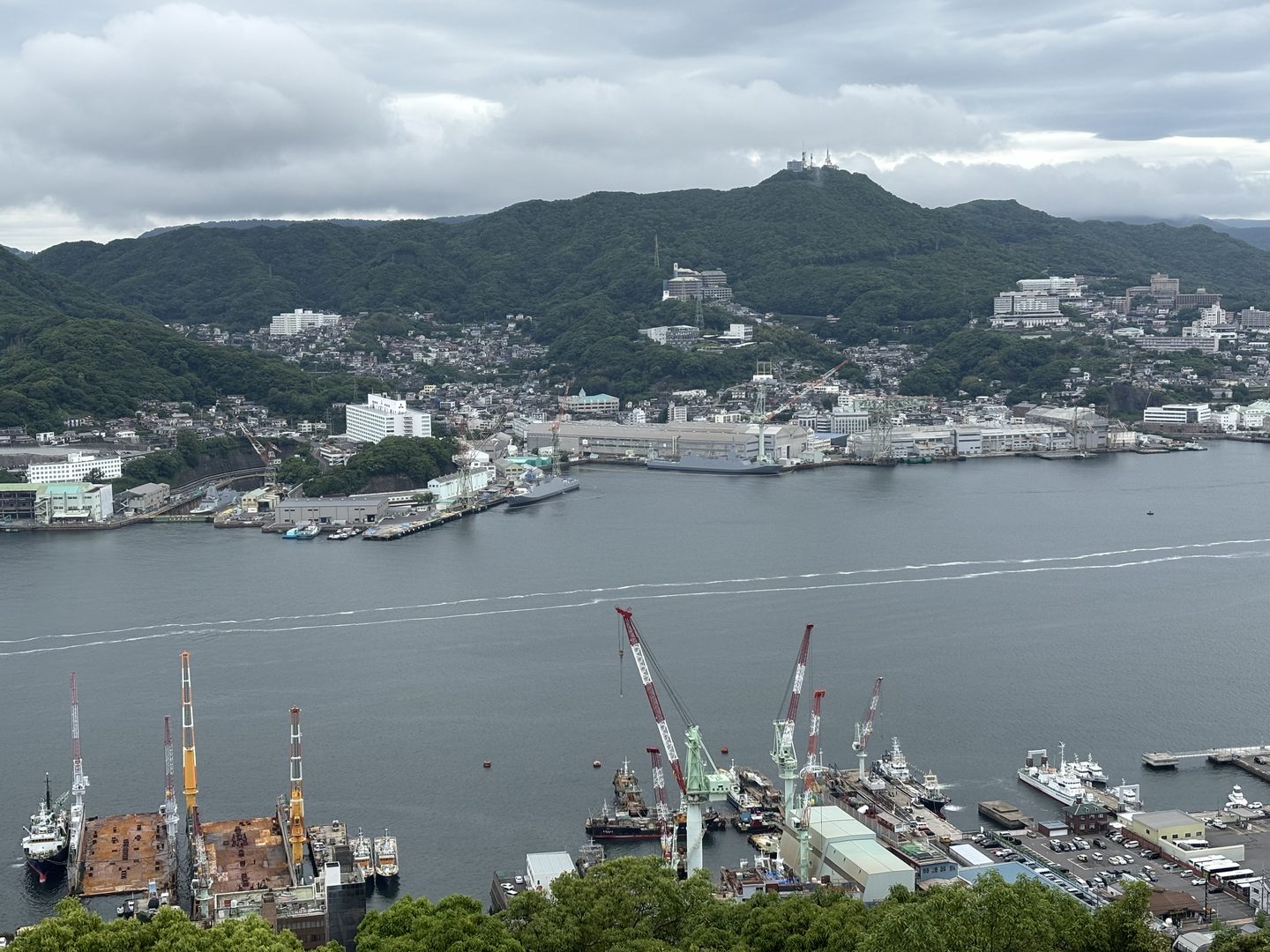
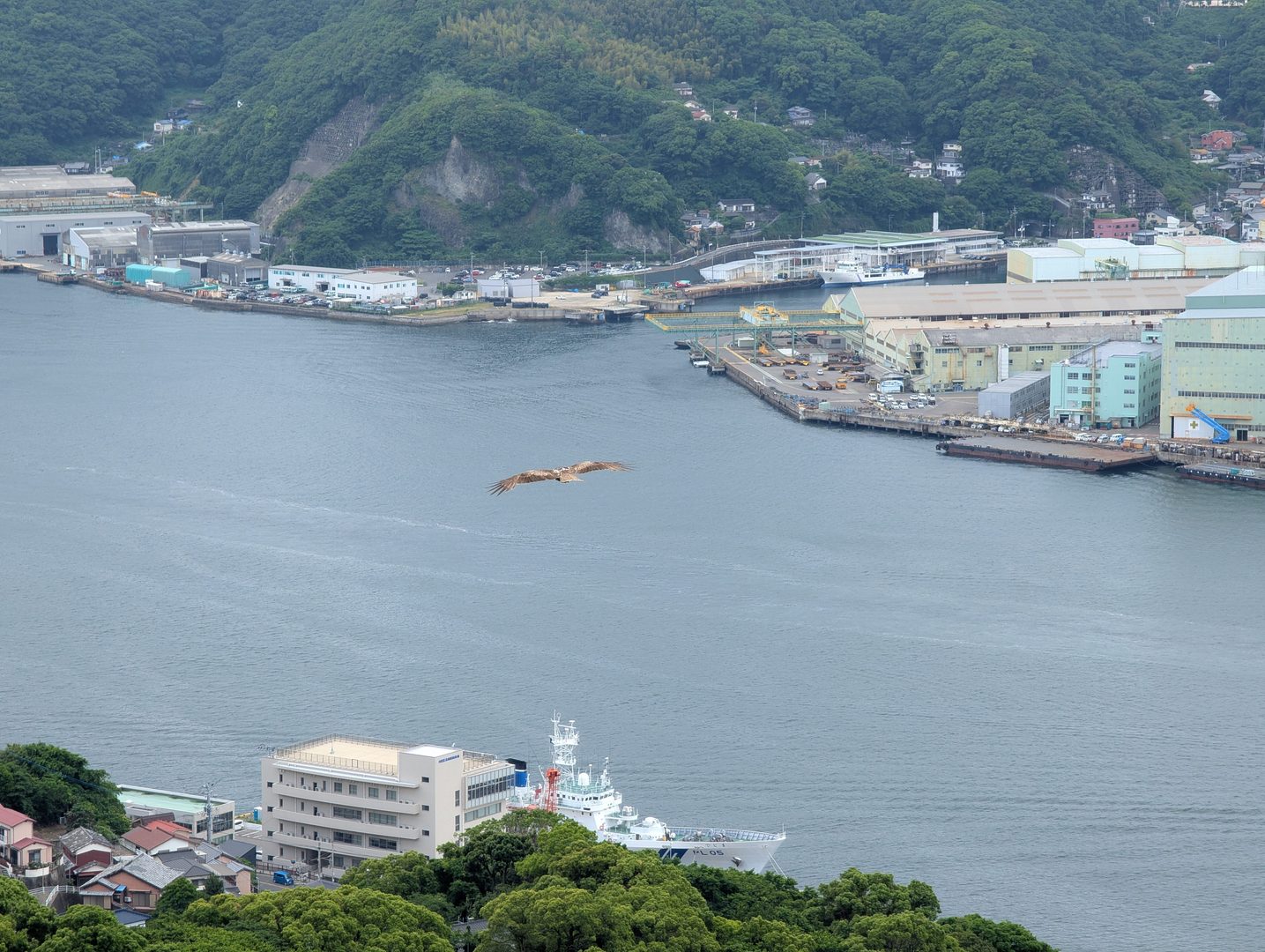
By then, I had already spent more of the day in Nagasaki than planned. From the observatory, I decided I would rather enjoy the city in the better weather than squeeze in a rushed visit to Huis Ten Bosch. With that settled, I headed back to ground level and left the city.
Along Ōmura Bay to Sasebo
At the station, I collected my bags from the coin locker, tapped in with the IC card on my phone, and boarded a train that was about to depart. Although it covered a long distance, it had the layout of a local train: sideways seats and plenty of standing space. It was not designed for a long ride. Nagasaki now has a Shinkansen connection, but Sasebo is not on that line, which explained the slower journey. The train seemed to be mostly used by middle school students; I did not see anyone else traveling the whole way.
The Seaside Liner lived up to its name as it followed Ōmura Bay north. We also passed Sonogi, a town known for tea, and I enjoyed a bottle of green tea from the region as we went by. It was indeed delicious.
In Sasebo, I went straight to Hotel Resol Sasebo, across from the station plaza, and checked in. Sasebo immediately felt more American-influenced than Nagasaki: there was more English around and, because of the military base, more Western visitors. In contrast to the Nagasaki hotel, I had chosen a genuinely old budget business hotel that was not especially well maintained. The room still had a now-defunct analog panel for a radio and alarm. For a moment, I thought I had found a time machine.
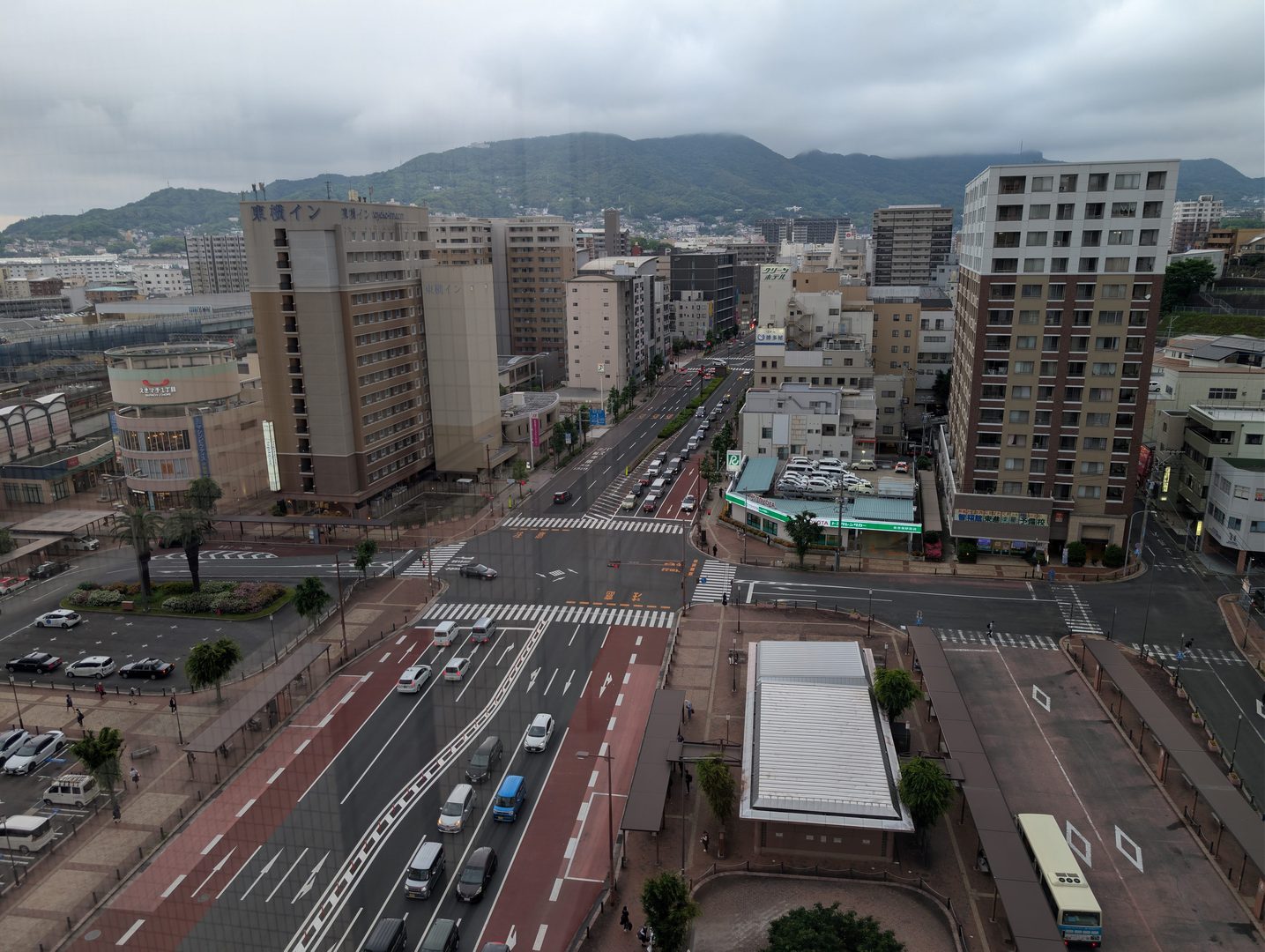
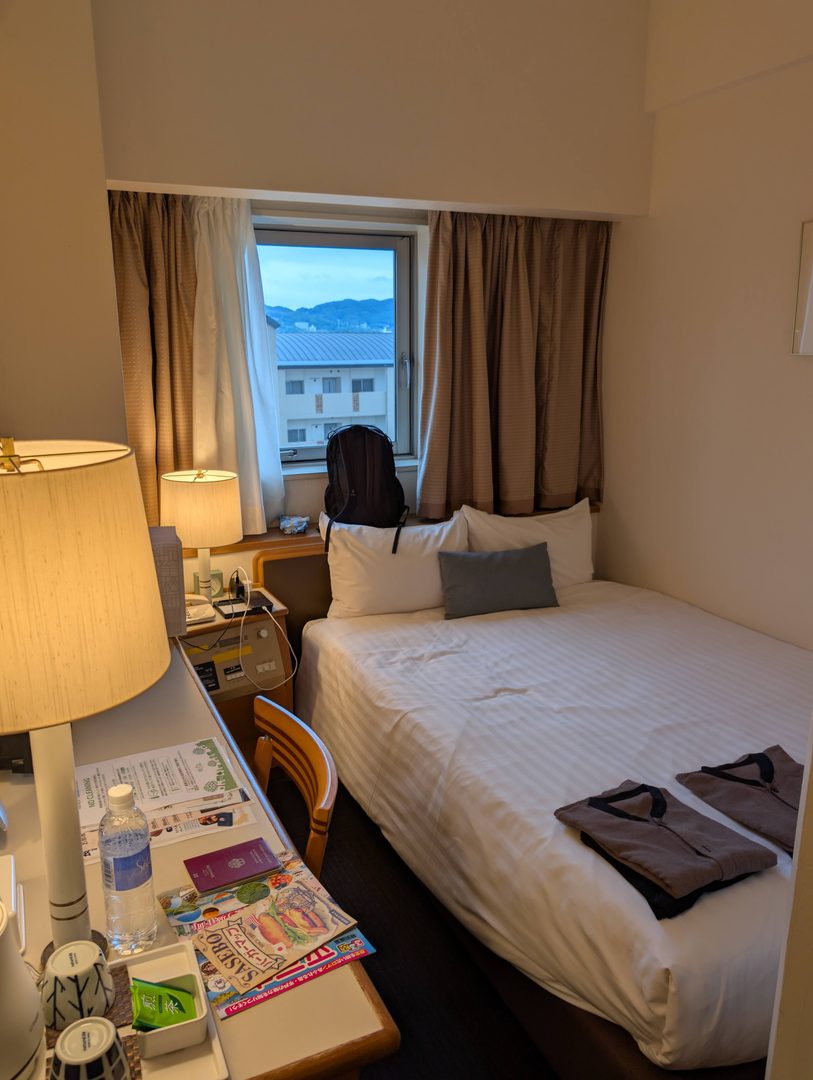
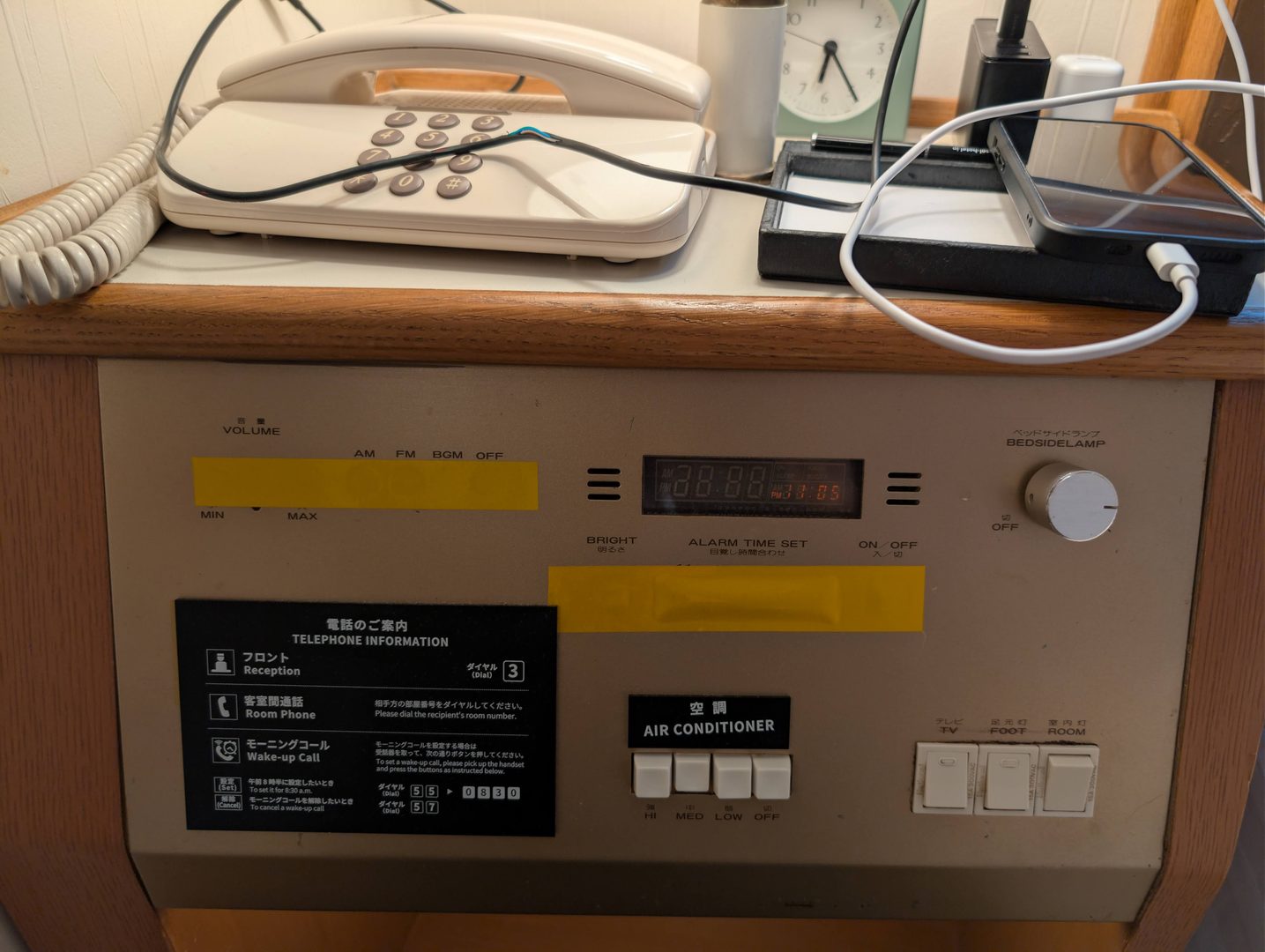
I was already starving, so I quickly looked for dinner. I followed Sasebo’s long covered shopping arcade and tried two yakitori places, but neither had room for me without a reservation. I instead settled on Gyoza no Ohsho. I ordered rather a lot, but enjoyed the gyoza, hoikoro, and fried kimchi rice.
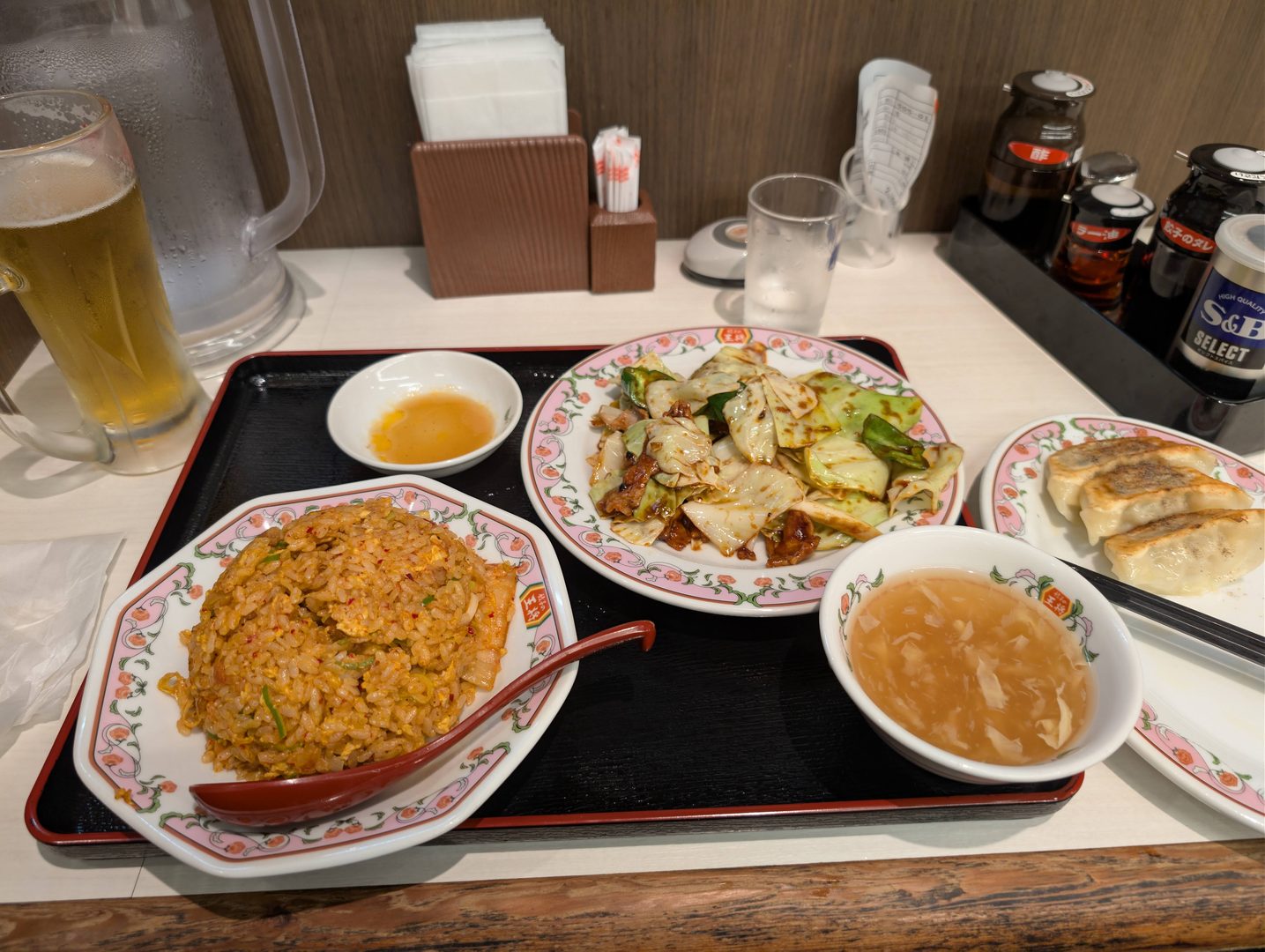
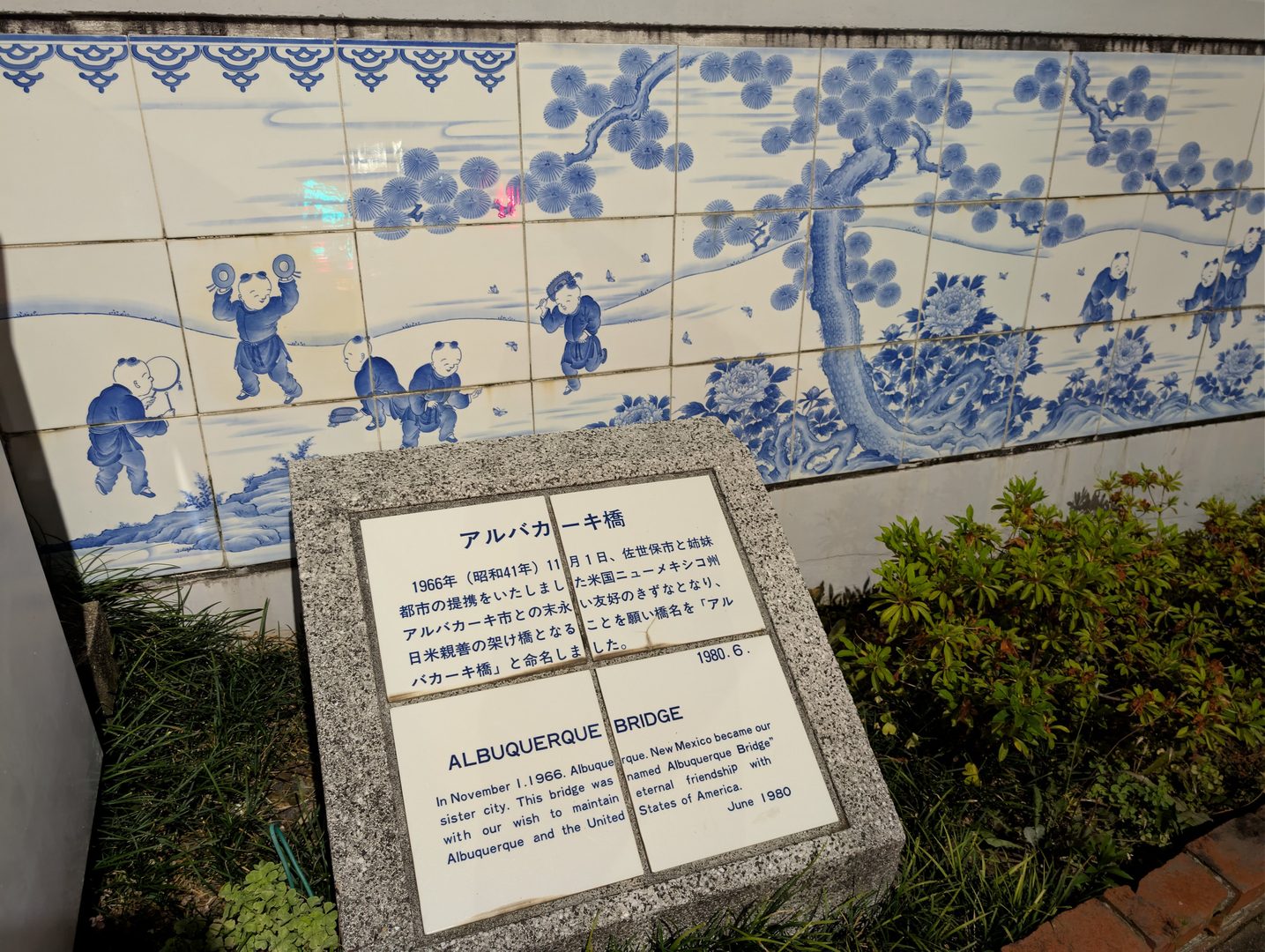
I went for a walk after dinner, following the shopping arcade to its end and continuing along the waterfront. I also crossed Albuquerque Bridge, which marks Sasebo’s sister-city friendship with Albuquerque, New Mexico, since 1966, before returning toward the hotel. On the way, I stopped at 7-Eleven for a smoothie. These frozen fruit cups are placed into a blender machine in the store, which turns them into a fresh, cold smoothie within a few minutes. Back at the hotel, I called it an early night. The next morning, I would pick up a rental car and head toward Hirado and Ikitsuki.
Japan 2026 · Part 3 of 12
← Previous: A Journey Starts at Home: From Basel to Nagasaki
Start of the series
Coming next: Hirado, Ikitsuki and Kujukushima: Along the Coast from Sasebo — November 6, 2026.
Entdecke mehr von Tabimonogatari - 旅物語
Melde dich für ein Abonnement an, um die neuesten Beiträge per E-Mail zu erhalten.
Pingback:A Journey Starts at Home: From Basel to Nagasaki - Tabimonogatari - 旅物語