November is one of the best months to travel in Japan, especially outside major cities. With autumn colors appearing in the mountains and winter slowly approaching at higher elevations, it is an ideal time to explore rural regions beyond the usual routes. This article is the start to a series that explores travelling Japan’s North in autumn.
In October 2024, I left Japan and moved back to Switzerland. It was a conscious decision for career reasons, but one that came with mixed feelings. And now, a year later, I felt an itch to return — not just as a visitor, but as someone returning to a place, a region, and a country I know like no other.
I was not alone in that sentiment. Five close friends from Switzerland were also planning to visit Japan in autumn, and we tried to coordinate our schedules to spend at least part of the journey together. In the end, it worked out surprisingly well: out of three weeks in Japan, I spent two days with two of them and nearly two full weeks on a road trip with the other three. It turned into a good balance between shared experiences and moments of individual travel — something I have come to appreciate more and more over time.
The Theme: Tohoku in November
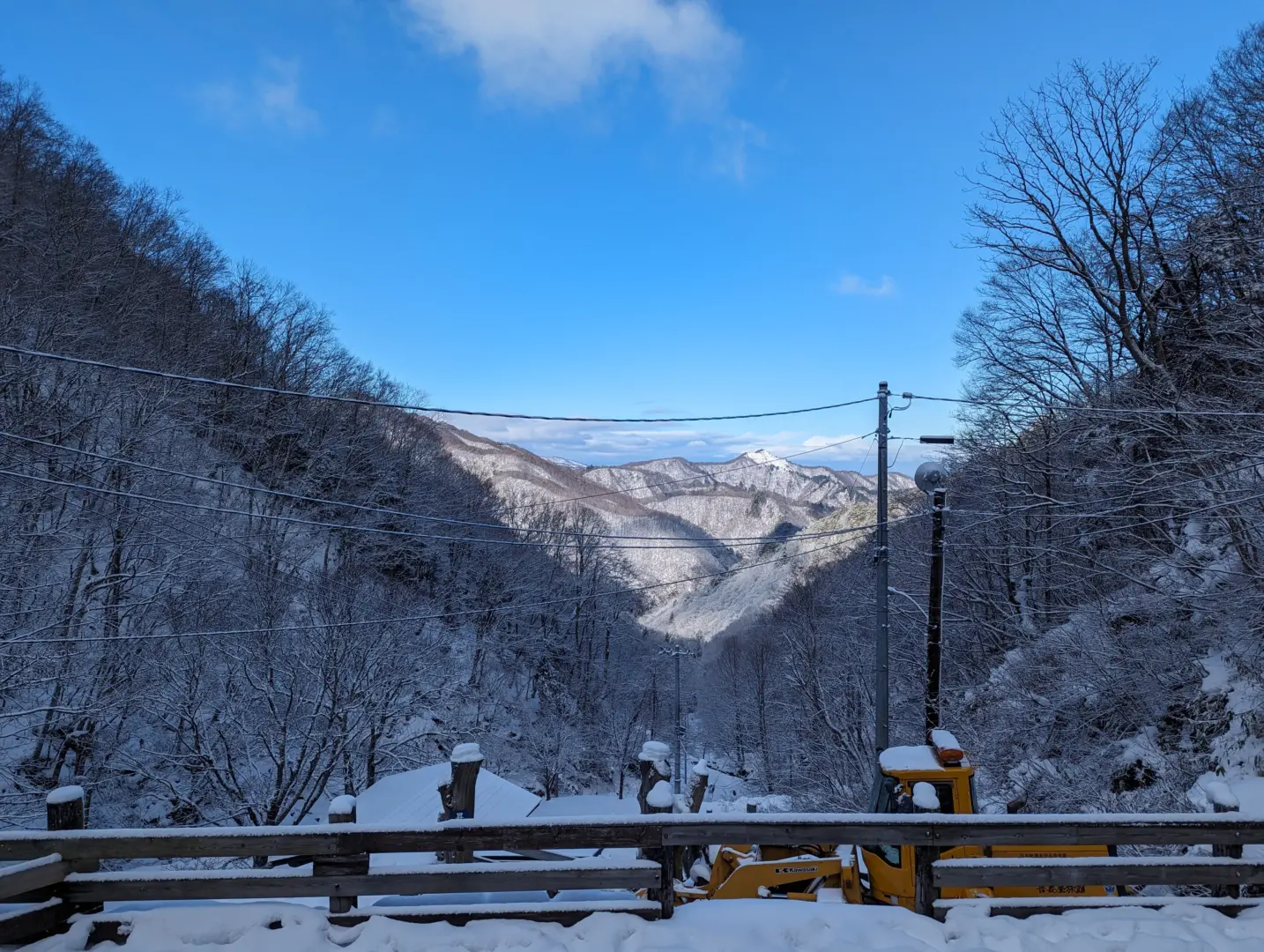
This time, revisiting places I already knew well was not my main priority. Instead, I wanted to focus on regions that were still largely new to me, even after multiple trips to Japan. The country offers far more than its most visible highlights, and lately, traveling in lesser-visited regions feels more balanced, calmer, and often more rewarding.
Back in January 2024, I traveled through Tohoku for five days in the depths of winter. It was a memorable and intense experience, visiting places like Hachinohe, Morioka and Aizu Wakamatsu. These cities are well connected by the Shinkansen, making travel efficient and straightforward — even in snowy conditions.
Returning to Tohoku felt like a natural choice. It was a region I had already encountered but never explored in depth, and large parts of it still felt like unknown territory. Especially the inland and western areas, where public transport becomes sparse and distances longer, had remained out of reach. Traveling as a group made one thing clear very quickly: renting a car would open up possibilities that would otherwise be difficult or impossible.
November proved to be an ideal time for this journey. One obvious motivation was autumn foliage — arriving earlier than in Tokyo, yet later than in central Europe, making it possible to experience peak colors twice in the same year. Beyond that, November offered comfortable temperatures, the end of the typhoon season, and relatively few domestic holidays, keeping visitor numbers manageable.
At the same time, we were aware of the trade-offs. Daylight hours are noticeably shorter, and in higher-altitude areas winter already begins to make its presence felt. Some mountain roads close early, and snowfall on the road is always a possibility.
This article provides an overview of the journey. Detailed impressions and travel reports from individual locations will follow in separate posts.
How the Route Took Shape
Planning this trip took more time than usual, mainly because decisions had to be discussed and agreed upon as a group. Still, the process turned out to be smooth. My companions Daniel, Matthias and Nick trusted my travel experience, allowing me to sketch out large parts of the route early on and refine it together with them.
The route did not emerge fully formed. Instead, it developed gradually through discussions, suggestions, and several rounds of revisions. About half a year in advance, we agreed on a broad framework: meeting in Aomori at the northern tip of Honshu, renting a car there, crossing Tohoku from north to south, and eventually ending the road trip in Kanazawa. From there, we would switch back to trains and return to Tokyo.
Before meeting in Aomori, the other three would first travel through Korea, while I spent a few days in Tokyo meeting two other Swiss friends, Micu and Reto. After the road trip, we (Daniel, Matthias, Nick and I) would all reunite once more in Tokyo before flying back on different flights.
From this outline, we identified a few key locations that would serve as anchors for the route. For me, two places stood out immediately.
The first was Oirase Gorge in Aomori Prefecture, famous for its moss-covered rocks, clear streams, and exceptional autumn scenery. The second was Nyūtō Onsen in Akita Prefecture — a secluded hot spring area known for its historic ryokan and milky, mineral-rich waters.
Initially I proposed to end the road trip in Niigata but Nick was interested in visiting Kanazawa so we extended the journey by another day to make it down to Kanazawa. Both cities are connected by the Shinkansen to Tokyo so both make a good end destination for this trip.
Once these anchor points were fixed, we built the rest of the journey around them, keeping daily driving distances reasonable and factoring in accommodation preferences. I was keen to stay at traditional ryokan and natural hot springs for one night each, while the others favored staying multiple nights in the same hotel for comfort. In the end, we found a compromise all the time. The itinerary was never meant to be rigid, but rather a flexible framework — and booking accommodation in advance gave us peace of mind and rigidified the broad route, so we could focus on the daily activities once there.
Route Overview

My journey would begin in Tokyo, where I would spend three days adjusting to the time difference and meeting the first group of friends arriving from Switzerland. Because their stay overlapped only briefly with mine, we decided to spend two days and one night together at a hotspring resort outside the city. After some debate, we chose Chichibu in Saitama Prefecture over Hakone. One of my friends had lived in the area for several years and recommended it warmly. Having visited Chichibu before, I knew it offered a quieter, more local atmosphere.
After returning to Tokyo for one night, I would fly to Aomori from Haneda Airport — faster and, somewhat surprisingly, cheaper than taking the train. This marked the beginning of the main road trip. The others arrived a day earlier and explored Aomori and nearby Hirosaki on their own.
Our first day together was spent around Aomori, including a drive west toward the Sea of Japan. I was eager to visit the striking Shinto shrine with its long corridor of torii gates along the coast, and to meet an acquaintance I had recently gotten to know in Zurich who now lives in Aomori.
From there, we headed south through the Hakkōda mountain range toward Oirase Gorge and Lake Towada. Staying at Hoshinoya Resort was one of the early highlights of the trip, and the surrounding forests, lake, and hiking trails offered deep immersion into nature.
Leaving Aomori Prefecture, we climbed into the highlands of Hachimantai, spanning Akita and Iwate. By November, snow was already expected here. The landscape is shaped by volcanic peaks like Mt. Hachimantai and Mt. Iwate, and dotted with hot springs. We planned to hike, soak in onsen, and witness natural phenomena such as Kagami-numa, also known as Dragon Eye Lake.
Because the mountain passes eastbound was expected to be closed, we continued south toward Lake Tazawa, Japan’s deepest lake, before reaching the remote hot spring area of Nyūtō Onsen. Since I first heard about Tsurunoyu onsen with a history that dates back to 1638 and its milky water, I wanted to experience it firsthand.
After the excursion in the mountains, we would head to Kakunodate, a former samurai town known for its well-preserved residences and historic streets. Nearby gorges offer additional hiking opportunities. Doing so, we would spend a considerable amount of days in Akita, a prefecture that is one of Japan’s least visited and rural.
Continuing south, we will spend a night in Tsuruoka in Yamagata Prefecture, a convenient stop in the Shōnai Plain and near the sacred mountains of Dewa Sanzan. From there, we followed the coastline into Niigata and took the ferry to Sado Island, a place rich in history and nature — once home to Japan’s largest gold mine and today known for the Kodo taiko drumming group.
The road trip would conclude in Kanazawa, where we stayed for two nights. From there, I wiill make a short detour to Kyoto to visit an old friend in the city I once called home, before reuniting with the others in Tokyo. I spent four final days there — two with the group, and two on my own — bringing this journey full circle.
With the route outlined, the next articles will take a closer look at the individual places visited along the way. These will include impressions from the road, practical travel information, and observations specific to visiting each area in November.
Entdecke mehr von Tabimonogatari - 旅物語
Melde dich für ein Abonnement an, um die neuesten Beiträge per E-Mail zu erhalten.