A journey does not start at the destination. It starts at 4:30.
I woke up feeling surprisingly well. My flight left shortly after 6:30, and I wanted to reach the airport early enough to check my bag without stress. The first airport bus was meant to get me there at 5:30, which seemed just sufficient.
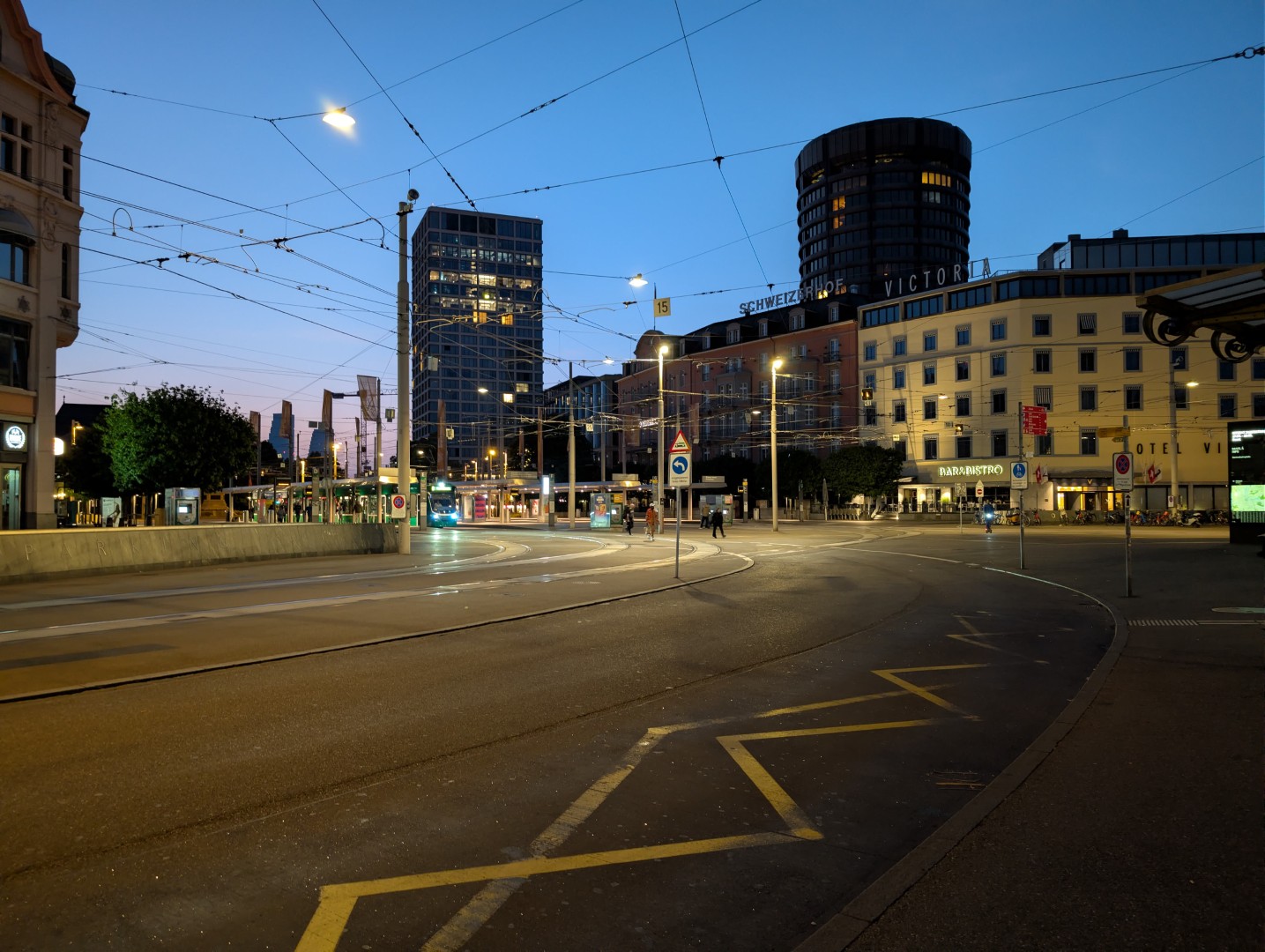
While I was waiting at the bus stop, the delay in the app kept growing. I did not want to take any chances, so I called an Uber and asked around if someone wanted to share the ride. The taxi arrived at light speed and turned out to be a Tesla. My companion was also avoiding a missed flight, flying to Seville on his way to a surfing holiday, and we reached the airport with time to spare.
I tried a new packing strategy for this trip. A duffel bag and a carry-on went inside a large black suitcase; the carry-on held everything I would need during the Kyushu part. The remaining space filled quickly with gifts for friends in Tokyo. I would forward the big suitcase to my Tokyo hotel, travel light through Kyushu, and use the empty space for shopping on the way home.
A short layover in London followed, with modern and efficient security. I could even keep my full water bottle.
The long flight to Haneda was not particularly full, and the other seats in my row stayed empty. I could stretch out and get enough sleep to arrive in Japan in reasonable shape. Between a few movies and the last bits of work before vacation mode, the 13 hours passed quickly. The food was forgettable, but the new A350 was comfortable.
We arrived in Haneda a little before 7 a.m. Immigration was busier than on my previous visit, probably because several flights had landed at once, but the luggage was already on the belt and customs went quickly. I opened the large suitcase, took out the carry-on, and left the duffel inside.
At the Yamato Kuroneko counter, I arranged for the large suitcase, with the duffel still inside, to reach my Tokyo hotel eight days later. The service cost ¥3,000. I kept only the carry-on for the Kyushu part of the trip.
A Bath between Flights
After another trip to the ATM to withdraw cash and a pit stop at a convenience store, I was ready to leave the airport because I had four to five hours for the layover. I wanted to visit a sento to refresh myself, body and soul, before continuing the journey. There is a super sento directly in the airport complex, but it is very expensive, so I decided to look for a more affordable option nearby. It turns out that many of them are still closed in the morning, but Tennen Onsen Heiwajima (天然温泉平和島), a hot-spring bathing complex, was open 24 hours, so I went there.
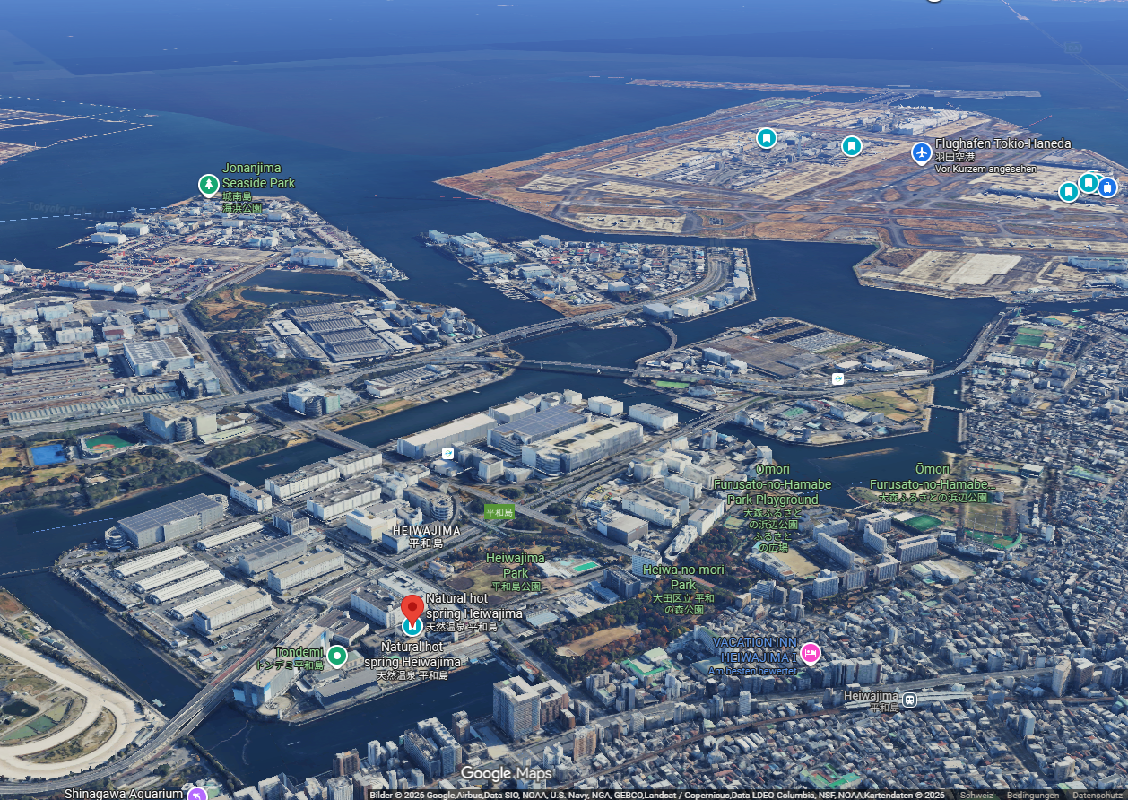
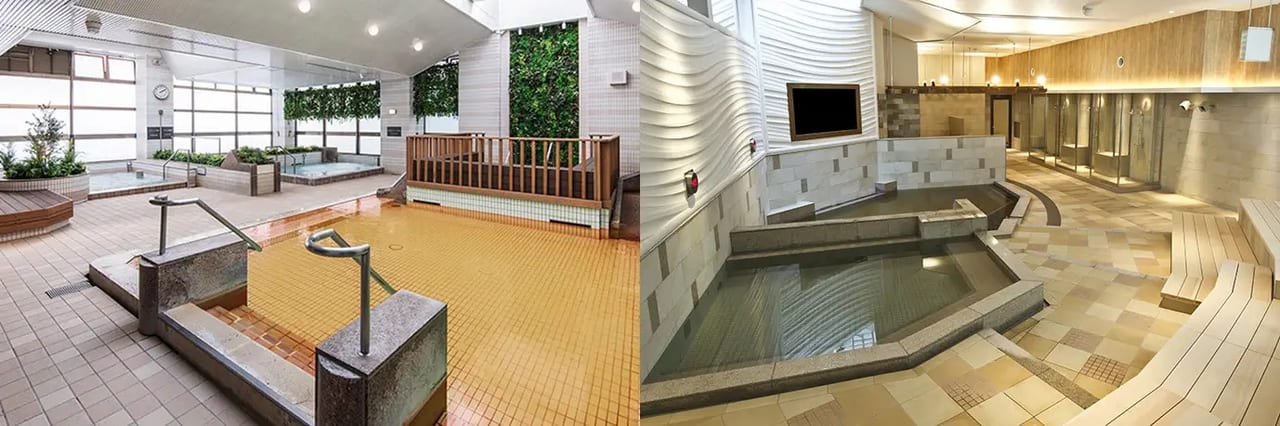
Getting there took about half an hour. Finding the way from the monorail station to the building was surprisingly difficult, even with Google Maps, but the walk gave me an early glimpse of a very industrial part of Tokyo coming to life for work. The center was old-school but extensive, with several pools, a sauna, hot-stone rooms, and a large television playing variety shows. I paid ¥1,400 for the weekday one-hour bath plan; additional time cost ¥400 per hour. It was far more reasonable than directly at the airport. After the long flight, starting the trip with an onsen felt like a great idea: a chance to reset properly before continuing. I would recommend the same rhythm at the other end of a journey, just before leaving Japan.
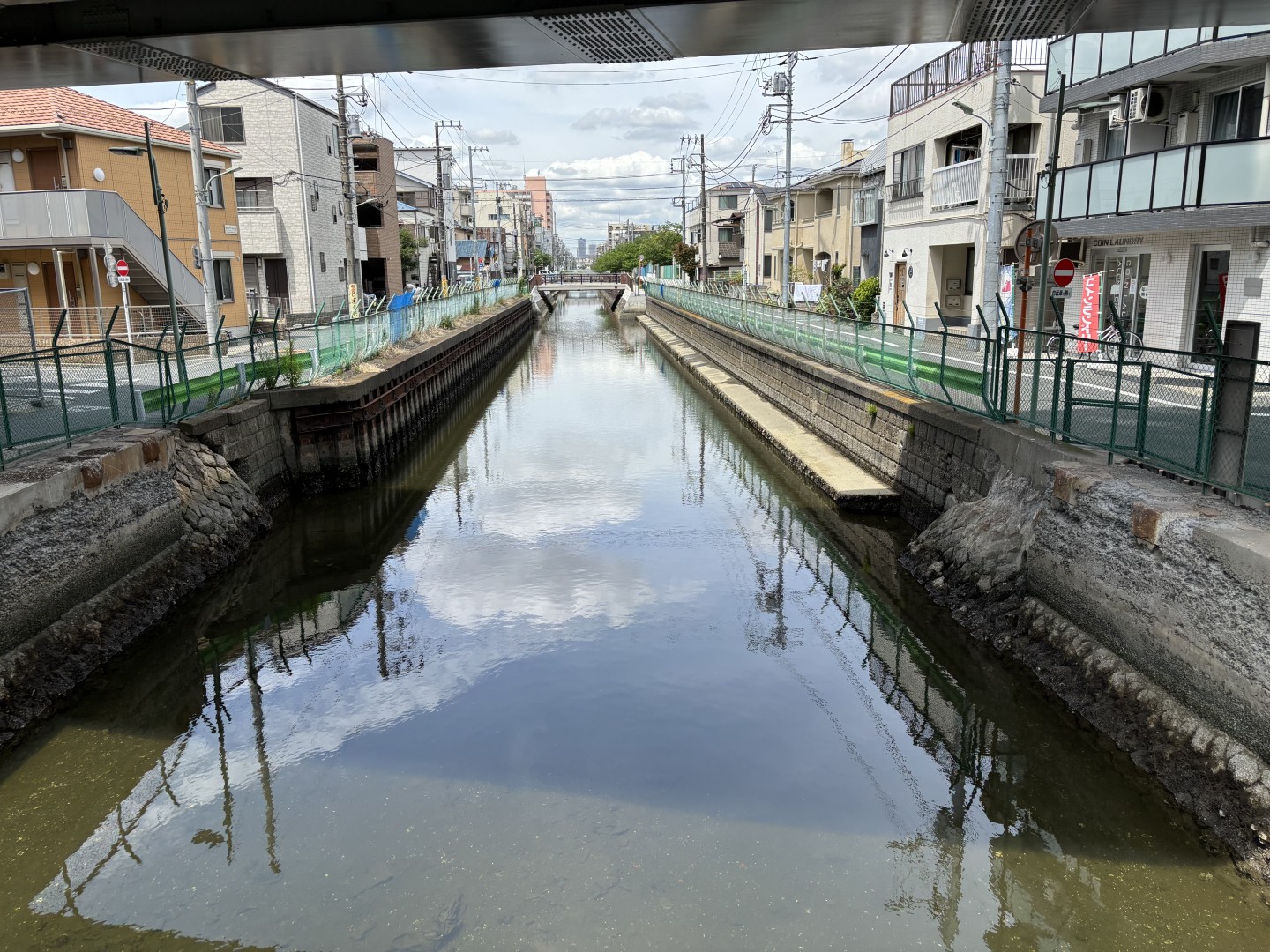
I was originally thinking of staying a few hours there to sleep as well, but since I had managed to get enough sleep on the plane, I left after an hour and explored the areas of Heiwajima and Omori some more. For example, I found a small channel that did not really lead anywhere but offered a great photo opportunity and created a calm vibe. Another curious place I found while walking around was a small park that looked like a mixture of a playground and an exercise park for car drivers because it had a miniature track and small children’s cars to let them drive through the course.
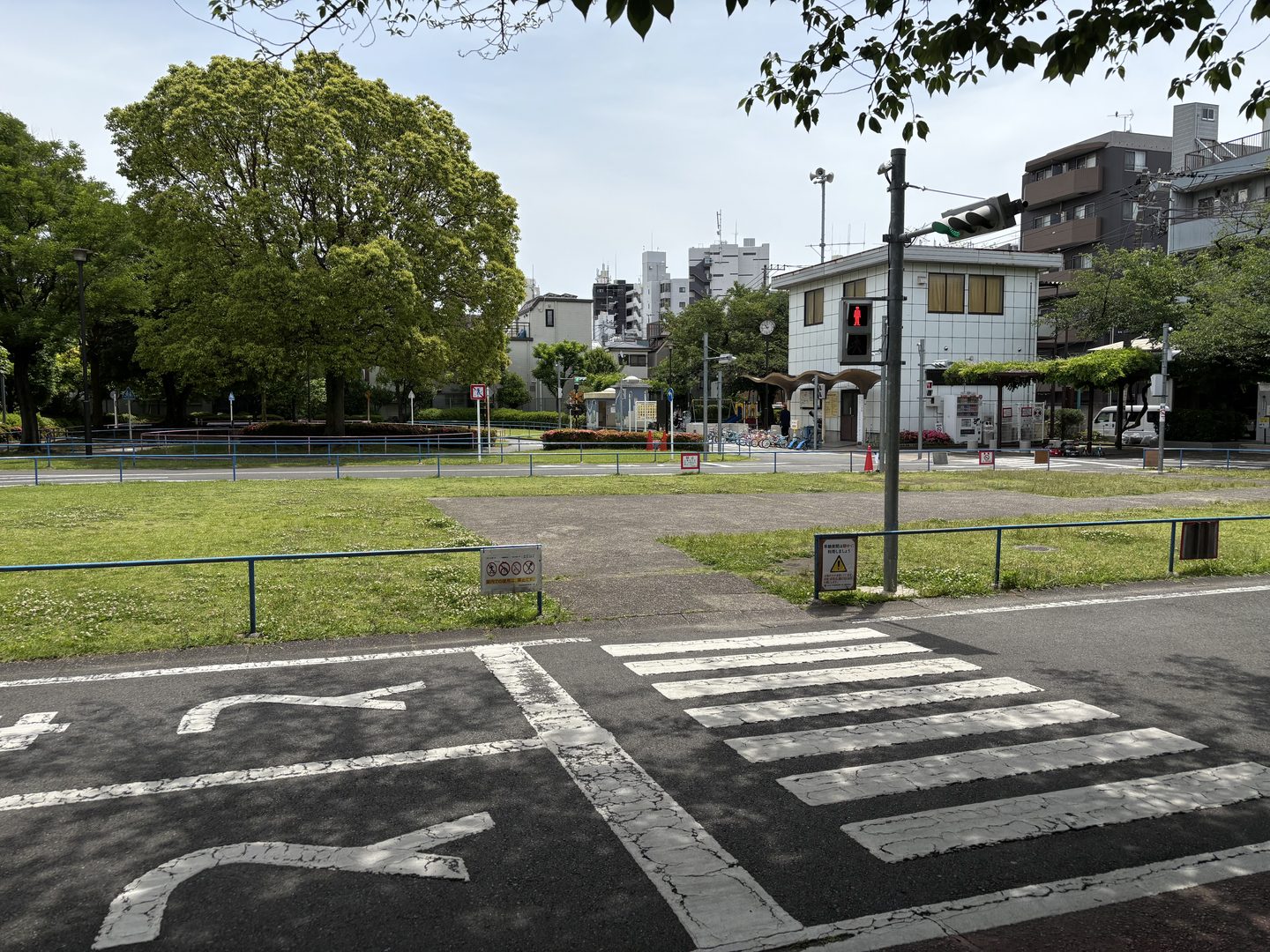
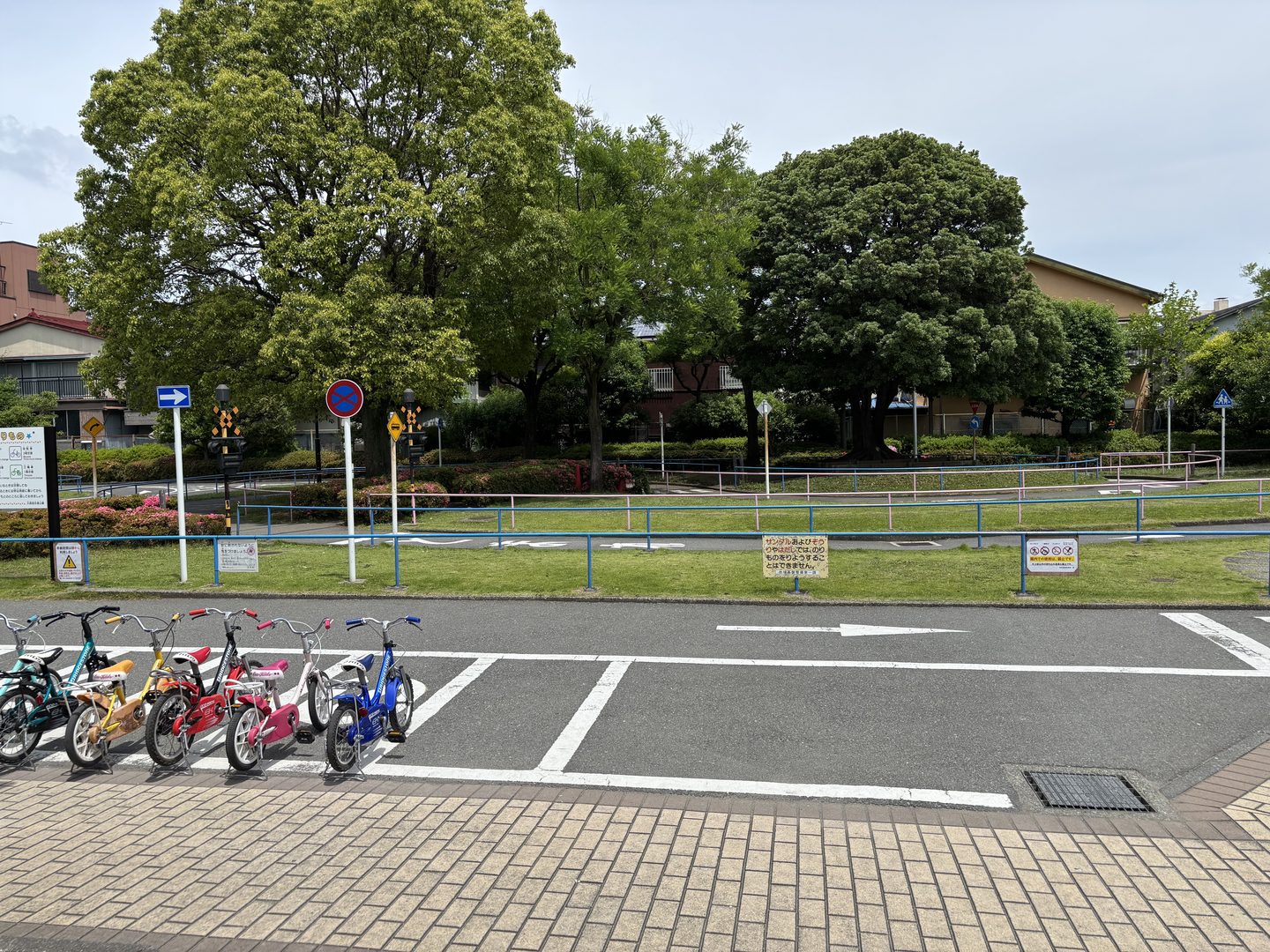
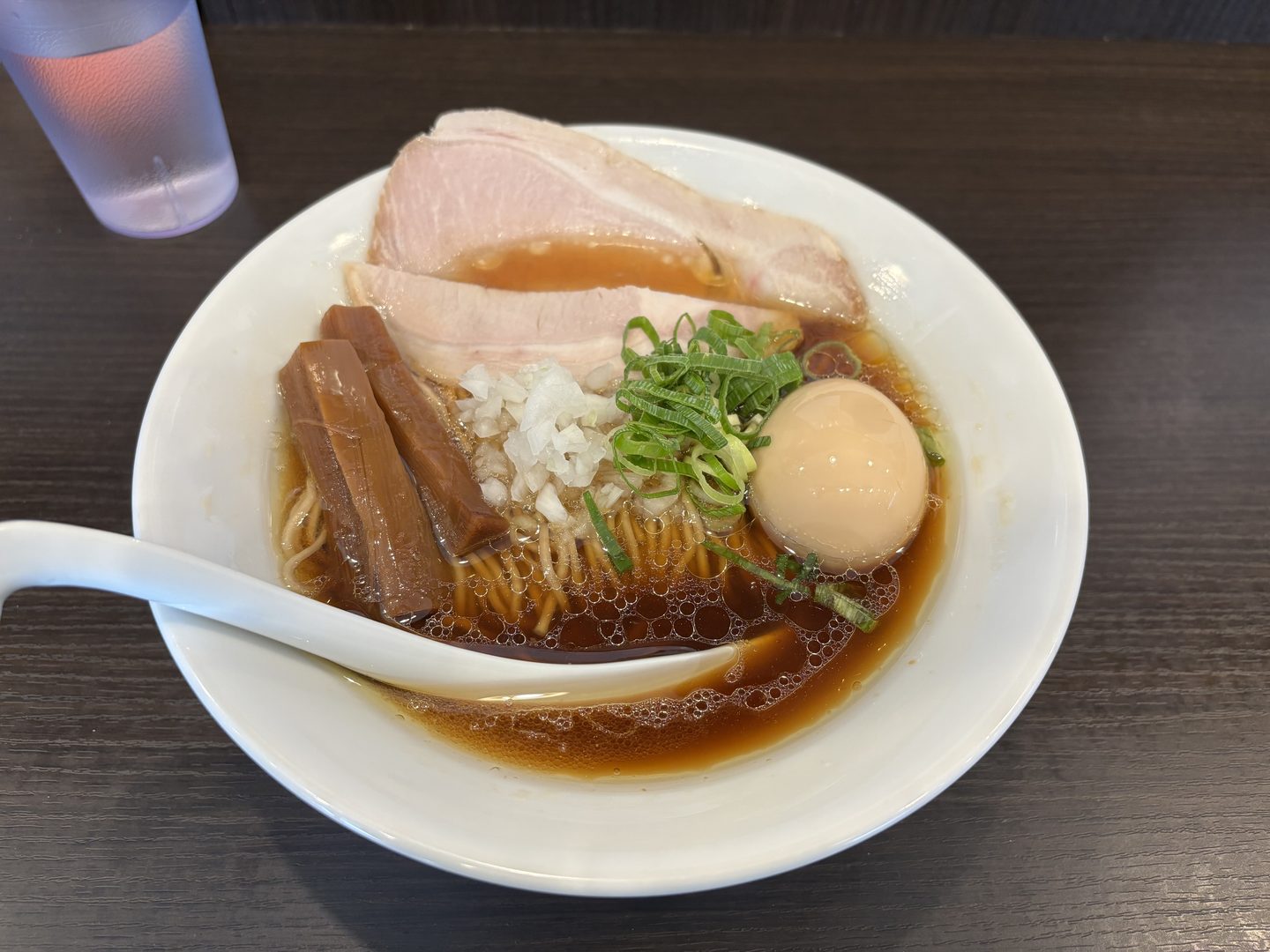
Since my flight was at 12:30, I looked for an early lunch. At Ramen Saisyoku Kenbi (らぁ麺 才色兼備), I had a very good bowl of Chinese-style chuka soba: soy-based broth, thin noodles, and particularly good ajitsuke tamago and chashu.
Back at Haneda, I refueled with coffee, passed through security, and boarded the flight to Nagasaki. Clouds hid most of Tokyo and Fuji, but farther west I caught glimpses of the coastline beyond Kyoto and the island-dotted waters around Sasebo. We also passed over Huis Ten Bosch, the Dutch-themed park near Sasebo that was still part of my plan at that point.
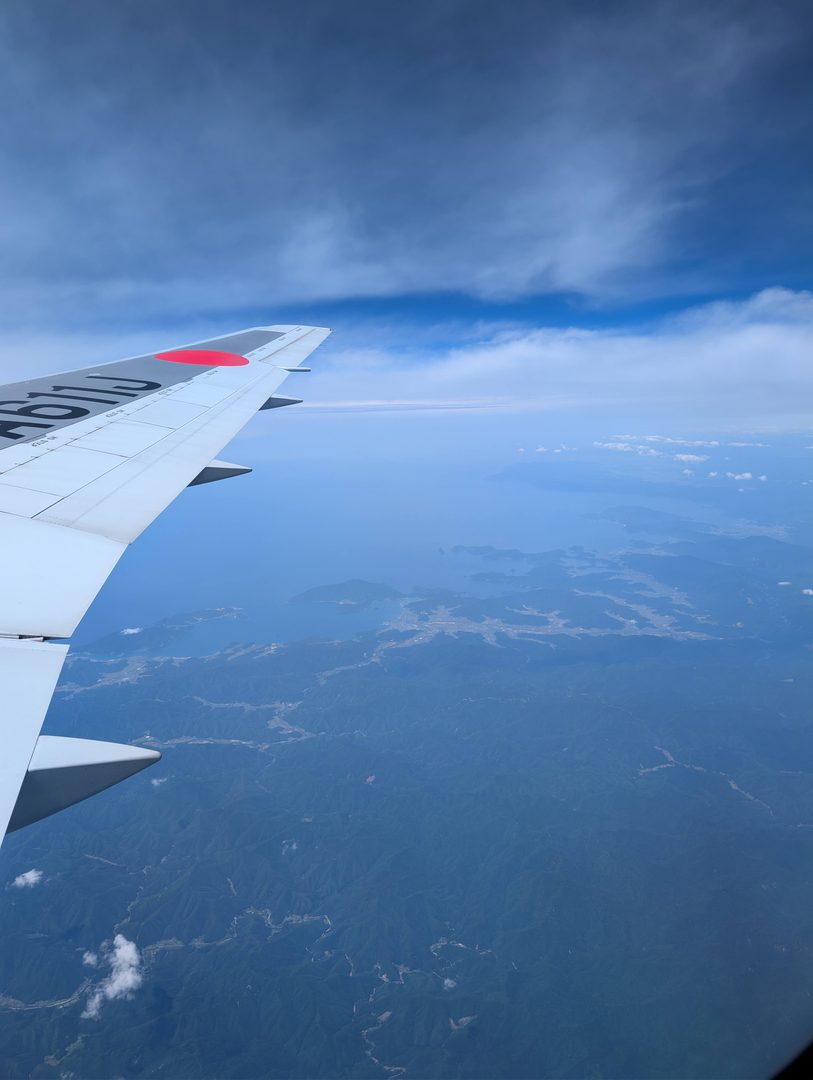
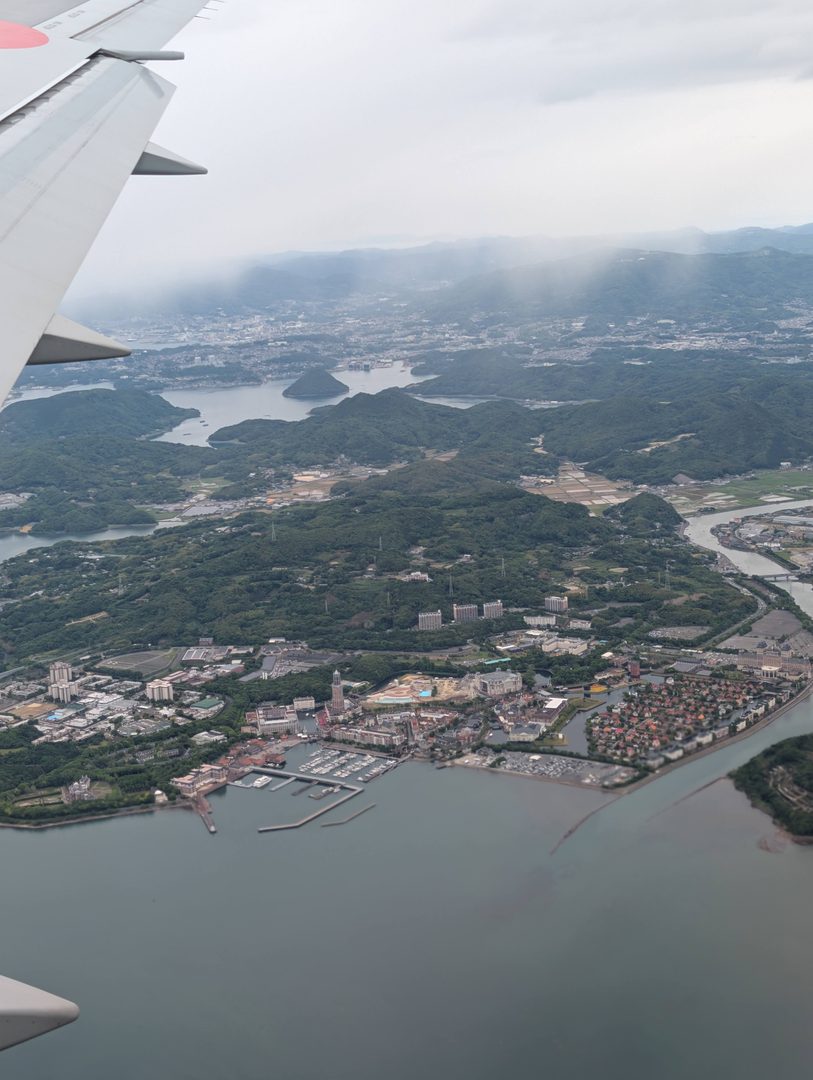
Above Nagasaki Bay
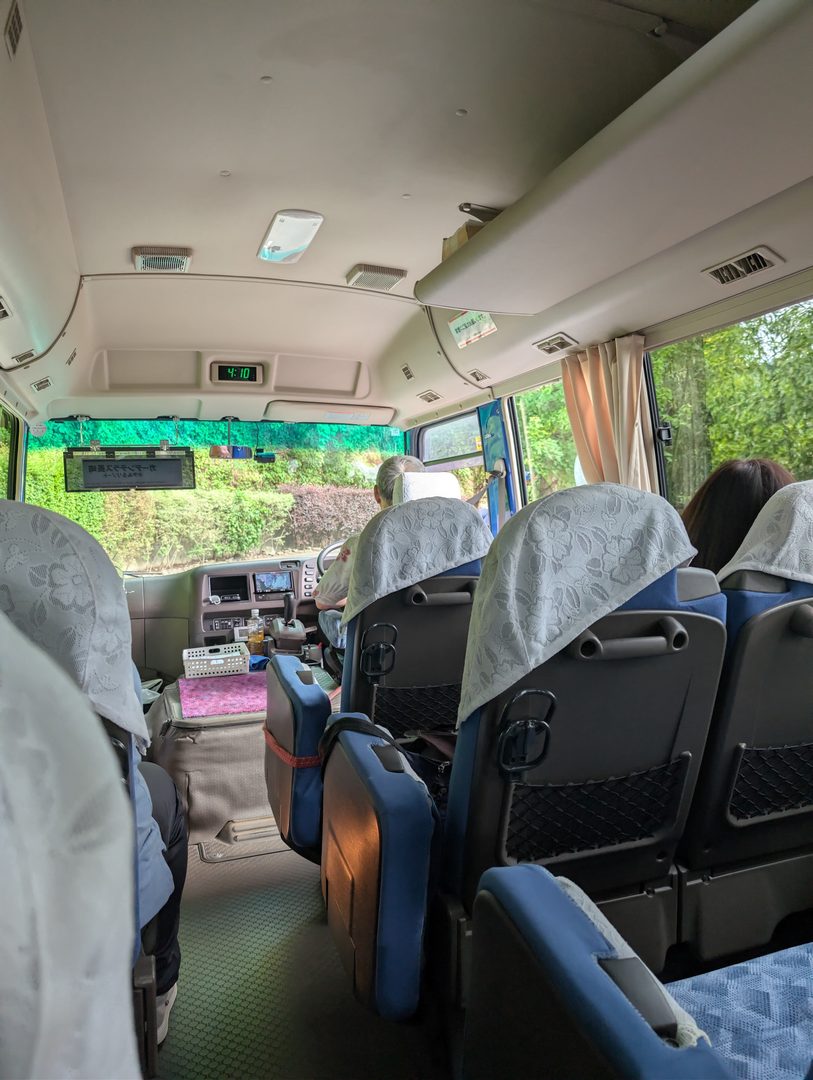
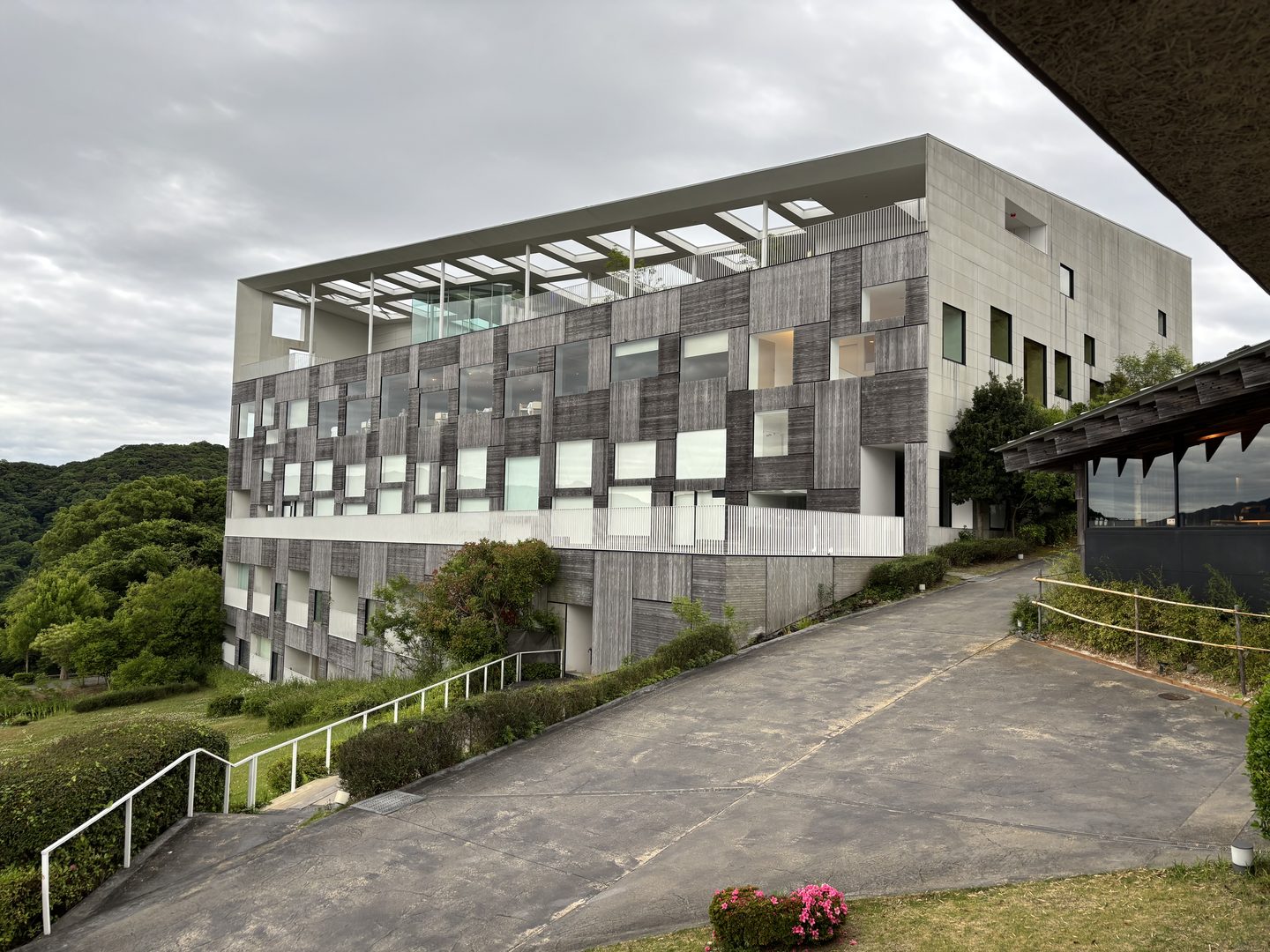
After landing, I took the 3:30 p.m. airport bus into the city. At Nagasaki Station, I briefly considered storing my carry-on in a coin locker to explore hands-free. By the time I reached the lockers, though, the hotel shuttle was about to leave, so I decided to take it and drop off my bags first. The bus climbed through the hills on winding roads, past houses seemingly built next to, above, and below one another without any visible system. Eventually we reached Garden Terrace Nagasaki Hotels & Resorts high above the bay.
The shuttle bus dropped us off at the reception building, where the staff had already been informed of our arrival en route. They took my luggage and guided me to a sofa, where I could rest and enjoy a welcome drink while they prepared the paperwork for check-in. During check-in, the staff asked where and when I wanted to have dinner and breakfast. I chose dinner at the hotel that evening and breakfast the following morning, leaving the second evening free to eat in the city.
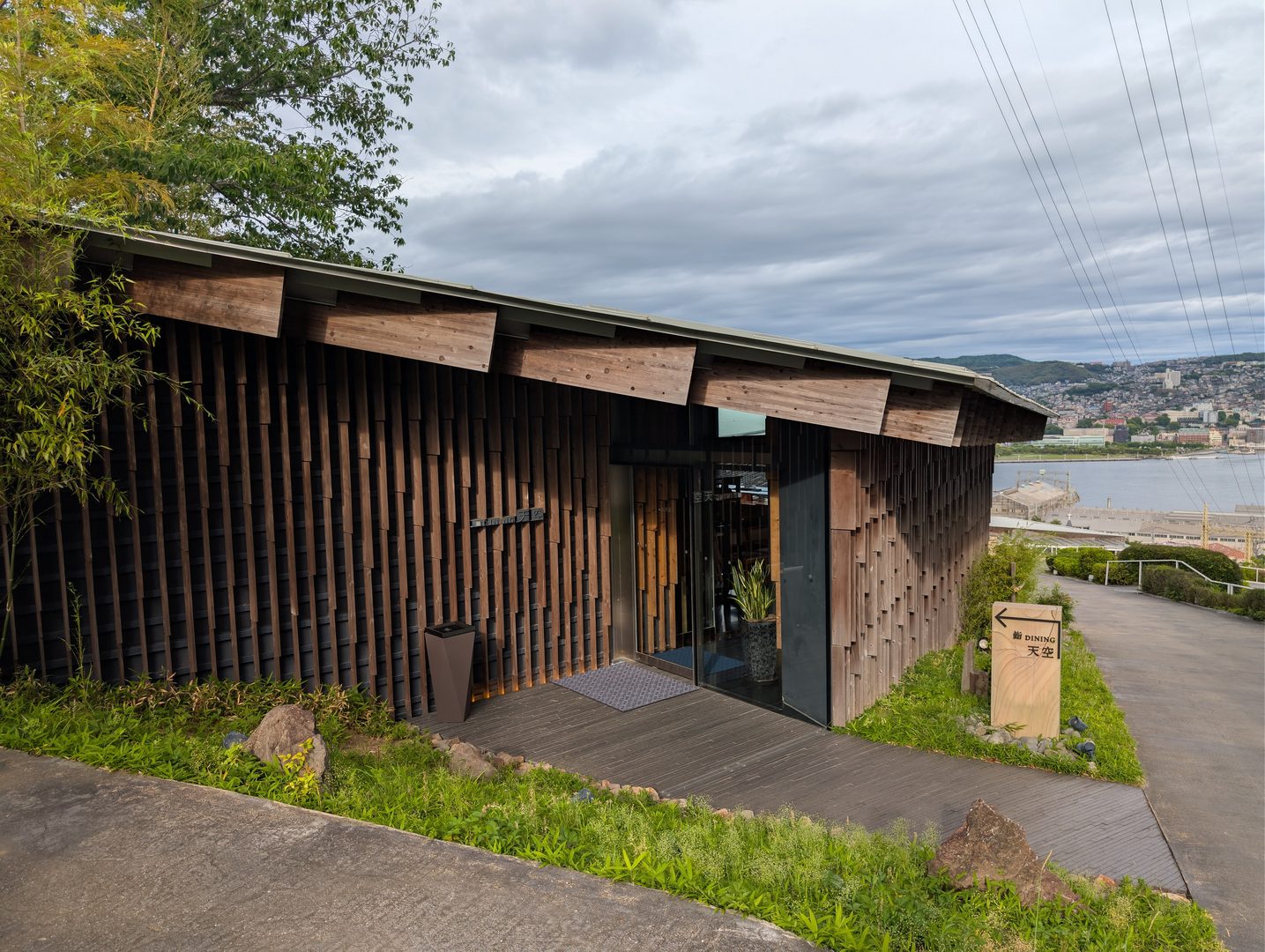
Rain was forecast for the next day, so I had been debating whether to use the remaining dry, cloudy hours for sightseeing. But it was already late, and I had committed to dinner at the hotel while checking in. Staying put was the easier choice.
I was then escorted to my room, one level below in the same building, although there were also other types of rooms in other buildings, all overlooking Nagasaki Bay and the city below. The room impressed me as much as the view. It was spacious, with two large beds, a jacuzzi in the bathroom with a window toward the bay, and a well-stocked minibar.
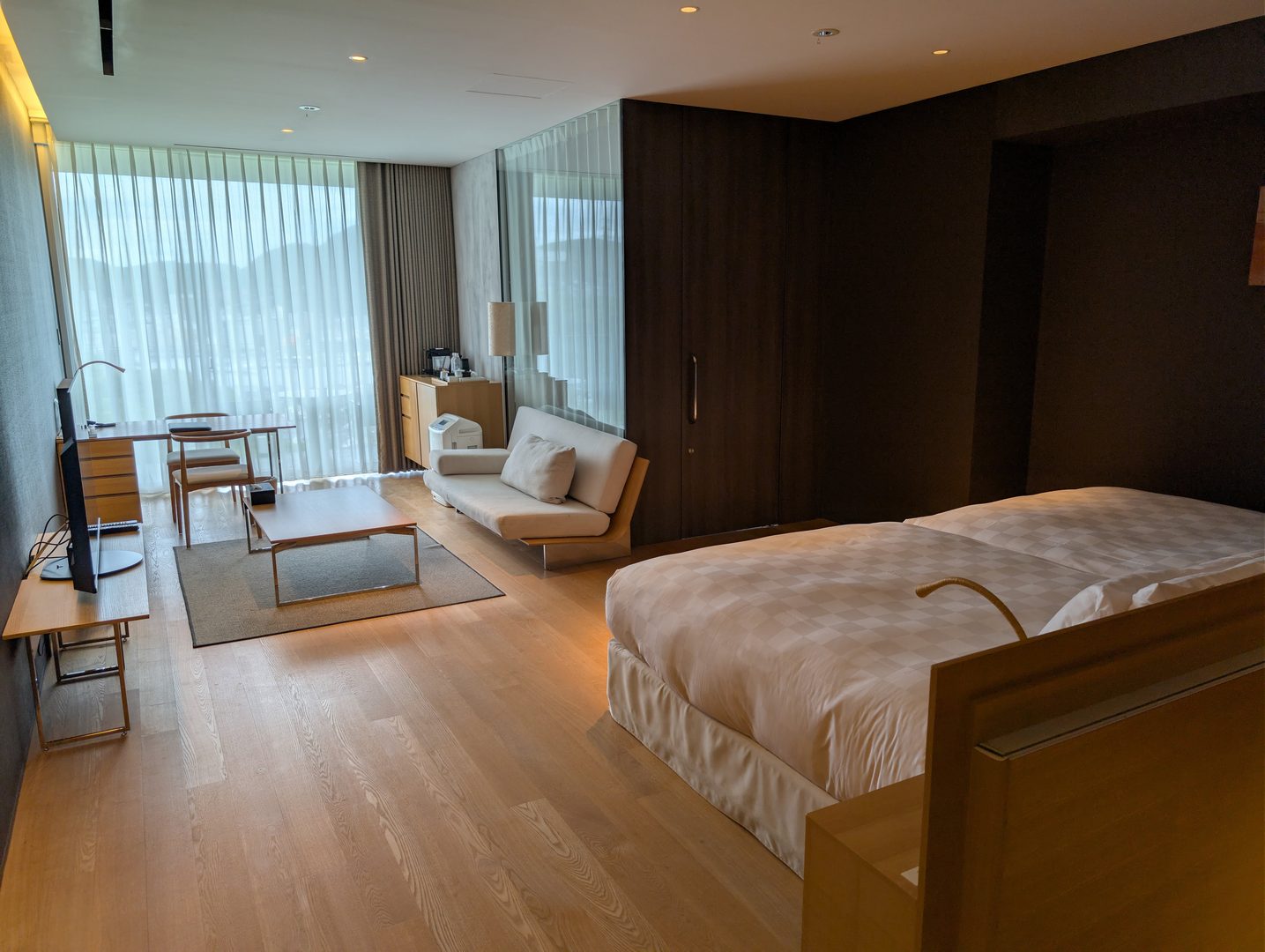
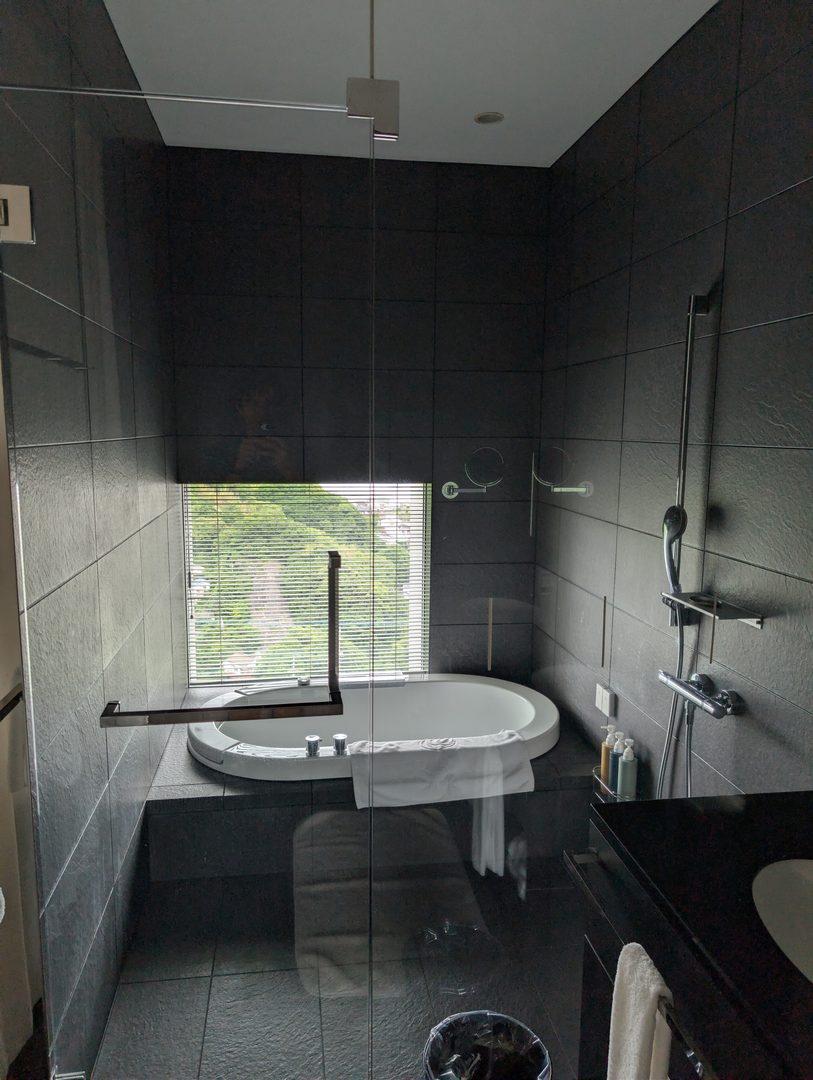
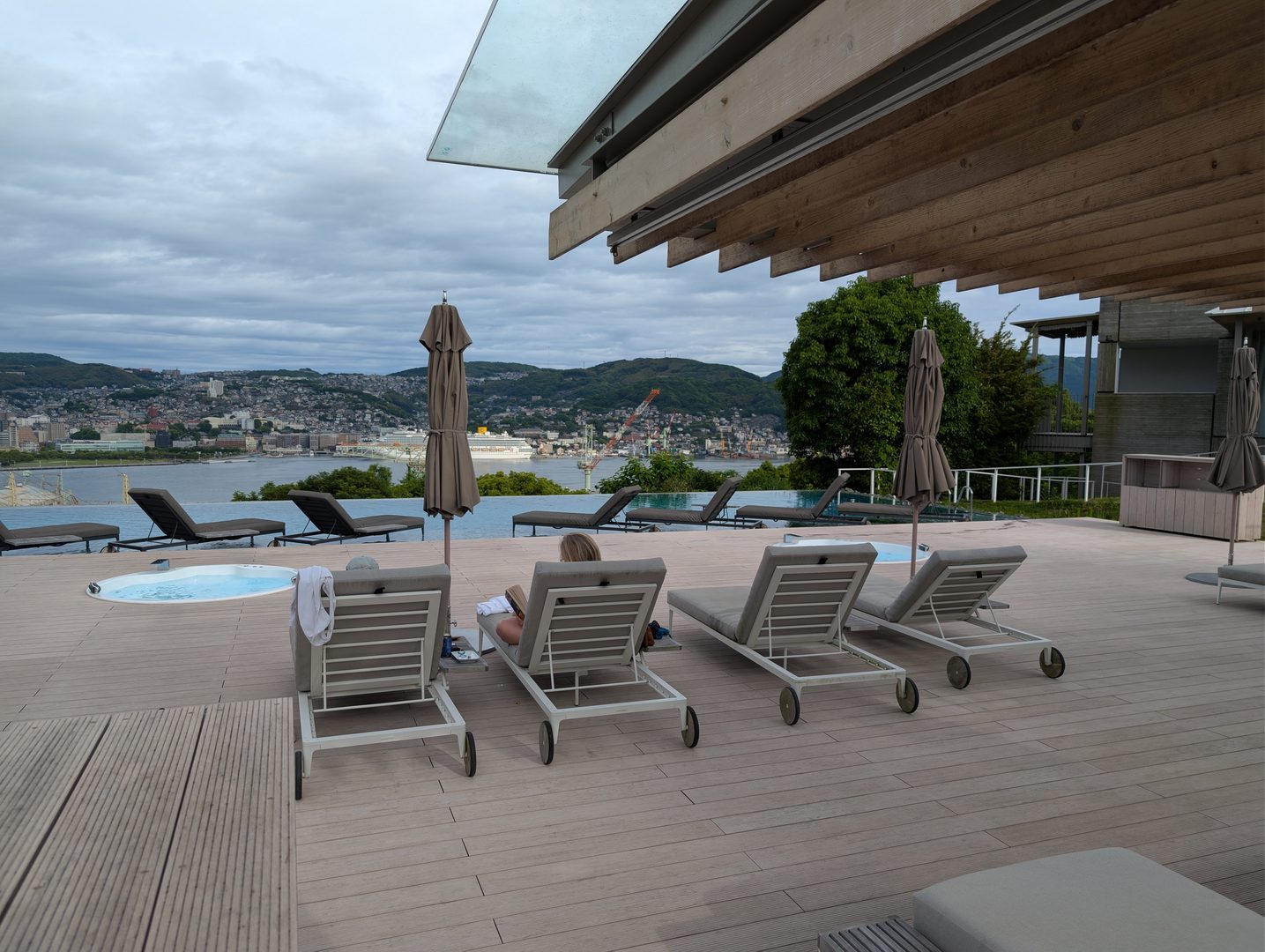
After winding down, I went out to explore the lounge that had been mentioned. A few meters farther down the hill was an infinity pool combined with a self-service minibar, a small gym, and two saunas. Unlike the onsen and ryokan baths I knew, it was mixed-gender and used in swimwear.
With a glass of sparkling wine at the pool and Nagasaki Bay below, I felt that the vacation had begun very well.
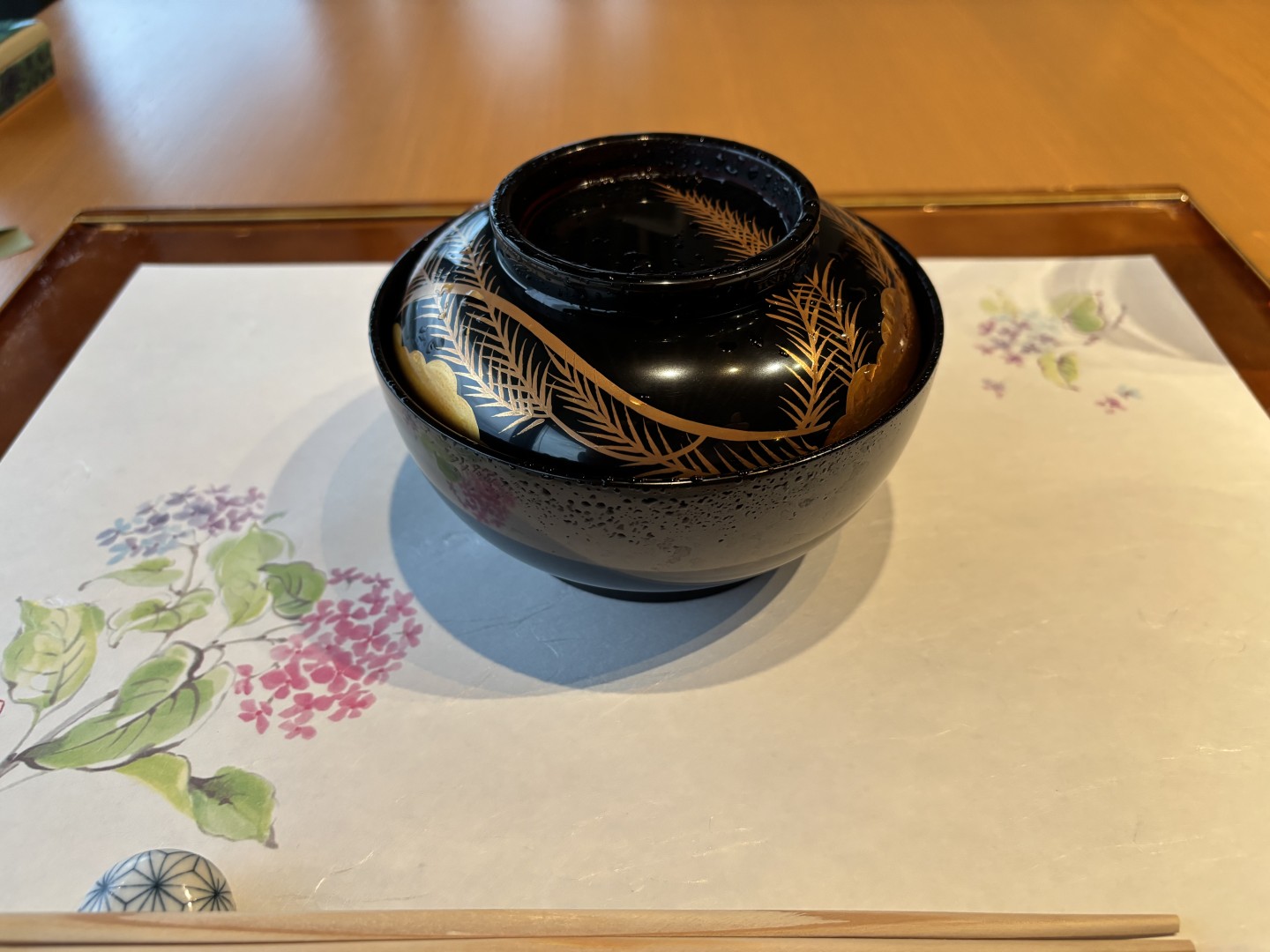
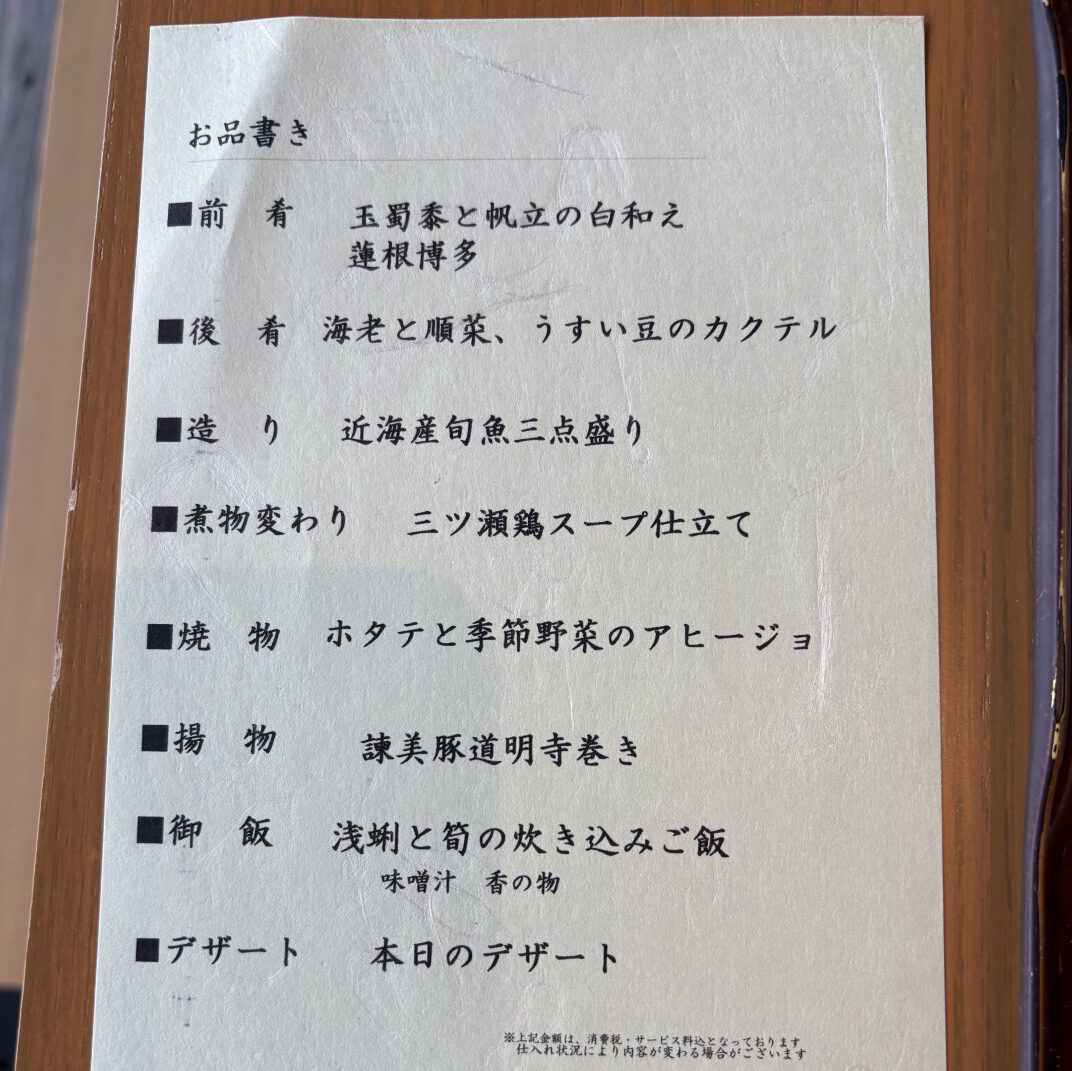
Later, I went to Akizuki, the hotel’s kaiseki-style restaurant. I again had a view over the bay as daylight faded, the city lights came on, and a large cruise ship left the port.
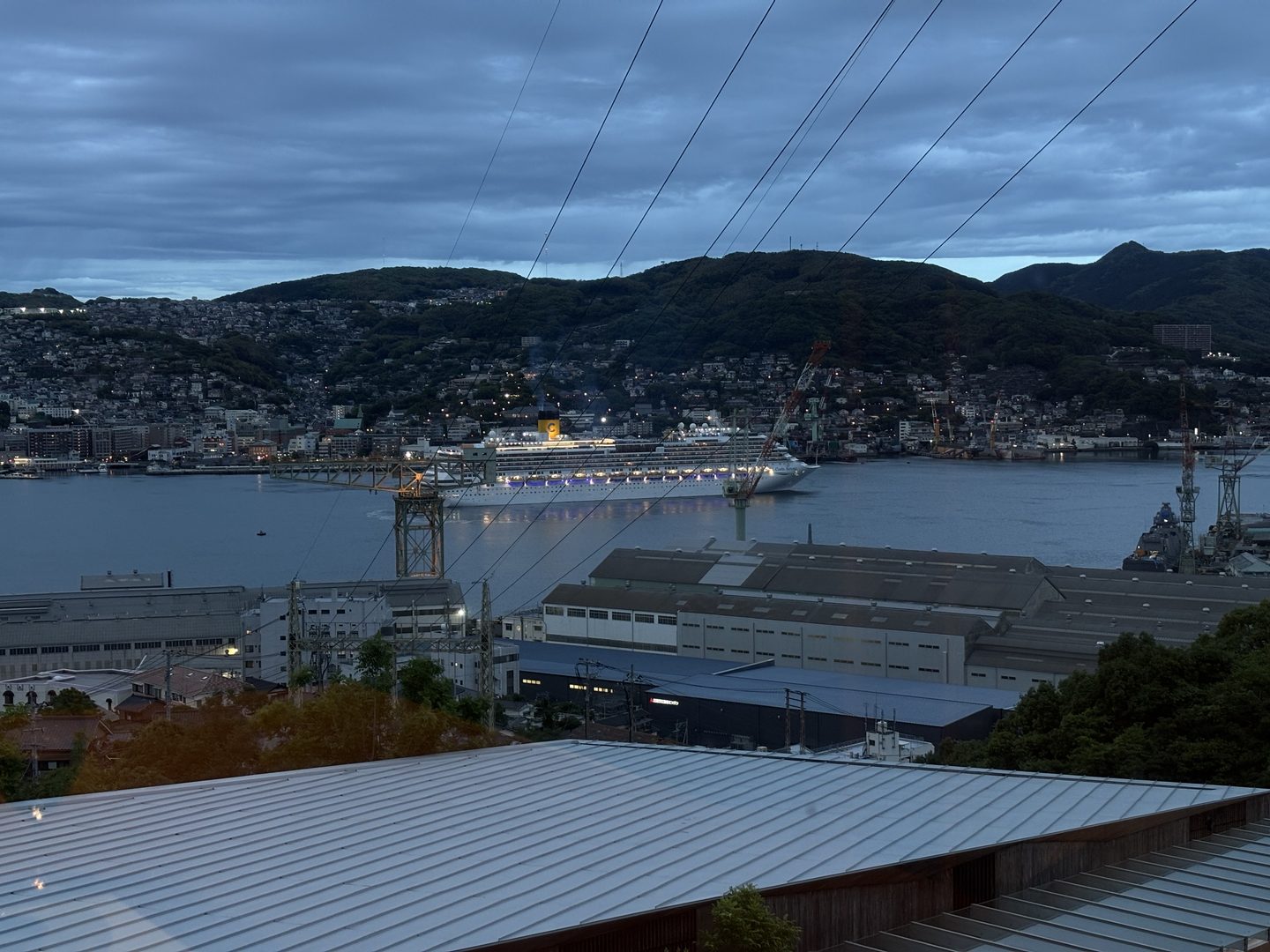
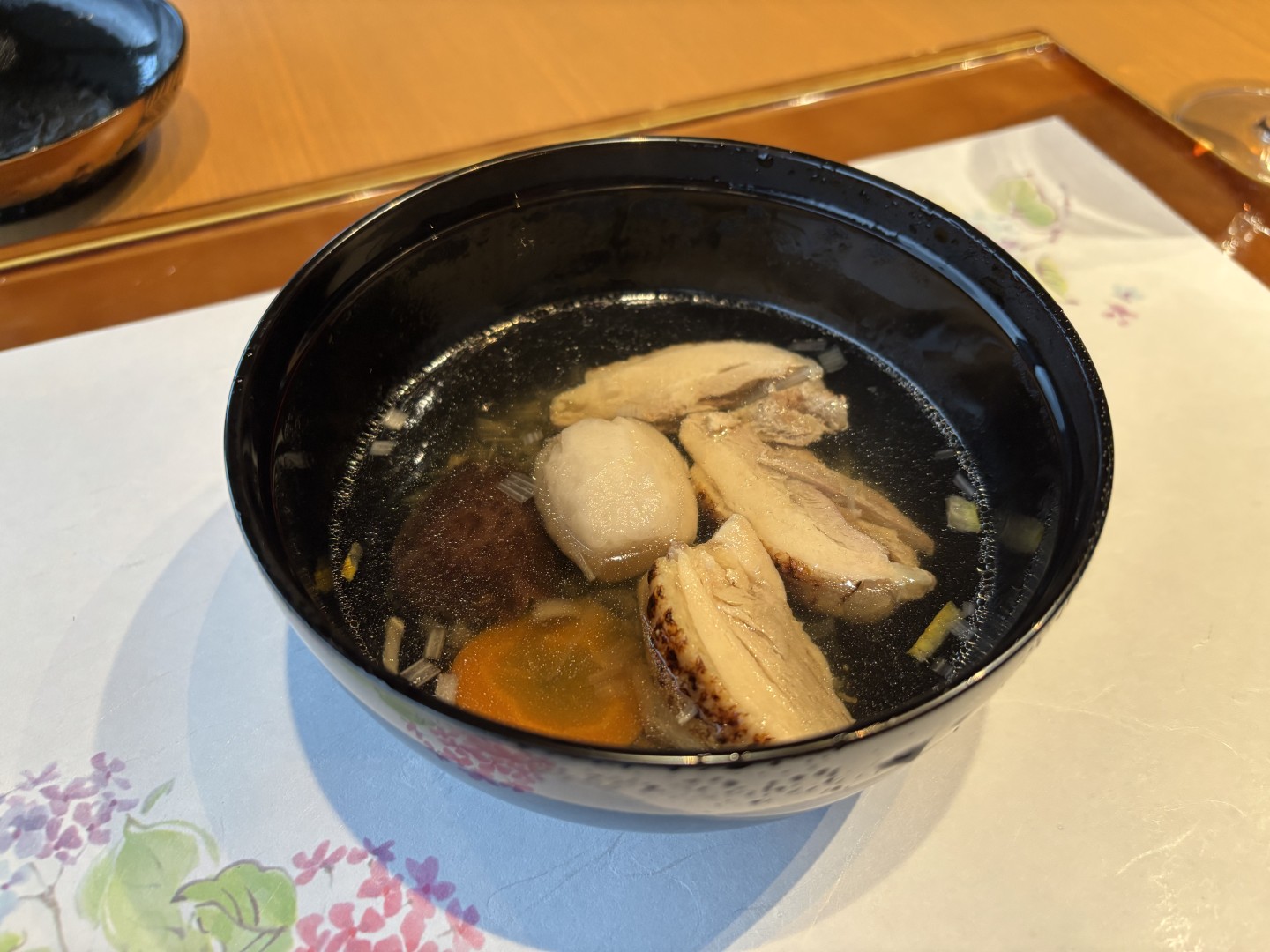
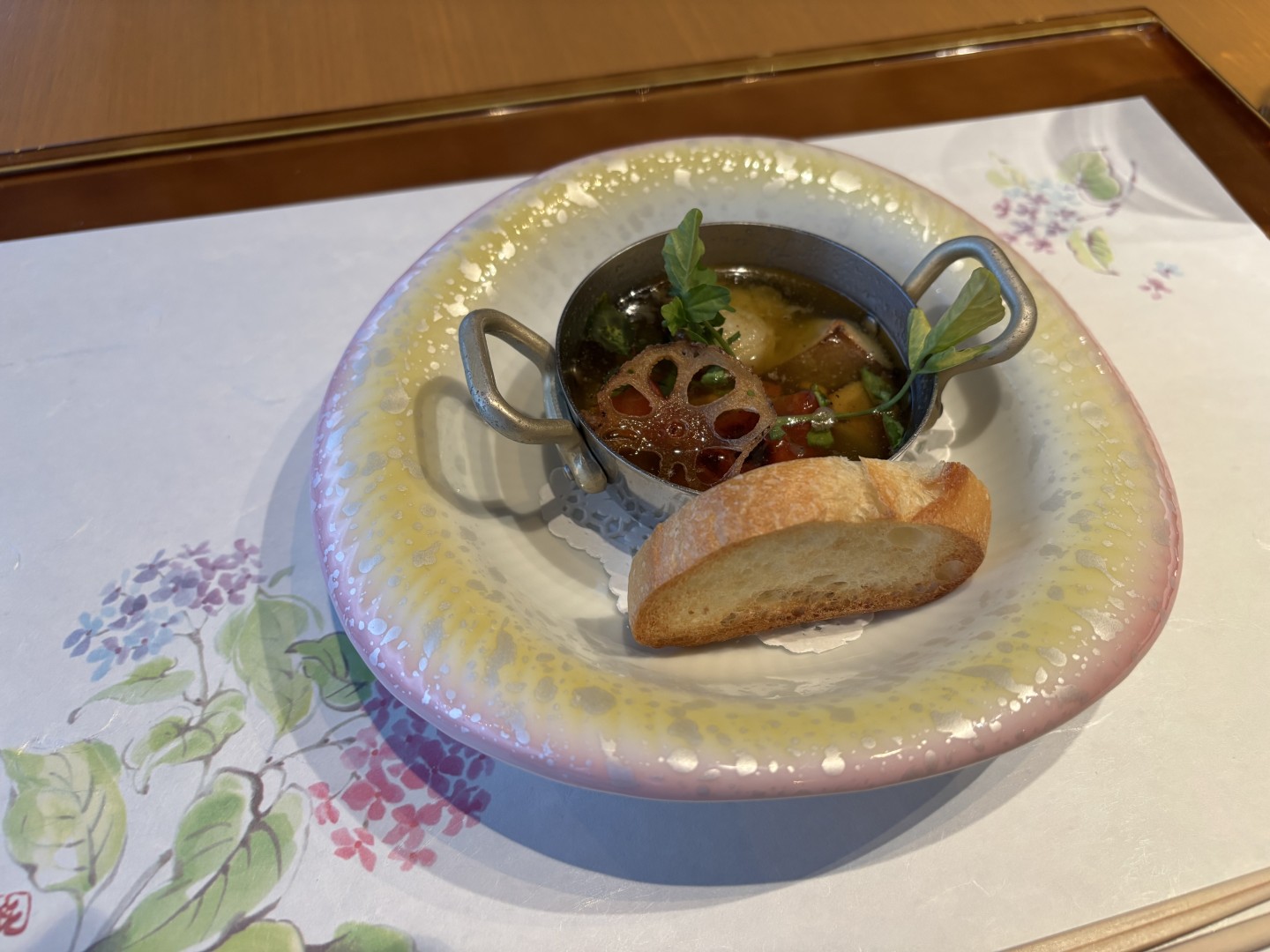
The meal was built around seasonal seafood: hirame sashimi with tai and maguro, a clear chicken soup, and ajillo. The surprise was a tempura course that looked like sakura mochi—pink rice wrapped in a thin layer of pork and fried in batter—and tasted far better than I could have anticipated. At the end, the miso soup with mixed rice included a tiny slice of lime, which changed the whole flavor profile. Matcha tiramisu with black tea finished the meal.
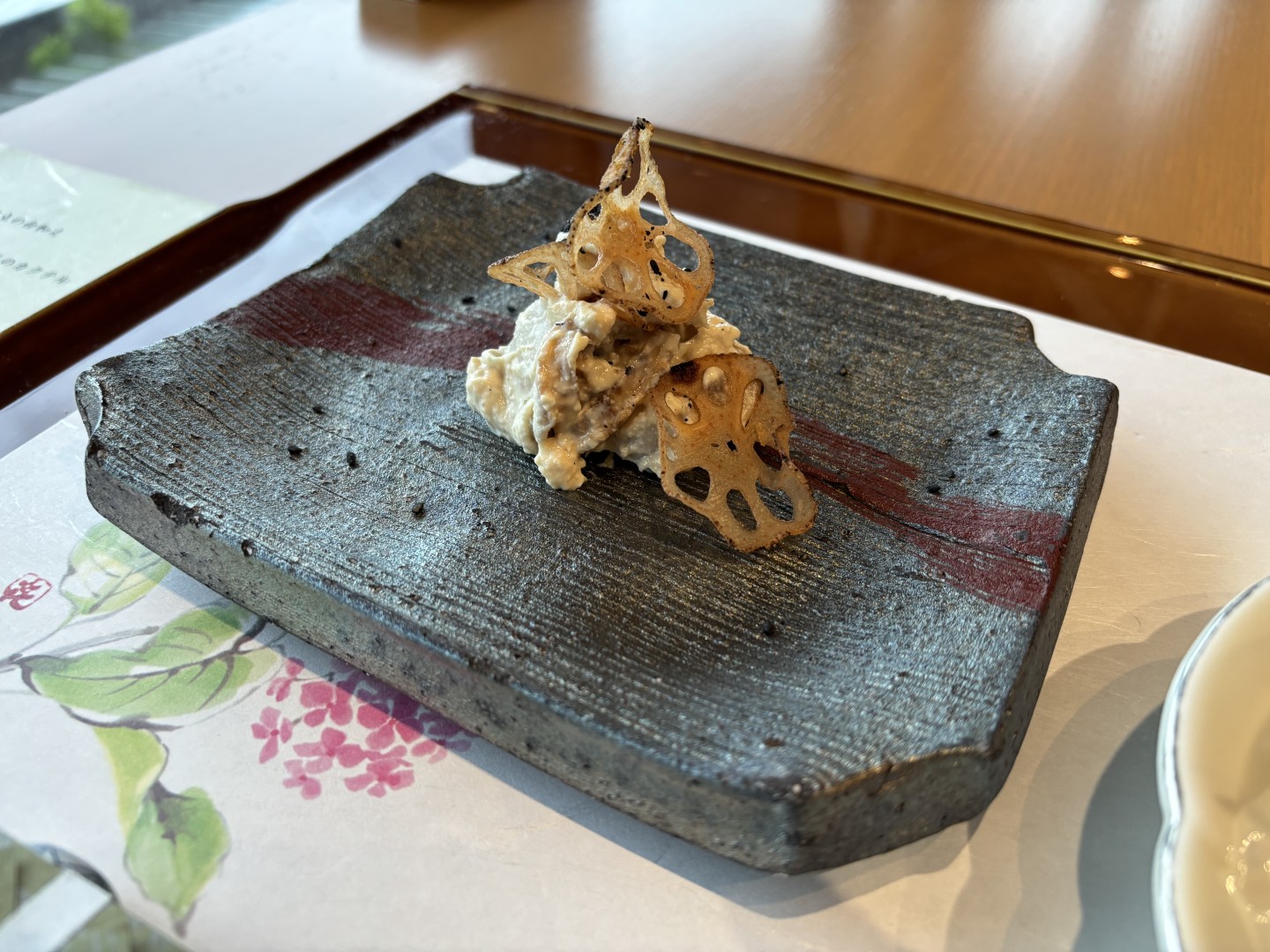
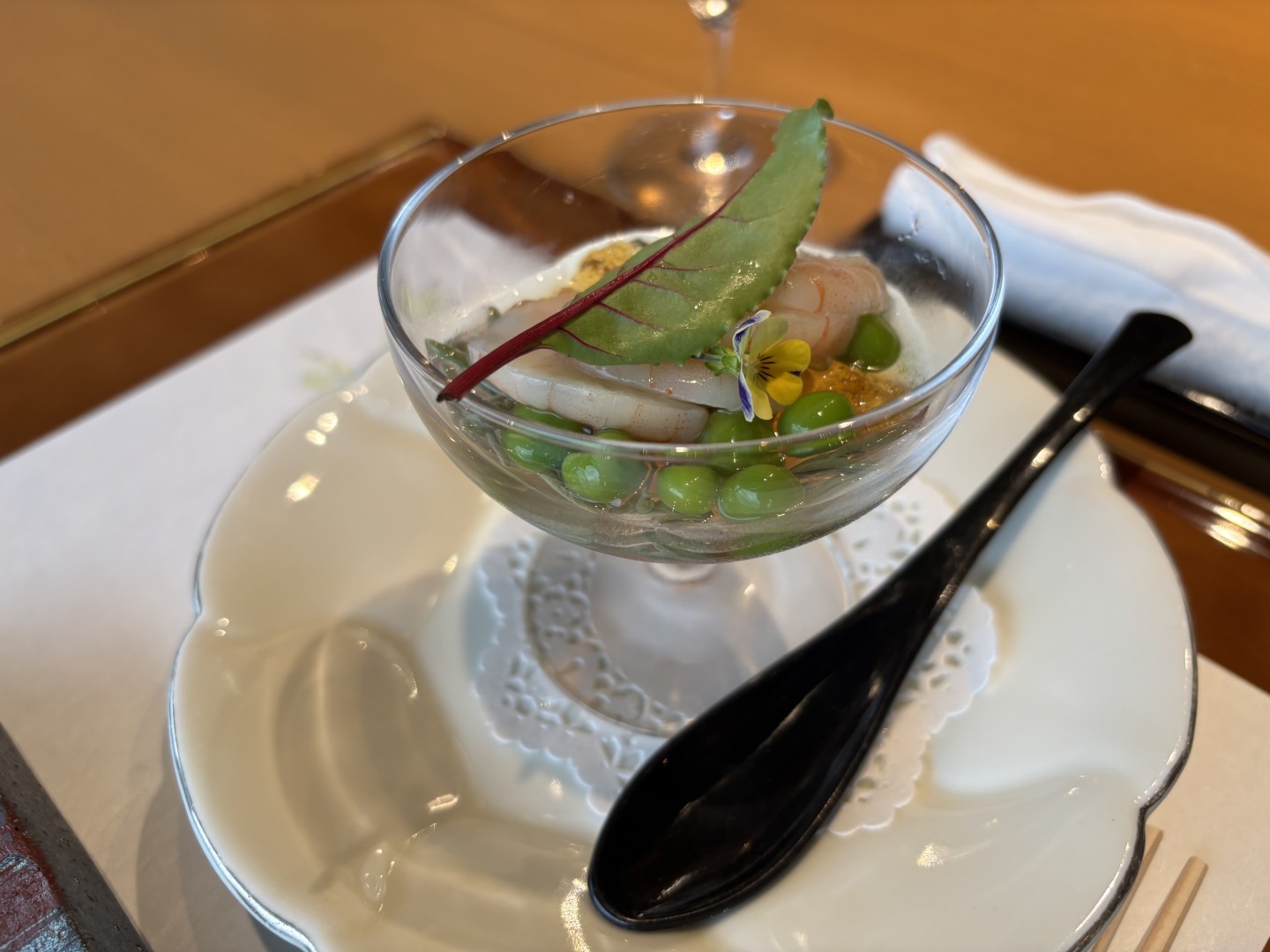
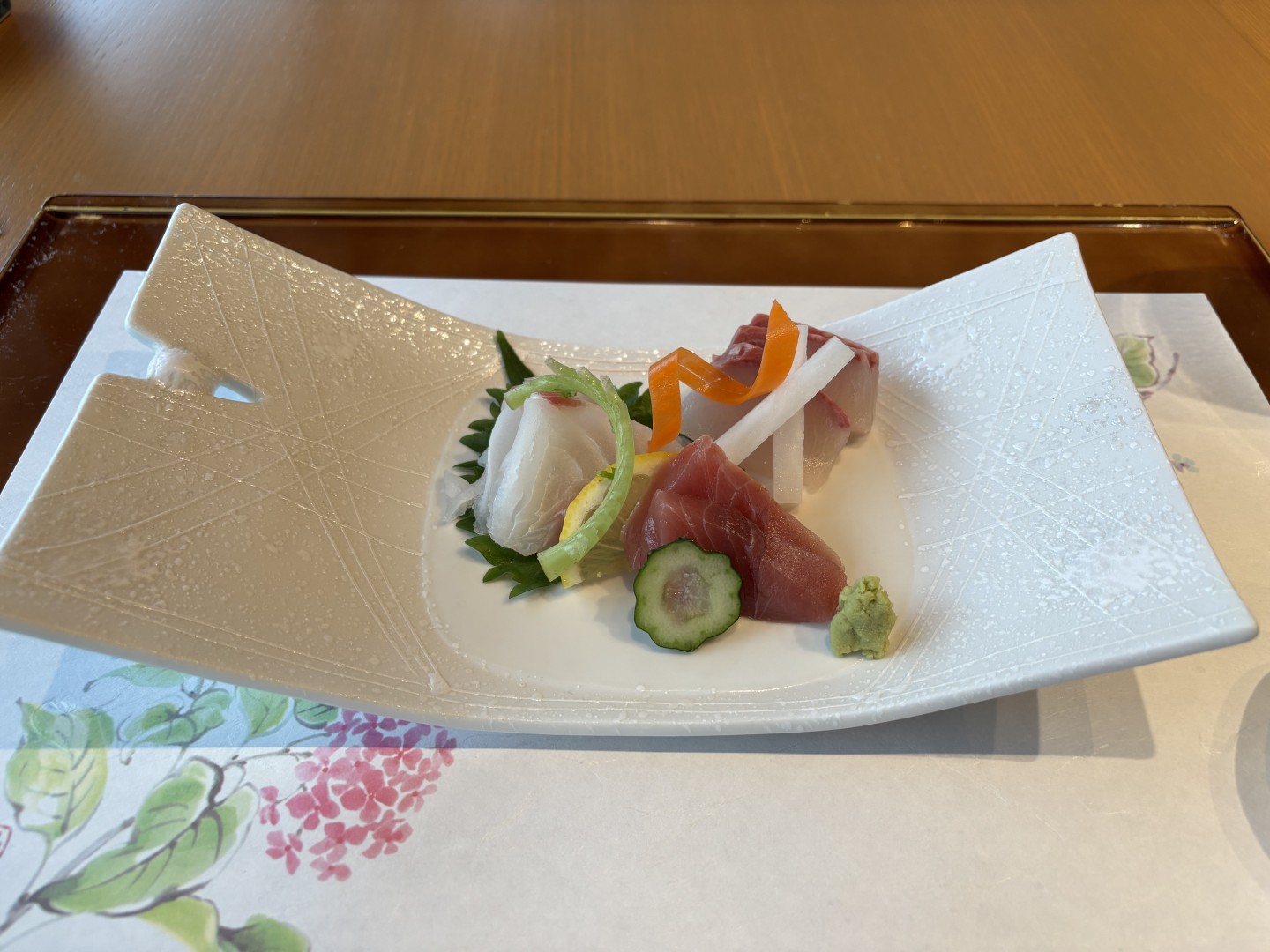
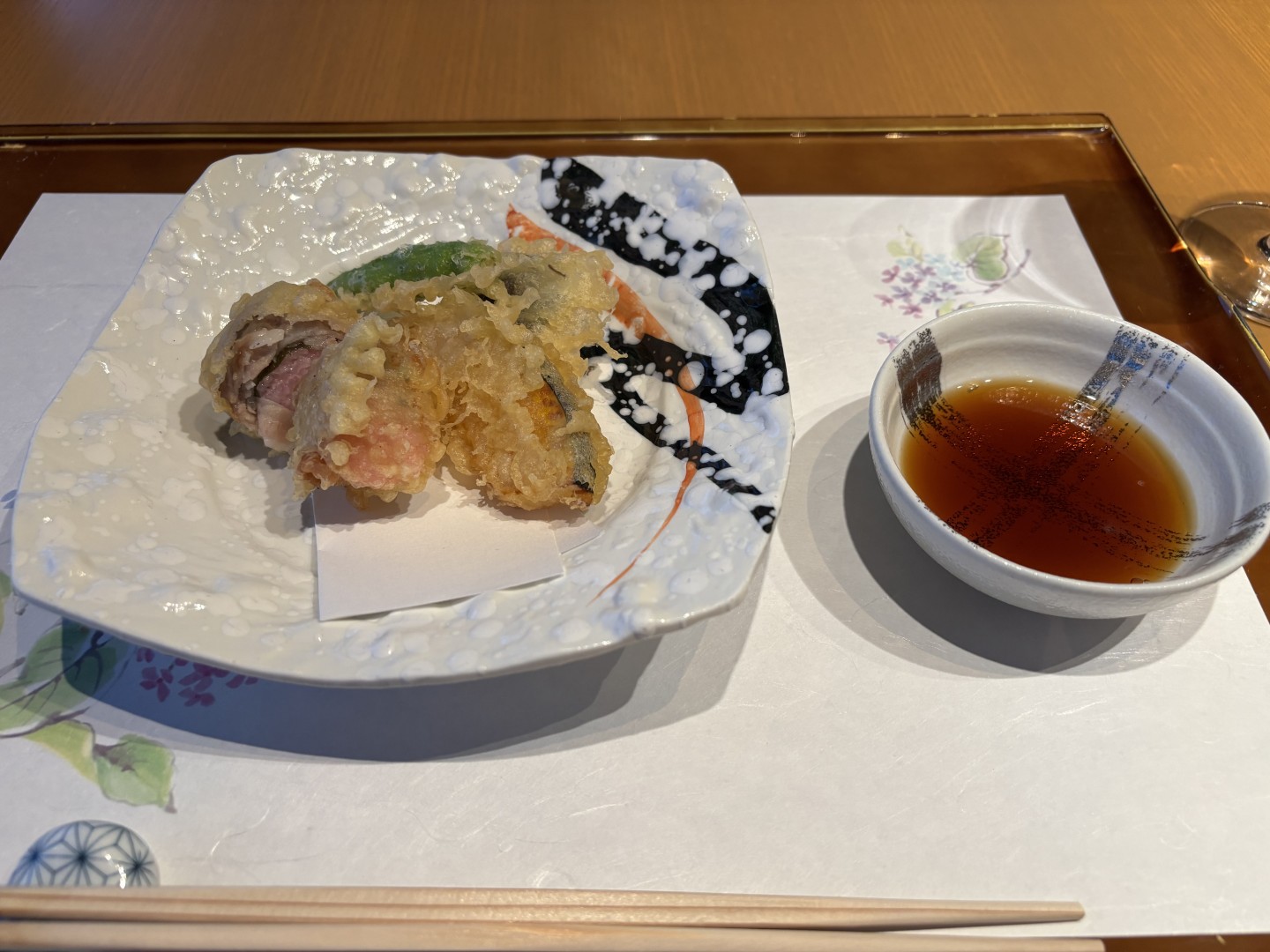
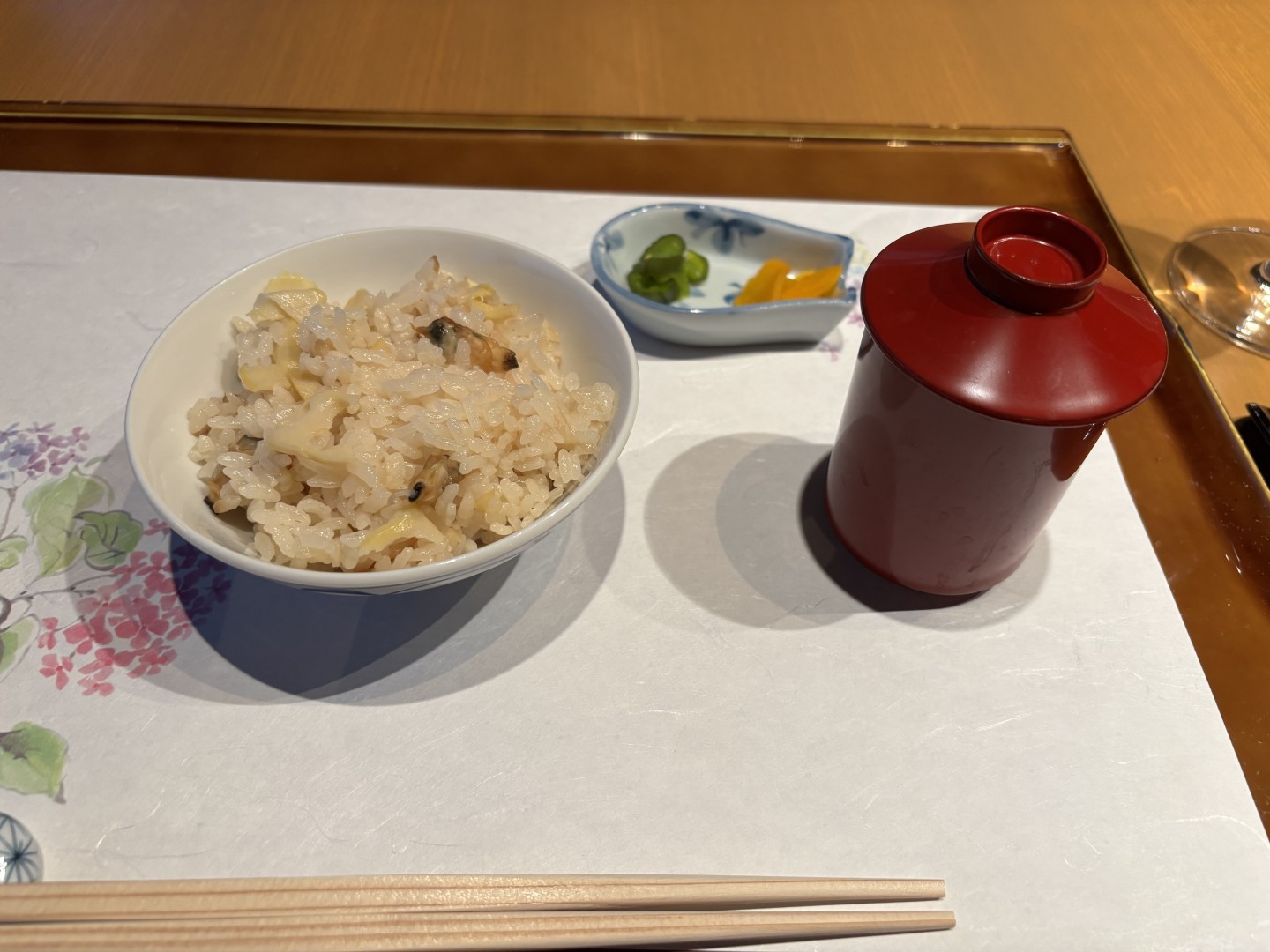
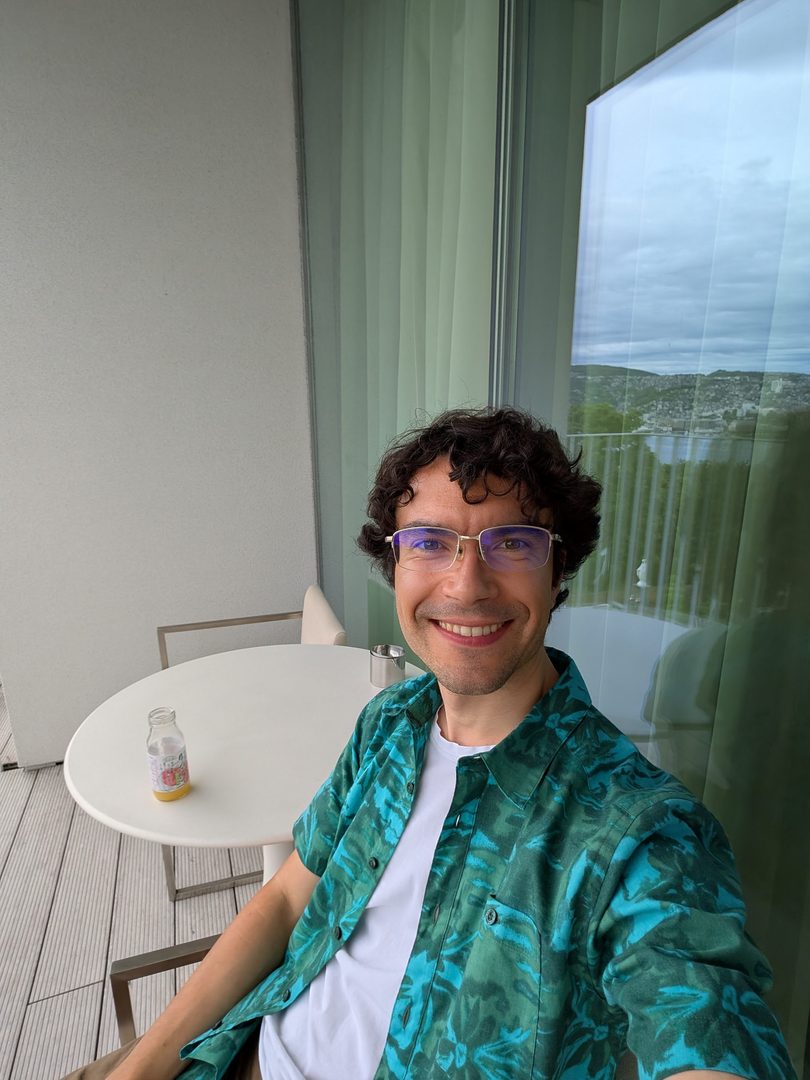
The day ended quietly on my balcony, making notes for this blog and planning the rainy day ahead.
Japan 2026 · Part 2 of 12
← Previous: Planning a Two-Week Kyushu and Tokyo Trip in Early Summer
Coming next: Nagasaki in Rain and Clearer Light — October 30, 2026.
Entdecke mehr von Tabimonogatari - 旅物語
Melde dich für ein Abonnement an, um die neuesten Beiträge per E-Mail zu erhalten.